Trump's Trade Policy in Flux as Canada Talks Break Down and Beef Tariffs Are Lifted, Experts Say
Key Takeaways
- •Washington Post reporter David J. Lynch wrote that Canadian Prime Minister Mark Carney was prepared to walk away from talks while President Trump retreated by lifting beef import tariffs after long denying that tariffs affect consumer prices.
- •Former U.S. trade negotiator Wendy Cutler called the outcome a big setback for Trump's trade policy and said some of the ten countries with finalized reciprocal trade agreements may demand revisions after learning of concessions offered to Canada, including lower tariffs on industrial metals.
- •White House trade adviser Peter Navarro and Commerce Secretary Howard Lutnick clashed with U.S. Trade Representative Jamieson Greer at a White House meeting, arguing against giving away concessions on aluminum tariffs.
- •During the negotiations, the U.S. sought to exclude Ontario-built heavy trucks such as the Ford F-350, F-450 and GM Silverado from tariff reductions and to limit Canada's ability to sign trade deals with other countries.
- •Trump's own Labor Department reported that the United States lost 75,000 manufacturing jobs since the start of his second term, despite his promises that tariffs would stimulate domestic manufacturing.
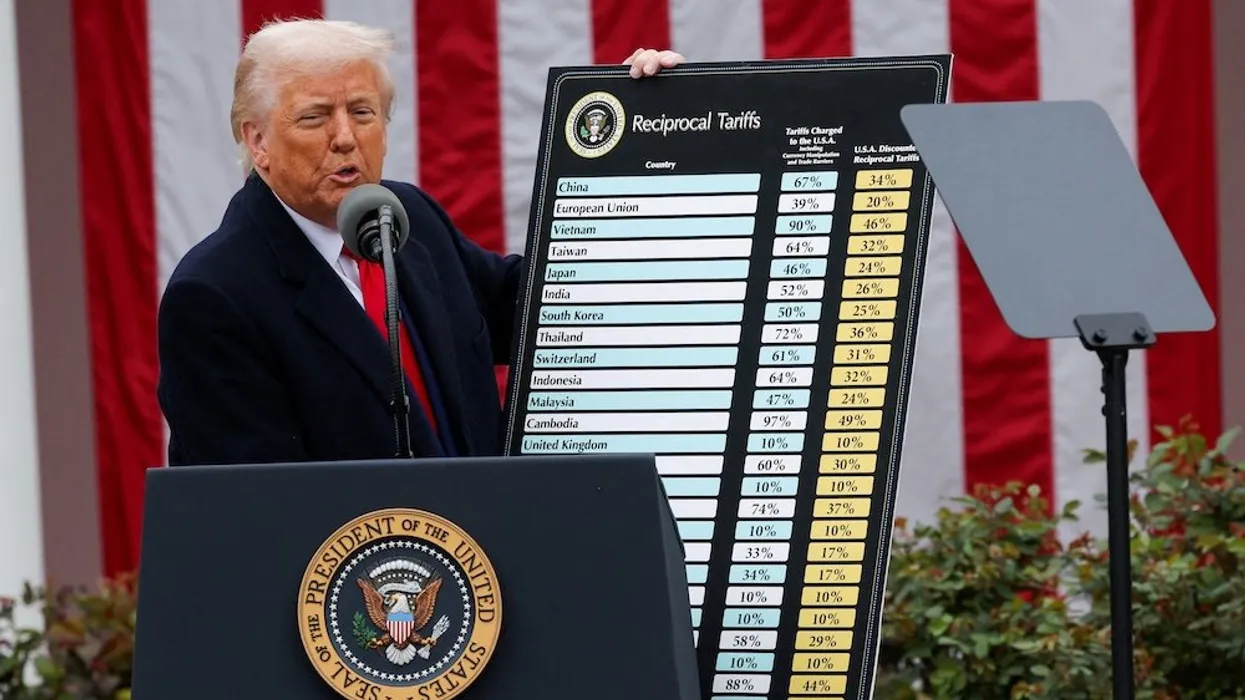
President Donald Trump has leaned on trade wars to pressure America's allies, but a new report indicates that his tariff strategies are falling short.
"As Carney prepared to walk away — a rare example of a foreign leader telling the president 'enough' — Trump was retreating on another trade front," The Washington Post's David J. Lynch reported Sunday. "On Friday, after insisting for more than a year that tariffs do not affect consumer prices, he lifted tariffs on beef imports, saying the move would lead to lower grocery prices."
Lynch added, "The two developments, coupled with legal challenges to Trump's tariffs, leave the president's signature economic policy in a state of flux."
A "big setback" for trade policy
Wendy Cutler, a former U.S. trade negotiator who now serves as senior vice president at the Asia Society Policy Institute, said, "It's a big setback for Trump's trade policy. We're at a juncture where other countries may be very closely watching how this plays out as they also are becoming increasingly frustrated with the demands the U.S. is placing on them in these largely one-sided trade agreements."
Cutler also told Lynch that 10 "reciprocal trade agreements" have been finalized with nations ranging from the United Kingdom and Japan to Malaysia. Hearing of the concessions that the U.S. offered Canada — including reductions in tariffs on industrial metals — some trading partners may demand revisions to their own deals, Cutler said, according to Lynch.
Friction inside the White House
According to Lynch, at a White House meeting, White House trade adviser Peter Navarro and Commerce Secretary Howard Lutnick — whose department administers the national security tariffs — clashed with U.S. Trade Representative Jamieson Greer. Navarro and Lutnick were representing industry views that the higher aluminum tariffs were needed to encourage domestic manufacturing, Lynch reported.
"Navarro and Lutnick were both yelling at Greer, saying: 'What are you doing? This is stupid. You know, we're not giving these things away,'" one industry representative told Lynch, speaking on the condition of anonymity to describe the confidential talks.
Late in the negotiations, the U.S. sought to exclude from tariff reductions heavy trucks produced in Ontario, such as the Ford F-350 and F-450 and the GM Silverado. Over time, that would have made it "more uneconomic" for the automakers to keep making the vehicles in Canada, Canadian Prime Minister Mark Carney said. The administration also sought to restrict Canada's right to sign trade deals with other countries, a key part of Carney's strategy to reduce his country's dependence on its increasingly unreliable southern neighbor.
Lynch pointed out that "Trump's undiplomatic style — including saying that Canada should surrender its sovereignty to become the 51st U.S. state — made it harder politically for the Canadian leader to accept a deal. Public opinion in Canada has turned fiercely anti-American."
Manufacturing jobs and expert warnings
Despite Trump's promises that his tariffs would stimulate America's manufacturing industry, the president's own Labor Department has reported that the United States lost 75,000 manufacturing jobs since the start of his second term. The mixed signals from Washington add to the uncertainty that importers, exporters and manufacturers say can complicate planning, even as the White House continues to frame tariffs as a tool to protect domestic industry.
"It's about uncertainty," Dr. Robert J. Shapiro, a former economic adviser to Presidents Bill Clinton and Barack Obama, told AlterNet in July. "Every investment is based on an assessment of the likely future demand for whatever you're investing in, and how much it's going to cost to produce it. So there are assumptions about labor costs, material costs and other input costs — and again, about demand. If you have a set of arrangements that give you some confidence about the price of your inputs coming from Mexico or Canada, or about demand for goods in Canada — and don't forget, we have virtually no trade deficit with Canada; we have enormous trade, and it goes in both directions — so it's certainly right, and it's not just about investments based on these probabilities that the trade agreement can help reduce uncertainty about."
Shapiro added, "It's also about how much you're going to produce today, apart from investment, because you've got thousands of companies selling goods or services into Canada. And so there's uncertainty about whether this will lead to more conflict with Canada, which would hurt Canadian demand for US goods, or whether Canada will impose a new tariff in retaliation for ours that makes my goods less competitive there. Of course it's bad — it's bad for American workers, it's bad for American investment."
Ed Gresser, a tariff expert at the Progressive Policy Institute, told AlterNet that Trump is achieving minor goals that do not work toward bigger economic resolutions.
"They're hoping to get small, individual policy achievements at the expense of a larger-scale increase in costs and loss of stability and predictability," Gresser told AlterNet in July.

