Legal Expert Warns Trump Administration's Supreme Court Motion Could Trigger 'October Ambush' on Mail-In Voting
Key Takeaways
- •The Trump administration filed an emergency motion on Monday asking the Supreme Court to lift injunctions blocking a March executive order that would create federal voter rolls.
- •The executive order would direct Homeland Security to compile state-by-state voter eligibility lists and instruct the Postal Service to refuse delivering mail-in ballots to anyone absent from the federal list.
- •A federal judge blocked the order in June and an appellate court upheld that injunction in July before the administration escalated the case to the Supreme Court.
- •Former U.S. Attorney Harry Litman cautioned that lifting the injunction could disenfranchise millions of eligible voters, with disproportionate effects in states that rely heavily on mail-in voting.
- •The motion will be processed through the Supreme Court's emergency docket, which enables rapid decisions with limited briefing and no full oral argument.
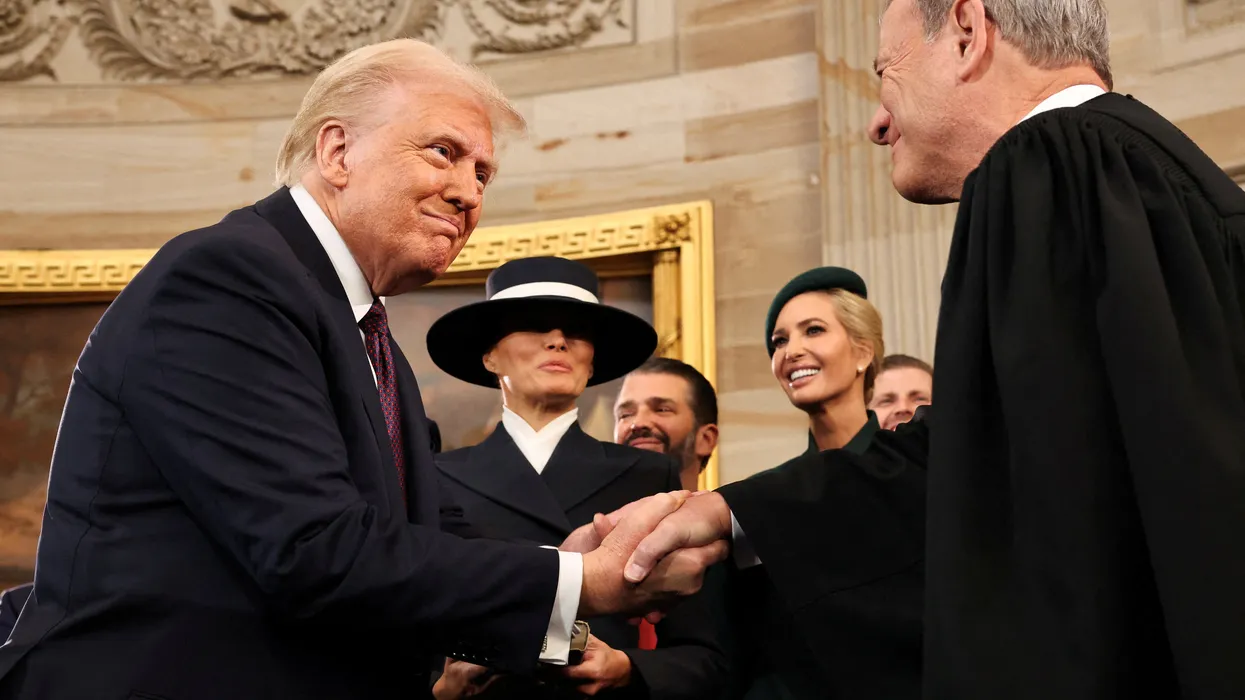
A legal expert is sounding the alarm over an emergency motion filed by the Trump administration at the U.S. Supreme Court, warning that it could become an "October ambush" that disrupts mail-in voting ahead of the November midterm elections.
Former U.S. Attorney Harry Litman, writing in a Friday piece on Substack, said he sees the "elements of a potential perfect storm" that could result in President Donald Trump effectively blocking mail-in voting before the midterms.
The concerns center on a Trump executive order signed in late March. The order would create federal voter rolls by directing the Department of Homeland Security to compile state-by-state lists of citizens deemed eligible to vote. It would also instruct the U.S. Postal Service to refuse to deliver mail-in ballots to any voter who does not appear on the federal list, according to Litman.
Under the U.S. Constitution, states have historically administered their own elections and maintained their own voter registration systems. Litman emphasized this point, noting that "there never has been a federal citizenship roster, much less one assembled and policed by the executive branch." The division of authority over elections has been the subject of repeated legal disputes over the years, but no modern administration has attempted to unilaterally impose a federal voter registration system enforced through mail delivery.
The executive order was blocked by a federal judge's injunction in June. That injunction was subsequently upheld by an appellate court in July. On Monday, however, the Trump administration filed an emergency motion asking the Supreme Court to intervene and lift the lower court's order.
"It would be an October ambush, if not quite an October surprise," Litman wrote. "Many commentators have explained why such a maneuver — which Trump tries to justify on the tired canard of widespread voting by non-citizens — would be revolutionary and cataclysmic."
Litman further warned that if the Supreme Court grants the administration's request and lifts the injunction, "all indications are that the upshot would be the disenfranchisement of millions of eligible voters, and of course, disproportionately Democratic." Mail-in voting has expanded significantly since the 2020 election, and several states now conduct elections primarily or entirely by mail, meaning any disruption to ballot delivery would have an outsized effect in jurisdictions where a majority of voters cast their ballots from home.
The administration's filing is an emergency motion, meaning it is seeking what Litman described as "a provisional decision" to lift the injunction rather than a final ruling on the merits of the executive order. The Supreme Court's emergency docket, sometimes referred to informally as the "shadow docket," allows the justices to act quickly on time-sensitive requests, often with limited briefing and without full oral argument. The Court has increasingly used this docket to resolve election-related disputes under tight deadlines, and rulings can come with little explanatory reasoning from the majority.
The outcome of the motion could have significant implications for the administration of the November elections, particularly in states where large numbers of voters rely on mail-in or absentee ballots. If the Court acts on the motion in October, election officials would have weeks or less to adjust ballot delivery and voter registration procedures already underway.

