What Trump’s Attacks on the Supreme Court Reveal About His Fears
Key Takeaways
- •During his 2024 campaign, Trump suggested that criticizing the Supreme Court should be punishable by heavy fines and additional penalties.
- •Trump publicly attacked the justices a day after a majority rejected his attempt to restrict mail-in voting in the midterm elections.
- •Trump appointed three of the Court's nine justices—Neil Gorsuch, Brett Kavanaugh, and Amy Coney Barrett—who hold lifetime appointments designed to shield them from political pressure.
- •Serwer argues Trump's attacks stem from belief that public pressure can sway the Court, and that he criticizes it to encourage favorable rulings in the future.
- •Alongside recent defeats in the tariffs and birthright-citizenship cases, Trump has secured favorable rulings including Louisiana v. Callais, Mullin v. Doe, and Trump v. United States.
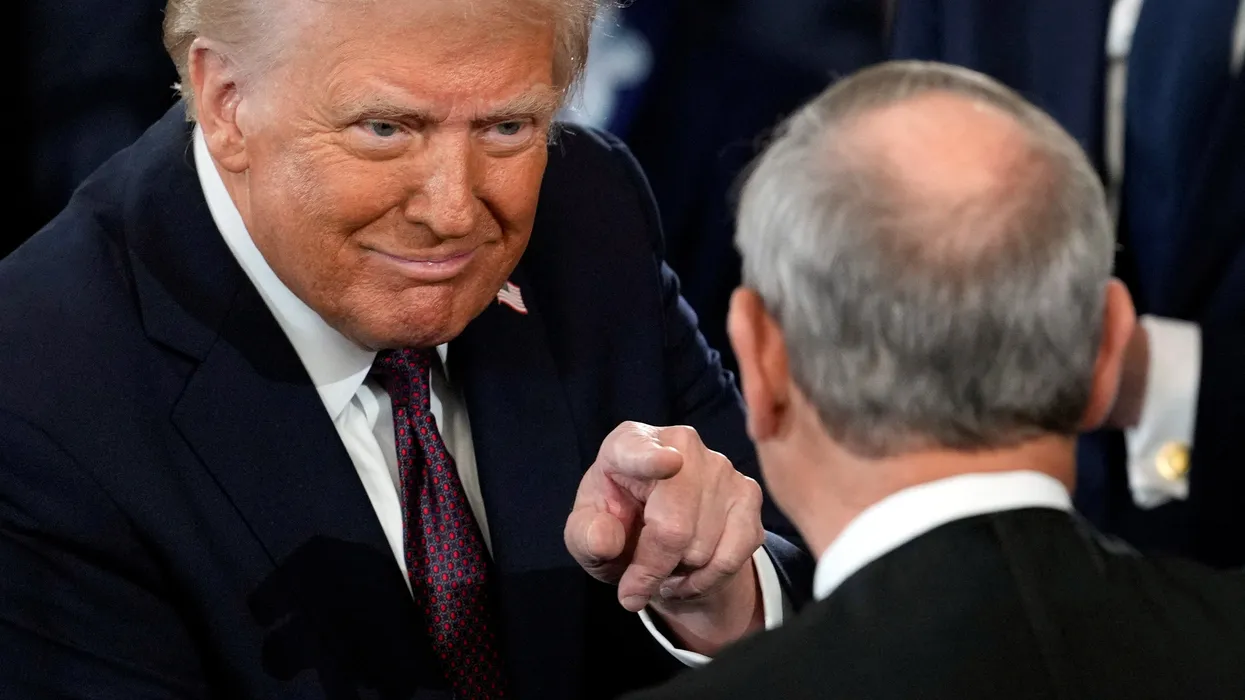
President Donald Trump once proposed making criticism of the Supreme Court illegal—a position that contrasts sharply with his increasingly frequent attacks on the justices. A new analysis in The Atlantic describes the shift as an “illuminating projection” of what Trump truly “fears.”
Writing for the magazine on Wednesday, staff writer and author Adam Serwer cited comments Trump made during his 2024 campaign. Trump accused people who criticized the Court’s rulings of “playing the ref” and besmirching “some of our greatest justices and a lot of great judges.” He suggested that such conduct should be “punishable by very serious fines and beyond that.”
Serwer noted that Trump now takes a very different view of criticism directed at the Court.
“Trump criticizing the Supreme Court, however, is perfectly fine and not illegal at all,” Serwer wrote. “Earlier this month, a day after a majority of the justices rejected Trump’s effort to restrict voting by mail in the midterms, Trump lashed out in a post: ‘These are not the people I interviewed to serve on the United States Supreme Court, they are merely a shell of their original selves.’ Trump accused the justices of being ‘bullied and cajoled by the Radical Left.’”
The complaint carried a particular edge because Trump appointed three of the Court’s nine justices—Neil Gorsuch, Brett Kavanaugh, and Amy Coney Barrett—during his first term. Like all federal judges, they hold lifetime appointments under the Constitution, a structure designed to insulate the judiciary from outside political pressure.
Serwer argued that Trump’s attacks on the Court, which he described as part of a broader pattern involving Trump and the Republican Party, expose what the president is thinking and what he “fears.”
“As is nearly always the case with the president’s accusations, this was an illuminating projection,” Serwer wrote. “Trump fears that public pressure on the Supreme Court can sway the justices and how they rule. So when they don’t side with him, he assumes that’s what happened, and he trashes the Court in the hope that it will side with him the next time.”
Serwer added that Trump views criticism of the Supreme Court much as he views laws generally: “When Trump or one of his allies wants to do something, such as use taxpayer dollars for cultish campaign ads, it’s legal. When his opponents want to do something, it’s illegal.”
He acknowledged that it is widely understood that presidents expect their judicial appointees to rule in their favor more often. Trump, Serwer wrote, has simply made that expectation more explicit. Although “it is a little embarrassing,” Serwer said, Trump is not expressing something Americans do not already “know and understand.”
“Trump has taken a few high-profile losses at the Supreme Court recently—in the tariffs case and in the birthright-citizenship case—but the Court has been more than willing to do his bidding most of the time,” Serwer concluded.
He pointed to the Court’s decisions in Louisiana v. Callais, which he said “eviscerated” the Voting Rights Act; Mullin v. Doe, which he said sanctioned Trump’s “overt racial discrimination toward Haitians”; Trump v. United States, which he described as fabricating a presidential-immunity right that appears nowhere in the Constitution; and its decision giving Trump “unfettered control” over agencies intended to remain independent.
“Considering that record, few could disagree that the justices have ‘rendered some of the most destructive, hurtful, and damaging decisions in our Country’s history,’” Serwer wrote. “Trump’s real complaint is they haven’t done that enough.”
Source: Alternet.

