MAGA Supporter Acknowledges Trump May Be 'Buying Some Votes' With $5,000 Midterm Check Pledge
Key Takeaways
- •A Trump supporter featured in a recent 'The Good Liars' video acknowledged that Trump's conditional $5,000 check promise might amount to buying votes, but stated his support for the president would not change.
- •Trump tied the proposed $5,000 payments to Republicans maintaining control of both the House and Senate in the upcoming midterm elections.
- •An April study authored by Cindy Harmon-Jones of Western Sydney University, published in The Journal of Social and Political Psychology, identified three ways Trump supporters respond to cognitive dissonance.
- •Roughly one-third of survey respondents said they judged Trump on his policies rather than his personal conduct, while a similar share justified controversies by claiming others engage in the same behavior.
- •The most frequent response documented in the study was dismissing unfavorable information as 'fake news' or as part of a conspiracy against Trump.
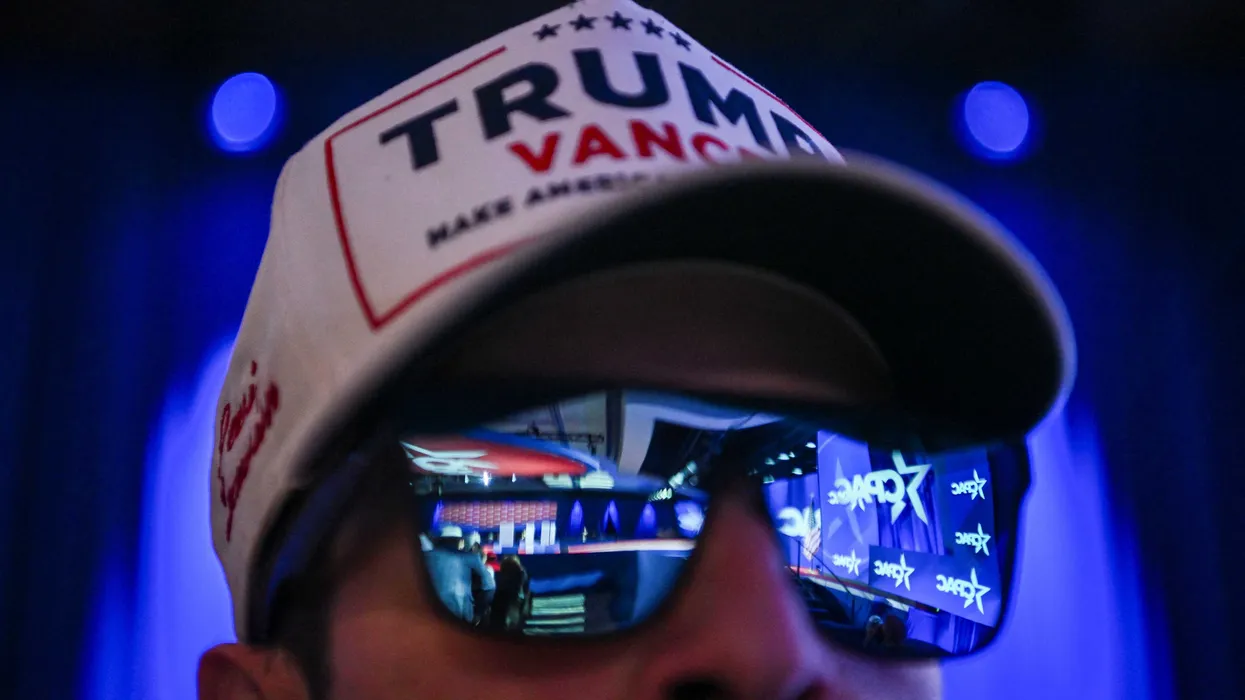
The comedy duo "The Good Liars" has built its reputation not by tricking supporters of President Donald Trump, but by asking them simple questions and letting the answers speak for themselves. In a recent video, the pair captured a subtle shift taking place among some of Trump's most ardent fans.
For audiences outside the political bubble, "The Good Liars" videos have offered an eye-opening look at the realities of MAGA world: justifications for unusual claims and beliefs, including that the government is causing hurricanes and other storms, that every investigation of Trump is a conspiracy, that vaccines inject tracking chips, and that wind turbines cause cancer.
In one recent video, a Trump supporter dressed in a MAGA hat and an "AMERICA"-shirt reacted to Trump's latest promise to deliver $5,000 checks if Republicans maintain power in the House and Senate. Midterm elections determine which party controls both chambers of Congress, and the pledge ties the payments directly to that outcome. The shift is a small one, but it is there.
"How did you feel about him saying everyone gets $5,000 checks, only if the Republicans win the midterms?" Jason Selvig asked.
"Well, sounds like it might be buying some votes," the man said.
"Sounds like he's buying votes?" Selvig asked.
"Yeah."
"Is that something the president should be doing?" Selvig questioned.
"Probably not, but we'll see how it all falls into place," the man replied.
"Does it make you question your support for him?" Selvig then asked.
"Not at all," the man said. "He's still done more for the country than any other president ever has."
"Even if he's buying votes, your words, that would be a big problem in the country. That would be a big issue. That wouldn't affect your support?" Selvig confirmed.
The man maintained his devotion to the president.
The exchange reflects a pattern documented in academic research. In a study published in The Journal of Social and Political Psychology in April, author Cindy Harmon-Jones, a senior lecturer in the School of Psychology at Western Sydney University, examined how people change their thinking to make two conflicting ideas fit together — a tension psychologists describe as cognitive dissonance. She found that Trump supporters had three ways of responding to the resulting "discomfort," with one response far more prominent than the others.
About one-third of those surveyed said they cared about Trump's policies rather than his personal life, including questionable morality, corruption, lying and alleged abuse. Another one-third of respondents relied on the justification that others are criminals doing the same thing, and some agreed with both sentiments. The most common response, however, was to echo Trump's "fake news" claims, alleging that the offending information was not real or was part of a conspiracy against Trump.
That sequence — on-camera concession followed by support grounded in Trump's record of accomplishment — echoes the response of the roughly one-third of respondents who said they judged Trump on his policies rather than his personal life.
View on Threads

