Trump’s attempt to prove the ‘deep state’ backfired in Global Engagement Center leak
Key Takeaways
- •Former GEC officials said the released documents do not prove the center was used for domestic censorship or sabotage against Trump.
- •The Global Engagement Center spent years tracking foreign influence operations from countries including Russia, China and Iran.
- •The State Department’s undersecretary for public diplomacy, Sarah Rogers, shared the GEC-related files with Jennica Pounds and later published them herself.
- •One of the documents was a 2022 GEC report on gendered disinformation, a topic that has become politically contentious.
- •The State Department is reportedly continuing some anti-propaganda work elsewhere, including an $11 million plan to pay influencers in south-east Asia to counter Chinese propaganda.
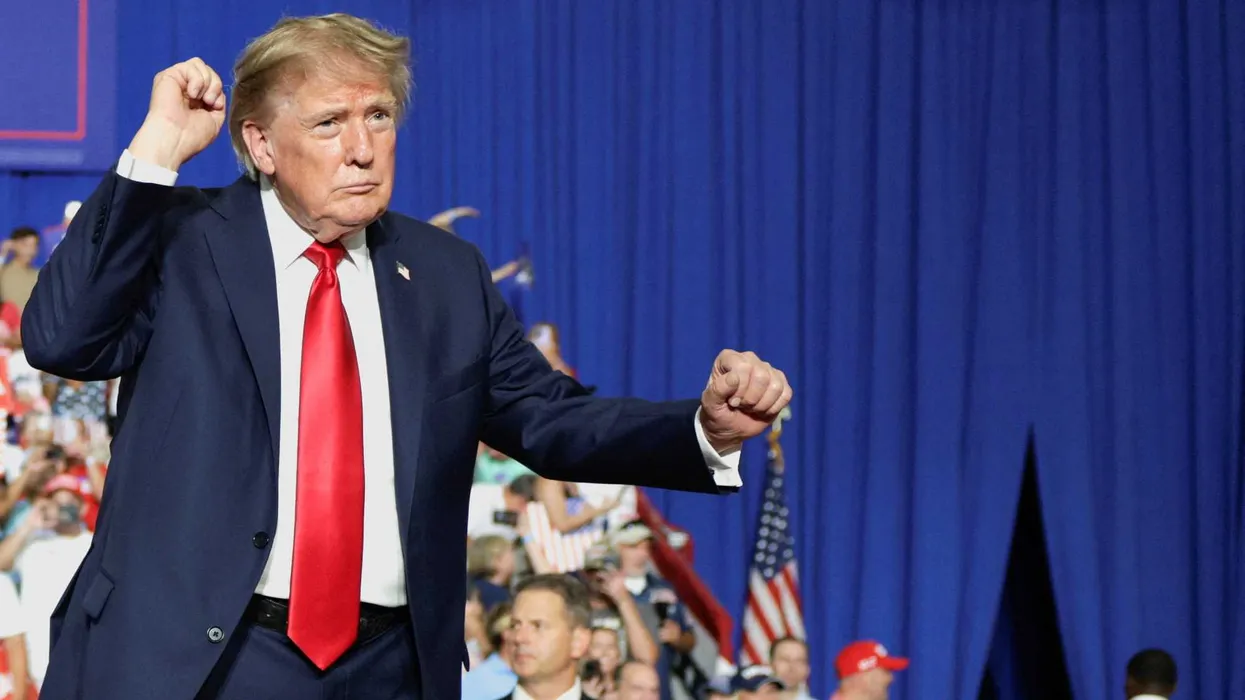
President Donald Trump has repeatedly argued that a so-called "deep state" has stymied him, including by claiming it was behind multiple investigations into his alleged illegality and by arguing that it undermined his foreign policy agenda.
A botched leak of purportedly explosive government files to a prominent conservative online personality was meant to provide proof for what the Trump administration and its allies have long alleged: that a little-known office inside the US State Department, created to combat foreign propaganda, had secretly become a tool for domestic censorship, reported The Guardian’s Joseph Gedeon on Sunday.
Two former high-ranking officials at the Global Engagement Center (GEC), a target of Republican ire that lost its funding in 2024 and was disbanded after Donald Trump’s return to office in 2025, said the documents show no such thing.
Instead, they argued, the files reflect a prolonged and bitter political fight over an office that spent nearly a decade tracking and countering foreign influence operations, particularly from Russia, China and Iran. That context matters because the GEC was built around a narrow national-security mission, but it became an increasingly visible target as debates over online censorship, government speech and election interference intensified in Washington. The State Department is now resuming some of that work elsewhere in its operations, including plans — laid out in a proposal reviewed by The Guardian — to pay social media influencers across south-east Asia as part of an $11 million campaign to counter Chinese propaganda.
Gedeon reported that the State Department’s undersecretary for public diplomacy, Sarah Rogers, provided the GEC-related files to a journalist known as "DataRepublican," Jennica Pounds, who later declined to publish them because she believed they were shared in an attempt to "entrap" her.
Rogers denied that claim and then published the files herself, saying officials inside the center "betrayed their stated mission," Gedeon wrote. The files included a 2022 GEC report on “gendered disinformation,” a subject that has become a flashpoint in the culture wars, underscoring how material tied to foreign influence work can quickly become part of broader domestic political arguments.
Throughout the report, Gedeon said the Trump administration failed to demonstrate that it had ever been sabotaged by the GEC. Instead, as its ability to monitor the rest of the world has deteriorated under Trump’s watch, the administration has revived many of the functions originally carried out by the GEC, although it has declined to describe the effort that way directly.
"Are they trying to re-create it? Probably," Carrie Gaux, the center’s former acting deputy coordinator, told The Guardian. "But now they’re spending a lot more tax dollars doing that, trying to get contractors to do some of the stuff that we were doing."
Gaux also told Gedeon, "The US has lost their seat at the table to do that, and that’s unfortunate. I hope we can gain it back, but we’re losing trust too, and that’s significant."
Ironically, the Trump administration’s flawed fight against the GEC was highlighted by the botched rollout of the documents themselves.
In Pounds’s account, an unnamed official — later identified as Sarah B. Rogers, the undersecretary for public diplomacy at the State Department — had offered to leak government documents about Cuba for publication as an "exclusive," wrote The Bulwark’s Will Sommer at the time. Sommer said Pounds initially embraced the offer, but markings on the documents caused her to fear she was being set up. She worried that publishing them would expose her to criminal prosecution, and she took the matter directly to her audience as a case of supposed entrapment.
Sommer added that the idea that Trump administration officials would conspire to send Pounds to prison was "bizarre on its face." He noted that Pounds is an administration favorite, pointing to her posts claiming she had data supporting Elon Musk’s cuts to USAID and other government agencies, which made her an unexpected star during the DOGE era even though, Sommer wrote, she did not appear to have a solid grasp of how government spending actually worked.
