Trump Orders Warning Signs Outside Smithsonian American History Museum Over Exhibits
Key Takeaways
- •Trump ordered signage and temporary exhibits outside the Smithsonian’s National Museum of American History to challenge its presentation of U.S. history.
- •The executive order cites the museum’s alleged failure to properly honor the 56 signers of the Declaration of Independence during the country’s 250th anniversary year.
- •The New York Times reported that a recent 162-page report accused museum director Anthea M. Hartig of radical activist ideology.
- •Critics on X said the order was part of an effort to reshape or rewrite the historical record.
- •Historian Samuel J. Redman told The New York Times he could not recall a similar case of top federal officials directly intervening in museum exhibits.
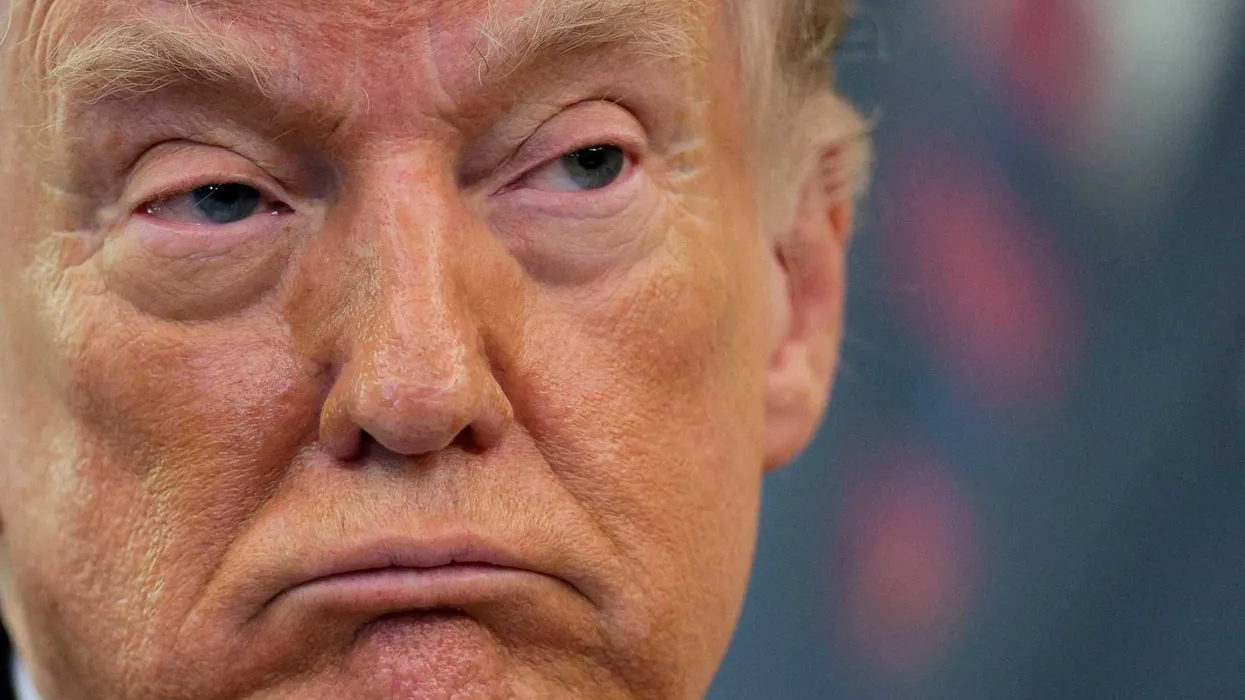
President Donald Trump on Friday ordered warning signs and temporary exhibits to be installed outside the Smithsonian’s National Museum of American History, saying they should alert visitors that the museum does not, in his view, accurately present American history, according to The New York Times.
The executive order marks “an escalation of the president’s dispute with the Smithsonian and its history museum, which was the subject of a recent 162-page report,” the Times reported. The newspaper said the report accused the museum’s director, Anthea M. Hartig, of “radical activist ideology” and accused the museum of undermining “faith in American institutions.”
Trump’s order said the signage should “notify visitors that the museum exhibits should be renovated … and direct visitors to locations and resources for accurate information regarding America’s history.”
“Because the museum has failed to appropriately honor the 56 signers of the Declaration of Independence during this 250th anniversary year of the founding of our country,” the order states, government agencies “shall install temporary exhibits or signage on N.P.S.-maintained sidewalks, walkways, and land used by the public that corrects inaccurate information presented in the museum.”
The directive is significant because it moves the dispute from criticism of museum leadership and exhibits into a government-ordered public intervention at the museum site itself. The language of the order also ties the conflict to the country’s 250th anniversary commemorations, a moment when federal institutions are expected to play a visible role in presenting national history to visitors.
The order drew immediate criticism on social media from users who argued that Trump was continuing earlier efforts to reshape the presentation of U.S. history, including records of its more painful chapters.
“Snowflake behavior,” one commenter wrote on X, according to the source article. https://x.com/ashley3one3/status/2080774320444346832
MS NOW producer Kyle Griffin also criticized the order on X, writing: “Trump just ordered warning signs and exhibits to be installed outside the Smithsonian's National Museum of American History to alert the public that the museum does not, in his view, accurately reflect American history. For the record: It does.” https://x.com/kylegriffin1/status/2080771258602426811
Another critic framed the move as an attempt to change the historical record. “Before you can rewrite history, you have to destroy it,” the X user wrote. https://x.com/JerradChristian/status/2080772979718308071
A separate X user pointed to what they described as a contradiction among Trump’s supporters. “The people demanding a historically accurate Greek myth are perfectly fine with Trump doing this,” the user wrote. https://x.com/covie_93/status/2080782161523638453
Hartig recently defended the museum’s work, saying it was presenting complex history, while the Times noted that historians have criticized Trump’s efforts to overhaul the Smithsonian as ideologically driven.
“I cannot recall a single instance where exhibits have been directly wrestled with by the upper echelons of the federal government,” Samuel J. Redman, a history professor at the University of Massachusetts Amherst, told the Times.

