Trump Warns Senate Republicans That Filibuster Repeal Fight Could Determine GOP's Future
Key Takeaways
- •President Trump is pressing Senate Republicans to abolish the legislative filibuster to enable passage of the SAVE America Act, which would mandate documentary proof of citizenship when registering to vote in federal elections.
- •Trump cited Michigan Democratic Senate nominee Abdul El-Sayed's advocacy for ending the filibuster as evidence that eliminating it has become a Democratic priority.
- •The filibuster requires 60 votes to override and has already been narrowed for executive, judicial, and Supreme Court nominations over the past decade, leaving the legislative filibuster as the last major procedural check requiring a supermajority.
- •During the Biden administration, Democratic senators Joe Manchin and Kyrsten Sinema defended the filibuster, but the dynamic has now reversed with some Republican senators protecting the same tool against Trump's wishes.
- •Trump previously called for eliminating the legislative filibuster during his first term when Republicans controlled Congress, maintaining a consistent position that some Senate Republicans opposed then and continue to oppose now.
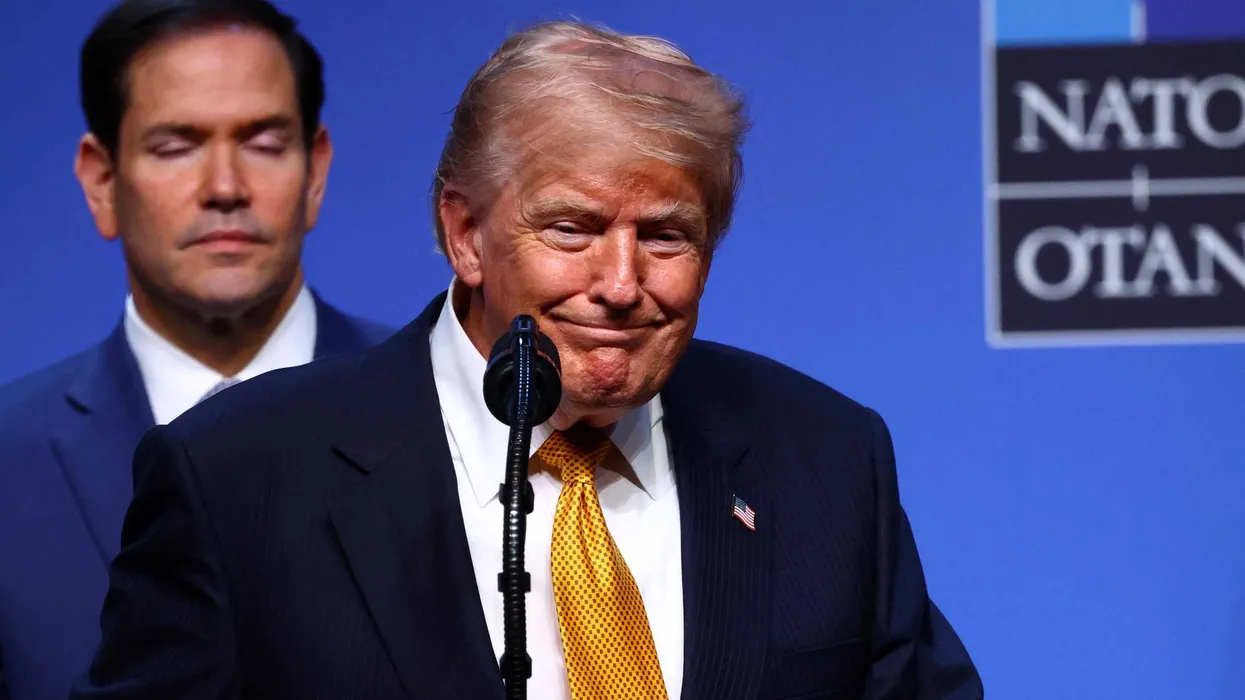
President Donald Trump has intensified his public pressure campaign against Senate Republicans, urging them to repeal the filibuster in order to clear a path for the SAVE America Act — legislation that would require documentary proof of U.S. citizenship when registering to vote in federal elections, a provision critics argue would disproportionately affect Democratic-leaning demographics who may lack ready access to birth certificates or passports.
In his latest push, Trump pointed to the recent Michigan Democratic Senate primary, in which Dr. Abdul El-Sayed secured the party's nomination, as evidence that eliminating the filibuster has become a central Democratic priority.
"For our Great Republican Senators, friends of mine 'all,' please be advised that the Communist Dumocrat Senate Candidate from Michigan, Abdulrahman Mohamed El-Sayed, is touting, as perhaps his single most important point, the Termination of the Filibuster," Trump wrote on his Truth Social platform (source post). "I watched yesterday, and he's gone Termination CRAZY. If he succeeds, the Dumocrats will gain 4 Senators, 8 Congressmen, many Electoral and Popular Votes, a stacked Supreme Court with 23 Justices, and I will be, sadly, despite the great job we are doing, the last Republican President! President DONALD J. TRUMP"
The filibuster is a long-standing Senate procedural tool that allows any single senator or party bloc to indefinitely delay legislation on the chamber floor. Overriding a filibuster on any given vote requires the support of 60 senators. While a simple majority could vote to permanently eliminate the tactic, senators across both parties have historically preserved it as a safeguard for minority power within the chamber. The tactic has already been narrowed in recent years, however: Senate Democrats eliminated the filibuster for most executive and judicial nominations in 2013, and Republicans extended that change to Supreme Court nominations in 2017. The legislative filibuster remains the last major procedural check requiring a 60-vote supermajority.
During President Joe Biden's administration, two Democratic senators — Joe Manchin of West Virginia and Kyrsten Sinema of Arizona — notably broke with their party to defend the filibuster, even as their stance drew criticism for enabling Republican obstruction of Biden's legislative agenda. Both have since departed the Democratic Party: Manchin became an independent and Sinema continued as an independent, narrowing the Democratic caucus's margins and intensifying debate over procedural leverage.
The dynamic has now reversed. A group of Republican senators is similarly defending the filibuster, despite Democrats having pledged to use the same tool to block the SAVE America Act. Notably, Trump himself called for eliminating the legislative filibuster during his first term when Republicans controlled both chambers, arguing it was needed to advance his agenda — a position consistent with his current stance but one that some Senate Republicans opposed then, as now.
This internal Republican divide reflects a broader conflict over the future of Senate norms and the balance of power between the legislative and executive branches. Senate institutionalists contend that maintaining the 60-vote threshold guards against drastic policy reversals each time control of the chamber changes hands. Trump and his closest allies, by contrast, argue the rule serves only to obstruct the president's core legislative priorities.
The friction also complicates Republican leadership contests in the post-Mitch McConnell era, as candidates must navigate a choice between upholding traditional Senate protections and demonstrating loyalty to the executive branch. What began as a dispute over a single piece of legislation has effectively transformed the filibuster from a procedural mechanism into an ideological loyalty test within the Republican Party — one that could shape not only the fate of the SAVE America Act but the chamber's operating rules for years to come.

