Former DHS Official Miles Taylor Warns Trump Is Building Legal Pretext to Seize Ballots in 2026 Midterms
Key Takeaways
- •Miles Taylor, who served as deputy chief of staff at DHS during Trump's first term, alleges the administration is preparing to use federal law enforcement to seize ballots and challenge unfavorable midterm outcomes.
- •The FBI raided Fulton County, Georgia's election offices on January 28, removing 656 boxes including the county's only copy of its 2020 ballots, based largely on previously debunked fraud claims.
- •The administration has sued 30 states and the District of Columbia after they refused to surrender voter lists, losing every case so far, which Taylor argues was never the intended objective.
- •Taylor contends the strategy aims to create enough uncertainty between Election Day in November 2026 and the seating of the new Congress in January 2027 to justify delaying the transfer of power.
- •The scenario Taylor describes would test the Electoral Count Reform Act of 2022, which clarified the vice president's ministerial role in certification and raised the threshold for congressional objections.
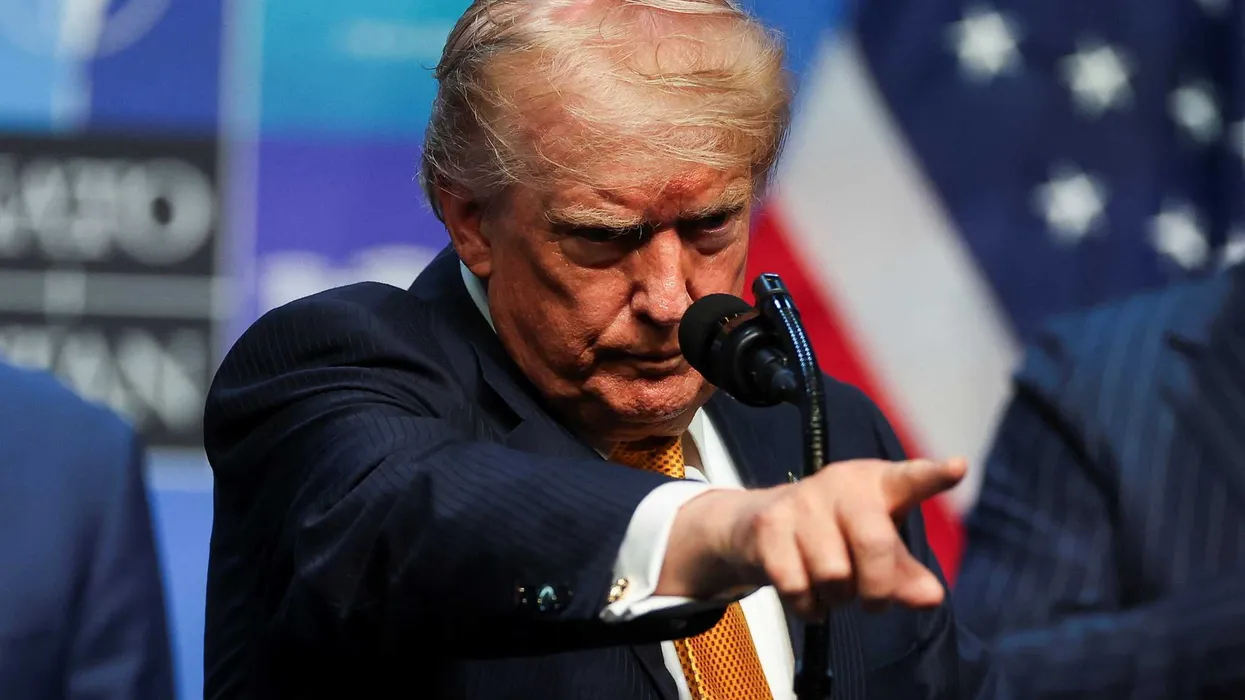
President Donald Trump is "laying the groundwork to seize ballots" and challenge election outcomes nationwide ahead of what could be a major midterm defeat, according to Miles Taylor, who served as deputy chief of staff at the Department of Homeland Security during Trump's first term. Taylor, who later revealed himself as the author of the 2018 New York Times op-ed by "Anonymous" and a subsequent book critical of the Trump administration, has continued to warn about what he sees as escalating threats to democratic norms.
On Tuesday, Taylor outlined "how Trump might try to send the FBI to seize ballots & steal the midterms," cautioning that although the strategy will "likely lose in court, losing is actually part of the plan." Under the U.S. constitutional framework, states—not the federal government—administer elections, and the FBI's direct seizure of ballots from local election offices would represent an unprecedented federal intervention in that process.
Taylor pointed to what he described as a rehearsal for future election interventions. "Earlier this year, the president's agents did an obvious dry run for how to steal future elections," he said. "On January 28, the FBI raided the election hub in one of the most contested 2020 battlegrounds — Fulton County, Georgia, where Trump was previously indicted for pressuring officials to 'find 11,780 votes' that didn't exist. The president himself said the raid would help him find out who 'really won' the 2020 election, despite the fact that those ballots had been counted three times, each time confirming that Trump lost."
According to Taylor, the strategy proved effective. "After Trump's DOJ sued Fulton County for its 2020 records and failed, it decided just to go seize them," he said. "The FBI quietly went to a magistrate judge earlier this year and sought a warrant to raid the county's election offices. Their filing rested largely on fraud claims debunked years ago and identified no concrete evidence of a crime. But the judge signed it anyway. Then FBI agents barged in and carted off 656 boxes, including the county's only copy of its 2020 ballots. And Georgia wasn't a one-off: the administration has gone after 2020 ballots in Arizona's biggest battleground county, too."
Taylor argues that the administration is laying the legal foundation to repeat this approach on a wider scale. During his second term, Trump has demanded that states surrender voter lists ostensibly to identify registered noncitizens. "But the databases are notoriously faulty," Taylor cautioned, "and there is limited oversight over who might get purged, raising fears that legitimate U.S. citizens in key battlegrounds would be dropped from the voter rolls."
While several Republican-led states have complied with the demand, 30 states and the District of Columbia refused and were subsequently sued by the administration. Trump has lost every one of those cases so far, but Taylor contends that courtroom victories were never the objective.
"They're creating a pretext," Taylor wrote. "In my opinion, the Trump administration is preparing the rationale for its future warrant affidavits to go seize ballots in these 'non-compliant' states. This will be their logic: We asked X state to let us verify its rolls to weed out fraud; it refused; the courts blocked us; therefore, no one can say whether noncitizens decided this election. So to investigate any fraud claims, we need to go get the ballots themselves."
Taylor warned of the potential consequences: "The result would be chaos-by-design. Picture FBI agents carting boxes out of election offices in two or three states with razor-thin margins, races that decide control of the House and Senate. While the ballots sit in federal custody, certification of a victor will be difficult if not impossible. In the meantime, voters will rightfully fret that Trump's agents are meddling with the results. MAGA candidates on the losing end will refuse to concede, citing the 'ongoing investigations.' And the White House will make sure the fog stays thick enough to hand GOP leaders in Congress a pretext to delay seating new members, which will be the final step in preventing a peaceful transfer of power if Democrats win either chamber."
The scenario Taylor describes would test post-2020 reforms, including the Electoral Count Reform Act of 2022, which clarified that the vice president's role in certifying results is ministerial and raised the threshold for congressional objections to electoral votes—changes designed to prevent precisely the kind of ambiguity in certification that Taylor's scenario envisions.
Although such actions would ultimately face legal challenges, Taylor noted that once ballots are in federal custody, retrieving them could require months of litigation. "With the ballots in the custody of the feds, they'll have the upper hand to claim possible 'fraud' because they'll control the evidence," he said.
"In the end, Trump's team doesn't care about losing in court," Taylor concluded. "All they care about is fighting the battle in the court of public opinion for two months — between the election on November 3, 2026, and January 3, 2027, when the next Congress is supposed to be seated. That's long enough to diminish confidence in the results and to create enough justification for Speaker Mike Johnson to secure support from his caucus not to hand over power."
Taylor detailed his analysis in a post on X (https://x.com/MilesTaylorUSA/status/2087169676774199463?s=20).
