Trump's Political Decline Accelerates Amid Middle East War, Waning Global and Domestic Support
Key Takeaways
- •The Trump administration's six-month Middle East war has accelerated his political losses rather than consolidating support, with no allied nation willing to participate militarily on his behalf.
- •Prediction markets place the Senate confirmation odds for Trump's Attorney General nominee Todd Blanche at approximately 50%, despite a Republican majority, with Senator Mitch McConnell expected to vote against.
- •Trump's attempt to modify a Saudi nuclear technology deal via tweet was rejected by Saudi Arabia within 24 hours, which stated that written agreements contain no provisions regarding Israel.
- •Polling analyst Nate Silver's bulletin shows Trump's approval ratings on a steady downward decline ahead of midterm elections, when the president's party historically loses ground.
- •Wall Street firms have largely stopped reacting to Trump's Truth Social posts, with many declining his offers of paid early access to his announcements due to diminished market-moving influence.
Every administration eventually faces the gradual erosion of presidential power as the political calendar turns and attention shifts toward the next election cycle. Second-term presidents have historically seen their influence wane as agenda fatigue sets in and would-be successors within their own party begin to position themselves, a pattern observed across administrations from Reagan to Obama. With Donald Trump's second term, however, that process is unfolding with unusual speed, according to an analysis by Rawstory columnist Jason Miciak.
The signs of decline are visible across multiple fronts — internationally, domestically, and even within Trump's own party — driven largely by the ongoing Middle East conflict rather than the numerous scandals that have marked his presidency.
The Middle East War as Catalyst
The Trump administration is now six months into a war in the Middle East, a conflict that Miciak argues was started, at least in part, to redirect attention from headlines related to the Jeffrey Epstein prosecution. Rather than unifying support, the war has accelerated Trump's political losses.
International allies have been among the first to recognize Trump's diminished standing. Whereas French President Emmanuel Macron previously attempted to engage or influence Trump directly, such efforts appear to have ceased. Trump's combative posture toward NATO and G7 allies — including his dismissive treatment of Canadian Prime Minister Justin Trudeau and his approach toward Greenland — has eroded cooperation. In the current Middle East conflict, not a single allied nation has been willing to participate militarily on Trump's behalf, a striking contrast to the broad coalitions assembled in prior U.S.-led Middle East operations.
The Saudi Nuclear Deal Controversy
A particularly contentious element involves Trump's deal with Saudi Arabia regarding nuclear technology in the Middle East. The arrangement is described as so conflicted that Trump attempted to modify it via tweet, asserting that the deal requires Saudi Arabia to recognize Israel. Within 24 hours, Saudi Arabia responded that written agreements override tweets and that the deal contains no provisions regarding Israel.
Saudi Arabia, Miciak notes, belongs to a small group of nations that effectively hold leverage over the American president due to the conflict of interest inherent in the arrangement.
The broader realignment has placed the United States in closer relationships with Russia, Saudi Arabia, Israel, and China than with Canada, the United Kingdom, and South Korea, a reversal of the post-World War II alliance architecture that has anchored U.S. global influence for decades.
Domestic Fractures Within the GOP
Within the United States, Trump faces growing resistance from his own base. Some MAGA supporters view Benjamin Netanyahu's influence over Trump's decisions with alarm, particularly given the rise of anti-Semitism within GOP ranks. The perception that Israel receives everything it wants has become a point of internal Republican tension.
Trump has struggled to maintain focus on the war effort, attempting to manage the conflict through social media posts. Every passing day on the calendar reinforces the reality that this strategy is not working.
Polling Decline
Poll after poll shows supporters pulling away by one or two percentage points at a time. As noted by polling analyst Nate Silver's bulletin (source), Trump's approval ratings reflect a steady downward trajectory. While some on the political left have dismissed analyses of Trump's waning power, the gradual erosion is significant — particularly during an active military conflict and ahead of midterm elections, when the president's party historically loses ground regardless of broader conditions. The Atlantic has also examined the intersection of the Iran conflict and midterm politics (source).
Meanwhile, Republicans in Congress have focused on hearings involving Dr. Anthony Fauci rather than addressing the war or the cost of living, a dynamic that Miciak argues contributes to further erosion of support from the center to the right.
The Todd Blanche Nomination Battle
A critical test of Trump's remaining power is the Senate confirmation of Todd Blanche, Trump's handpicked choice for Attorney General. Even with a Republican majority, the prediction market Kalshi places Blanche's odds of confirmation at approximately 50%. The Senate has rejected attorney general nominees before — John Tower's defense secretary nomination failed in 1989 — and a failed nomination would leave the Justice Department without Trump's preferred leadership. Opposition is coming in part from senators Trump has previously primaried, who are now in a position to retaliate.
Senator Mitch McConnell is expected to vote against the nomination. Some GOP senators are reportedly uneasy about what they perceive as a slush fund and get-out-of-jail-free card associated with the appointment, similar to their concerns about the so-called "Save Act," where Republicans have chosen to preserve the filibuster.
Trump needs Blanche confirmed to maintain control over federal investigators and law enforcement. If the nomination fails, it would represent what Miciak calls "the ultimate sign that Trump is losing it," potentially redirecting his outward military focus inward against domestic opponents.
Wall Street Loses Interest
Perhaps the most concrete indicator of Trump's diminished influence is Wall Street's changing behavior. Financial firms once traded heavily on Trump's social media announcements about the Iran war, but have largely stopped reacting to those posts. According to the Los Angeles Times (source), Trump has attempted to monetize early access to his Truth Social posts by offering brokerage firms a "first shot" for upfront payment. Some firms have paid, viewing it as a pragmatic way to navigate the federal government, but many have declined, no longer believing his statements carry sufficient market-moving power.
This development follows a rocky history between Trump and international leaders, including his well-documented tensions with Macron at the G7 summit (source), (archived).
Voter Unity Against the "Epstein Class"
Outside the White House, American voters across the political spectrum are expressing surprising unity in their frustration with billionaires — including Jeff Bezos, Elon Musk, and Mark Zuckerberg — who are viewed by some as more disliked than Trump himself. Voters are lashing out against data centers, wars, and perceived corruption, and some Republicans report that their constituents are willing to see Trump weakened if it means addressing these grievances.
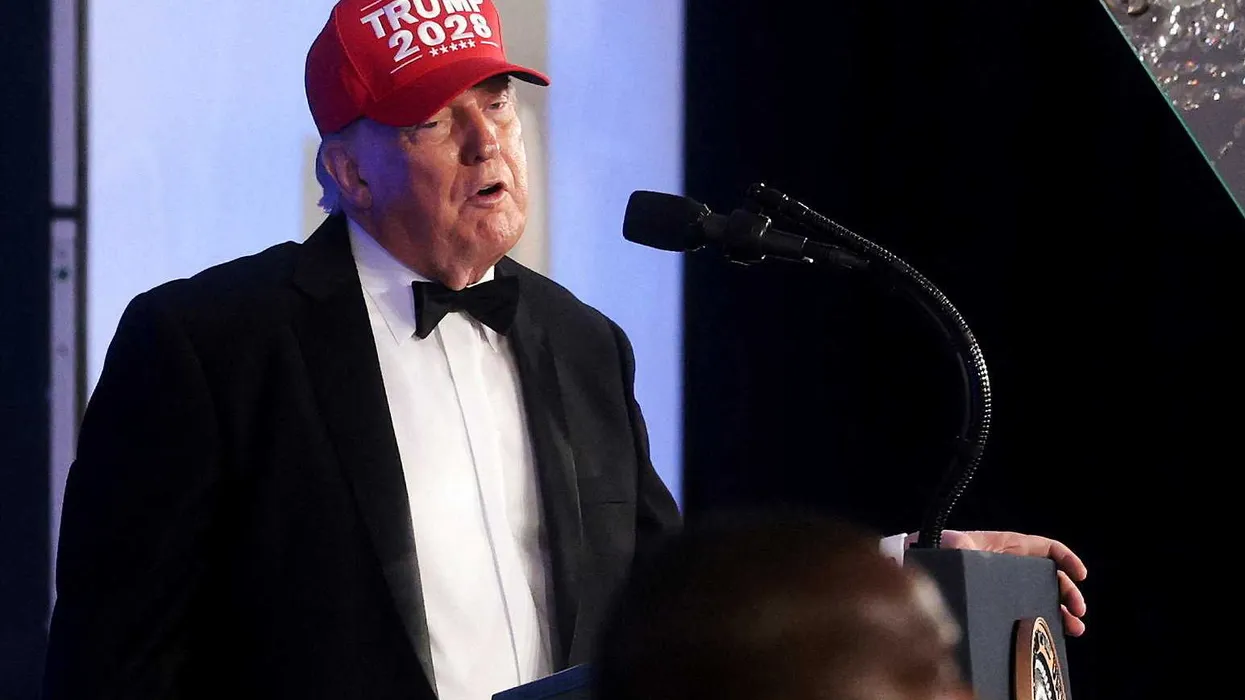
Trump has joked about a potential "Trump 2028" third term, to which voters have responded with "Obama, 2028." While the Constitution has never deterred Trump before, the columnist notes that Trump's age — he is not 60 — works against any such ambitions. The 22nd Amendment explicitly limits presidents to two terms, a barrier that would require a constitutional amendment to overturn.
The Danger of Desperation
Miciak warns that Trump retains immense presidential power and will use it as long as he occupies the office. The pattern with Trump, he argues, is to start conflicts — potentially wars — fueled by personal fury, particularly as he faces congressional hearings, investigations, and possible impeachment votes. Trump is more likely to escalate military action against Iran, provided sufficient munitions remain available. The author also raises the concern that Trump could redirect his energies against domestic opponents.
Every corrupt deal, every sign of inattention, every turn of the calendar contributes to the erosion of the clear MAGA support Trump enjoyed a year ago. The author characterizes the current moment as one in which the public is collectively holding its breath — watching and waiting — while the political calendar continues to advance.
Jason Miciak is a Rawstory columnist, former editor of Occupy Democrats, author, political consultant, attorney, and single parent. He can be followed on Bluesky and reached at jasonmiciak@gmail.com.

