Trump Orders 'Substantial Reduction' in South Korea Joint Military Exercises, Drawing 'Playing With Fire' Warning
Key Takeaways
- •Trump directed the Pentagon to substantially reduce joint military exercises with South Korea before the next round of drills was set to begin.
- •He said the exercises would be inappropriate and hostile toward North Korea and described the regime as unthreatening and respectful.
- •The decision recalls Trump’s first-term suspension of large-scale drills after his 2018 Singapore summit with Kim Jong-un.
- •Kevin Baron argued that Trump’s language resembles North Korean rhetoric and lacks supporting intelligence, data or proof.
- •Baron warned the move could cost dollars, diplomacy, readiness and morale while weakening deterrence and allied security.
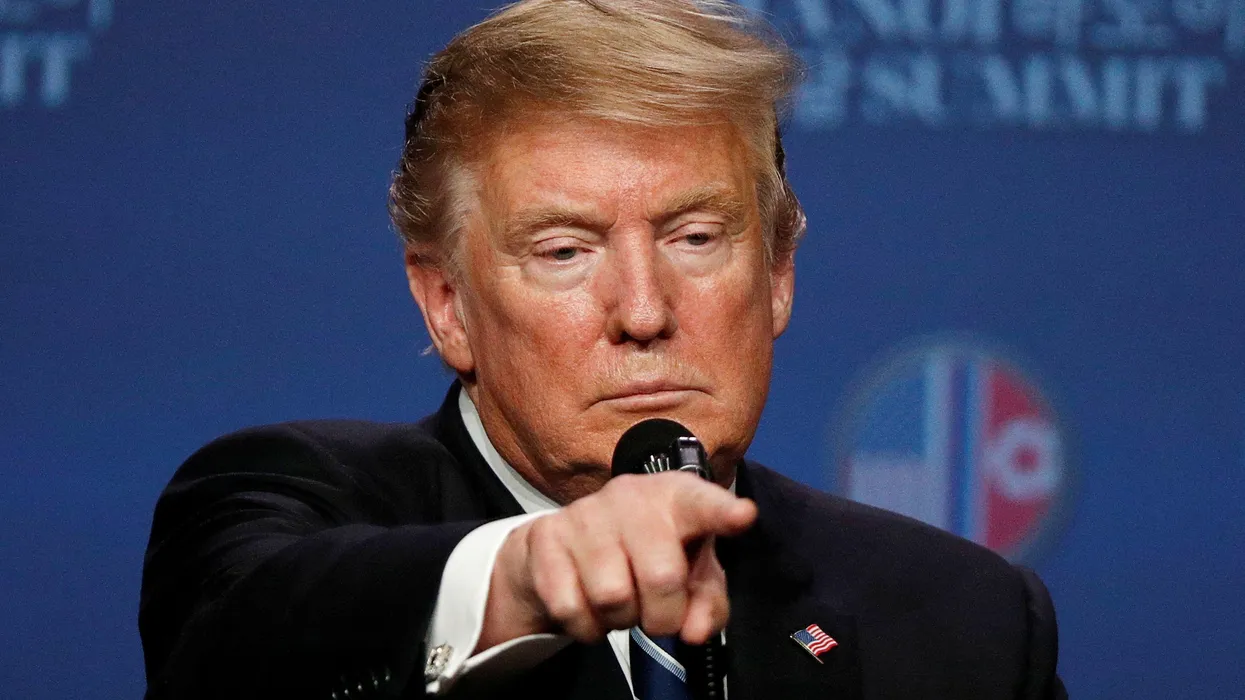
President Donald Trump's decision to scale back joint military exercises with South Korea has drawn sharp criticism from national security analysts, with a new piece from MS NOW comparing his characterization of North Korea to the language of the country's leader, Kim Jong-un.
Over the weekend, Trump used a Truth Social post to direct Defense Secretary Pete Hegseth to "substantially reduce" joint military exercises with South Korea, shortly before new exercises were set to commence. Trump argued that participating in the drills would be seen as "totally inappropriate and hostile" toward North Korea, the dictatorship he described as having been "unthreatening and respectful."
"Based on the fact that it is too late to cancel, I have instructed Secretary of War, Pete Hegseth, to substantially reduce the Joint Military Exercises," the post read. The post did not specify how the reduction would be carried out.
The move revives an approach from Trump's first term, when he suspended several large-scale joint exercises after his 2018 Singapore summit with Kim, calling the drills expensive and provocative "war games," before large-scale combined training resumed in subsequent years. The exercises are a long-standing pillar of an alliance grounded in the 1953 U.S.-South Korea Mutual Defense Treaty, under which roughly 28,500 American troops are stationed in the South. The Korean War ended in an armistice rather than a peace treaty, leaving the peninsula technically in a state of war for more than seven decades; North Korea has long demanded the cancellation of the drills, which it characterizes as rehearsals for invasion, while Washington and Seoul describe them as defensive in nature.
The United States has no formal diplomatic relations with North Korea, yet Trump has long insisted on maintaining a close relationship with Kim Jong-un, one of several authoritarian leaders toward whom he has expressed fondness. In his post, Trump also implied that the decision was a direct response to South Korea declining to aid in his war with Iran.
Writing for MS NOW on Tuesday morning, national security analyst Kevin Baron chastised the president's statement, arguing that his "description of North Korea sounds like Kim Jong Un wrote it," and questioning why he is choosing to "be blindly trusting that North Korea's murderous, prison-state regime has turned a page toward global peace."
"Did North Korea write that message?" Baron asked. "With no intelligence, data or proof provided to back up his assertion, Trump appears to be blindly trusting that North Korea's murderous, prison-state regime has turned a page toward global peace. With that choice, Trump is unilaterally rejecting American intelligence threat assessments, military preparedness and history. He's also getting nothing in return for it. That's his prerogative as commander in chief."
Baron further questioned the wording of Trump's justification for the move, saying it sounded as if the president had only just learned that joint exercises with South Korea were about to take place. He warned that the abrupt decision would carry a "substantial cost," measured in "dollars, diplomacy, readiness and morale."
"At best, Trump is playing with fire. At worst, he is willfully endangering American lives, interests and influence for the chance at saving money, based on nothing but a gut feeling," Baron continued.
He concluded: "Trump is always hunting for a bargain, but U.S. security is nothing to bargain with. America's forward-deployed military presence and preparedness with allies including South Korea and Japan are what allow people to live in peace and prosperity there, so that we can do so here. It's not charity. It's not a gift. It's a security umbrella. It's a multibillion-dollar investment and insurance policy on American prosperity. And it's the best leverage the world has to deter North Korea from doing something catastrophic. On Sunday, Kim got another unearned gift courtesy of the U.S. president: A free pass to never change."

