Trump's Growing Alignment With Putin Alarms Canadian Security Experts, Raising Fears for NORAD
Key Takeaways
- •The Trump administration invited Russian President Vladimir Putin to the December G20 summit hosted at the president's Miami resort, a grouping that includes Canada as a member.
- •Trump moved to abandon sanctions on Russia in a decision that would channel $4 billion to Moscow for diesel fuel purchases.
- •Elon Musk, a Trump ally who has reportedly grown close to Putin, has slowed Starlink service to Ukraine, disrupting satellite communications critical to Ukrainian battlefield operations.
- •Former national security adviser Vincent Rigby warned that the restored Trump-Putin relationship raises Arctic sovereignty fears and could, in a worst-case scenario, end the NORAD partnership.
- •Canada is responding by building defense capabilities and pursuing closer European cooperation in areas such as defense manufacturing, financial infrastructure and satellite systems to reduce dependence on U.S. networks.
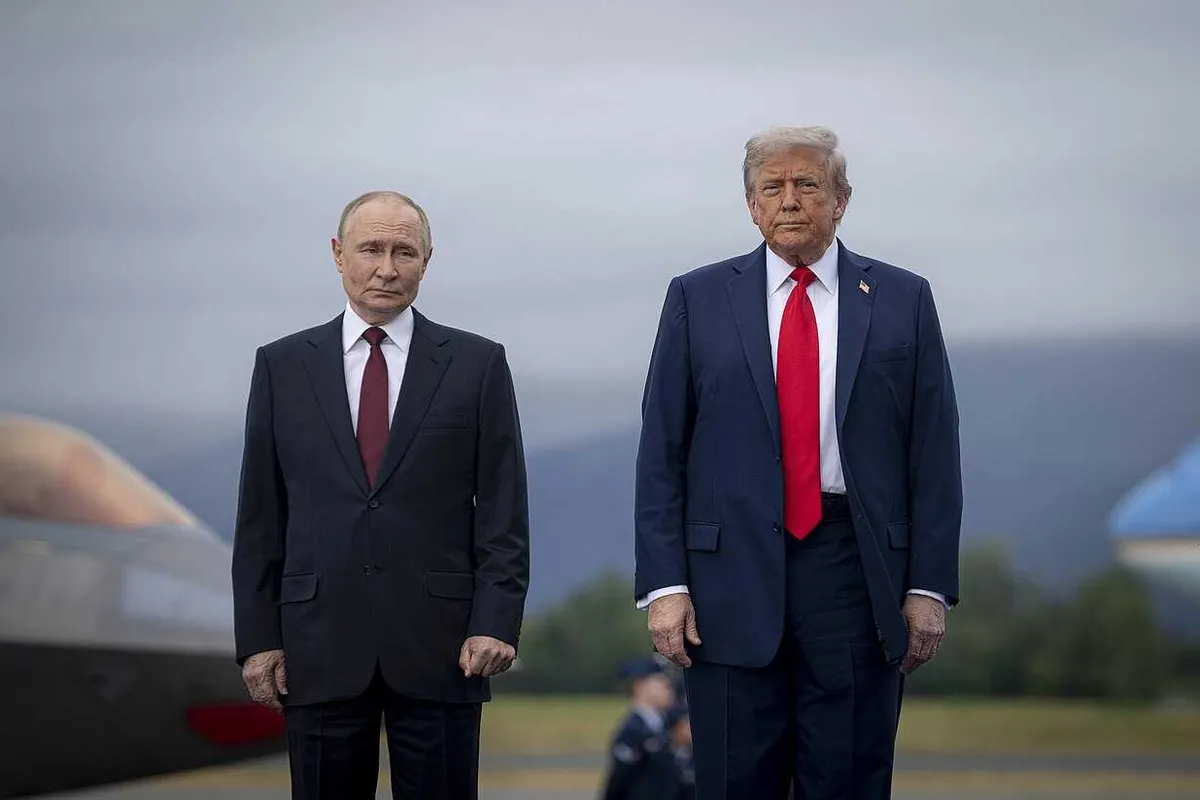
President Donald Trump's growing alignment with Russia is raising serious concerns among Canadian security experts, who warn that even closer ties with Europe may not fully shield Canada from an increasingly erratic United States.
According to a report by CBC News, Trump has made several recent moves favorable to Moscow. Secretary of State Marco Rubio invited Russian President Vladimir Putin to December's G20 summit, to be hosted at Trump's resort in Miami — a grouping that includes Canada as a member. Trump then moved to abandon sanctions against Russia in a decision that would send it $4 billion for diesel fuel.
Meanwhile, restrictions on aid to Ukraine are mounting. Elon Musk, a Trump ally, has reportedly become a close friend of Putin and has put his thumb on the scale by slowing Starlink service for Ukraine, as reported by the Kyiv Independent and HuffPost. Starlink terminals have become integral to battlefield communications for Ukrainian forces, giving any disruption to the service direct military significance. The Pentagon's watchdog announced it would not investigate Musk, though a new Congress is expected to do so. Ukraine has also struggled to obtain additional Patriot missiles, the US-made interceptors that rank among the most sought-after Western air defense weapons against Russian missile strikes.
"This is not Trump playing footsie with Putin," said Vincent Rigby, a national security and intelligence adviser who served as an adviser to the prime minister until 2021. "This is something far, far more serious, and strategically, this can't help but be a concern."
Maria Popova, a Russia expert at McGill University, said Trump's approach appears to be shifting from neutrality toward an open alliance with Putin again.
"We have to start thinking about where this trajectory ends up eventually," she said. "And it ends in the U.S. directly helping Russia's war effort."
Rigby agreed, saying the restored relationship between Trump and Putin raises new fears about Arctic sovereignty, a region where Russia has spent years expanding its military presence and where thawing sea ice is drawing renewed attention from world powers. He cautioned that it "could be the end of NORAD in a worst-case scenario." NORAD, the North American Aerospace Defense Command, is the joint U.S.-Canada partnership that surveils the airspace of both countries and helps protect their sovereign airspace — a binational arrangement in place since 1958 that has outlasted decades of political change in both capitals.
There is also concern about Putin and Trump meeting with Chinese President Xi Jinping during the November APEC summit, a forum in which Canada is also a participating economy.
Experts have cautioned against normalizing a world divided among three powers; such discussions could entrench a global order split into American, Russian and Chinese spheres of influence, leaving smaller countries vulnerable to decisions made without their participation.
Canada is responding by strengthening its international partnerships, increasing defense capabilities and working to preserve functioning institutions with Washington, the report described. Experts see value in closer European cooperation in areas such as defense manufacturing, technology, financial infrastructure and satellite systems, which would reduce Canada's dependence on U.S. networks and communications systems at a time when Musk is so closely aligned with Putin and Trump.
Trump's pro-Russia push may not last much longer, with a Democratic-controlled House expected, and Trump has only 26 months left in office.
However, Rigby told CBC that he expects those next 26 months to be tumultuous ones.
"You are potentially going to see a president after next week being even more reckless, less restrained and more aggressive," he said.

