Trump's Rushed Construction Projects Risk Another Reflecting Pool-Style Failure, Experts Warn
Key Takeaways
- •The Atlantic warned that the compressed schedules behind Trump's East Wing ballroom, triumphal arch, and other projects could produce shoddy work requiring later repairs, as it said occurred with the Reflecting Pool.
- •The Supreme Court allowed the East Wing ballroom to continue after ruling that historic preservationists challenging the project lacked legal standing to sue.
- •Interior Secretary Doug Burgum announced triumphal arch excavation will start within two weeks, and a judge ordered the administration to give advance notice after Vietnam veterans sought a restraining order.
- •The Trump administration is seeking a two-year shutdown of the Kennedy Center for rushed renovations, with ongoing court battles over Trump's attempt to attach his name to the venue.
- •Construction-management research and expert Awad Hanna of the University of Wisconsin indicate that accelerated construction reliably raises costs and can cause new delays and revisions.
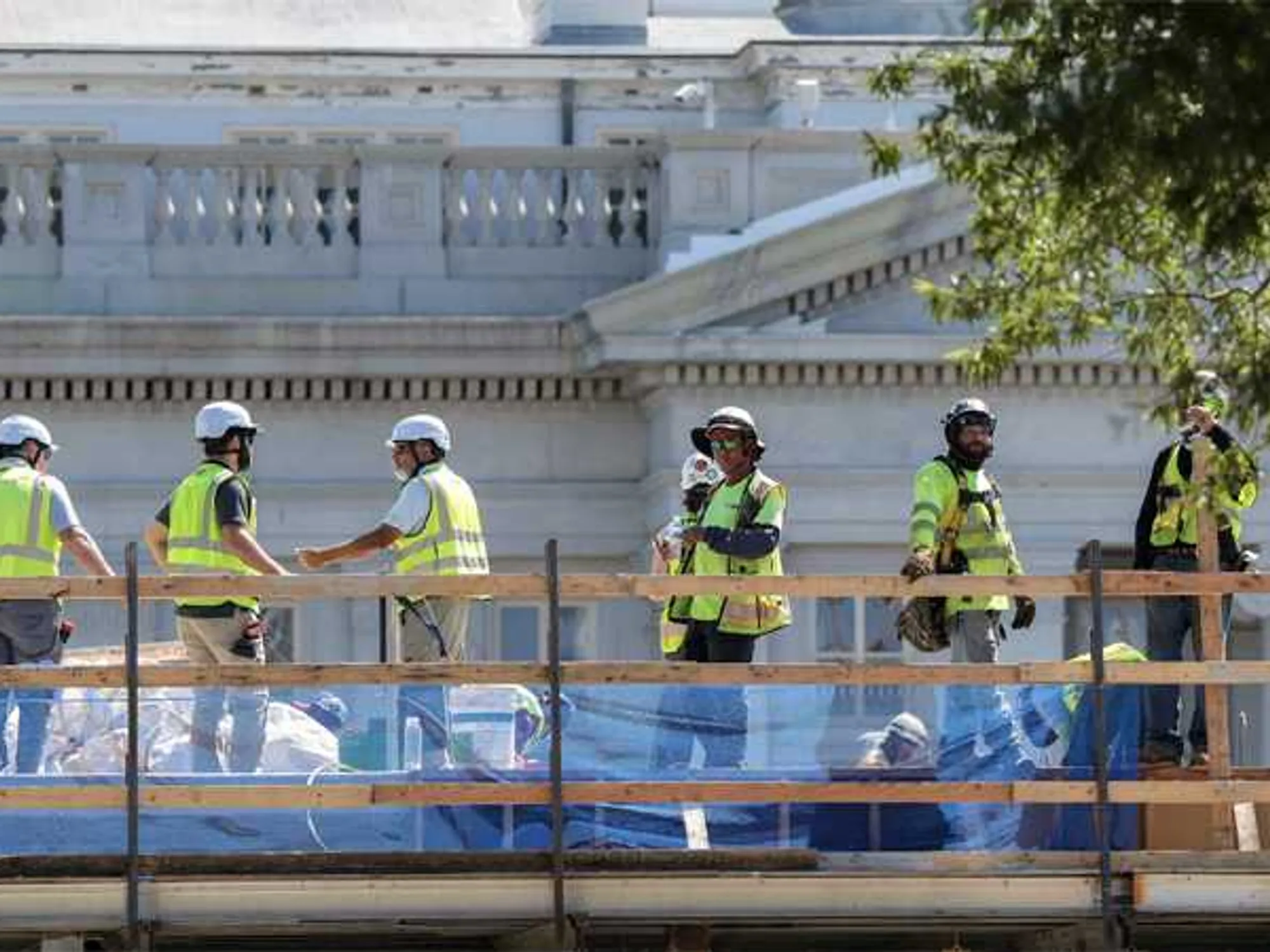
President Donald Trump's effort to fend off lawsuits against his construction projects is setting the stage for another Reflecting Pool-style disaster, experts contend.
Trump's accelerated building of projects, including the East Wing ballroom and a triumphal arch, drew a scathing critique from The Atlantic on Saturday.
"Compressed schedules could lead to shoddy work that will require more repairs later," The Atlantic warned. "Trump's botched repairs to the Reflecting Pool ahead of the nation's 250th-birthday celebrations, in July, offer a classic example of the problem."
The article described a Washington where "cranes and bulldozers appear like DoorDash deliveries: fast, frictionless, and on demand."
When historic preservationists sued to stop the bulldozing of the White House East Wing, the Trump administration argued before the Supreme Court that construction of the ballroom was 65 percent complete and too far along to stop. The Supreme Court ultimately gave Trump the green light to proceed, finding that the preservationists lacked standing. The ruling turned not on the merits of the preservationists' claims but on the legal doctrine of standing, which requires plaintiffs to show a concrete, particularized injury — a threshold the Court concluded they had not met.
Earlier this week, Interior Secretary Doug Burgum announced that excavation for the triumphal arch will begin within the next two weeks, a "similarly intensive schedule," The Atlantic noted. Vietnam veterans filed an emergency motion seeking a restraining order to halt the project, and a judge ordered the Trump administration to provide advance notice before work begins.
The Atlantic also noted that the Trump administration is seeking to shut down the Kennedy Center for two years to carry out renovations on a rushed timeline. The Kennedy Center has been entangled in back-and-forth court battles over Trump's attempt to put his name on it.
According to research cited by The Atlantic, long hours, additional shifts, and overlapping work during compressed and rushed construction invite new delays, higher costs, and revisions down the line. That dynamic is well documented in construction-management literature, where schedule compression is a recognized tradeoff: accelerating work typically requires premium labor, overtime pay, and resequenced tasks, which raise unit costs even as overall duration shrinks.
"Accelerated construction is always at higher cost, no matter what you do," Awad Hanna, chair of the construction-engineering and management program at the University of Wisconsin at Madison, told The Atlantic.
For Washington, the immediate open questions are whether the courts impose further constraints on the arch excavation and the Kennedy Center shutdown, and whether the compressed timelines produce the kind of defects and follow-on repairs that critics — pointing to the Reflecting Pool — say are the predictable cost of building at speed.
