Psychologist Cites 'Strange and Unusual' Involuntary Spasms as Possible Sign of Neurological Decline in Trump
Key Takeaways
- •Garrison reviewed two recent Trump appearances and said the president appeared to display repeated right-side spasms.
- •He said the movements could possibly be linked to neurodegenerative disease, Parkinson’s disease, Lewy body dementia, Alzheimer’s disease, or post-stroke behavior.
- •Garrison emphasized that he has not examined Trump in person and was speaking only in terms of possibility rather than diagnosis.
- •He argued that Trump’s impatience and agitation during public events may make the spasms more likely to occur.
- •Trump’s doctors have previously described his health as excellent, and the White House relies on the annual presidential physical for formal medical evaluation.
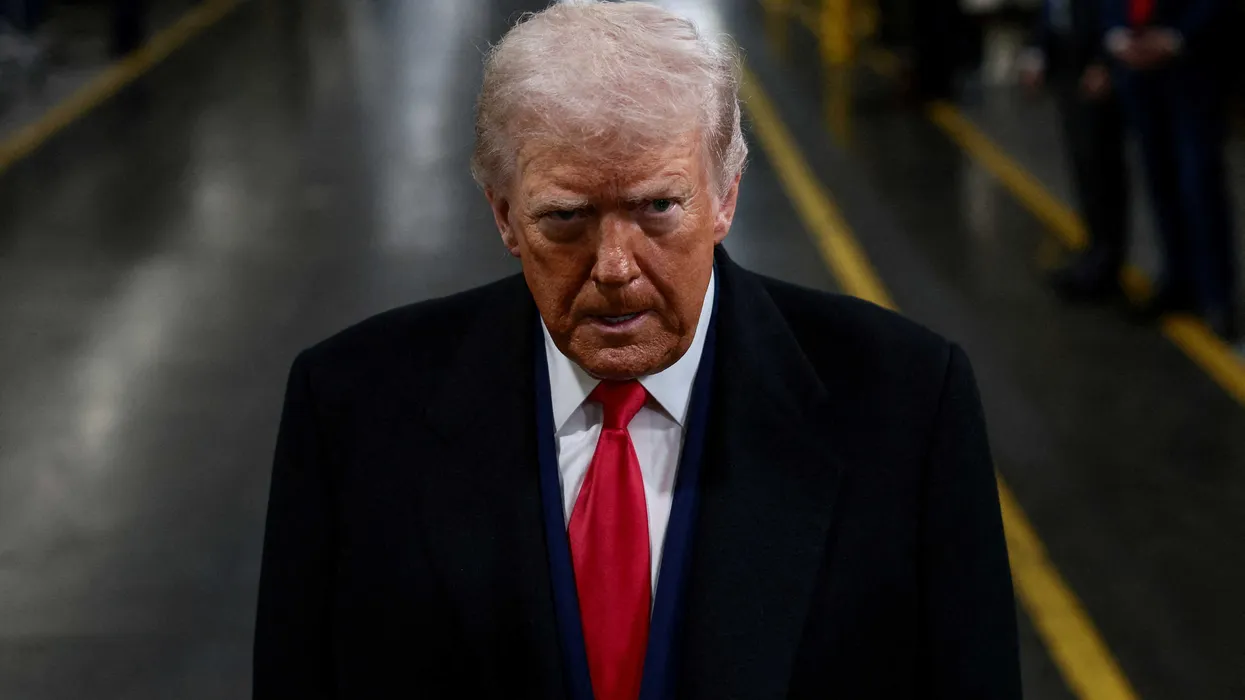
President Donald Trump appears to be showing a notable decline in his neurological condition, according to a licensed clinical psychologist, who points to a "strange and unusual" tic that the president cannot seem to control as evidence.
Dr. John Paul Garrison is a licensed clinical and forensic psychologist who specializes in body language. He is also a prolific content creator, offering professional analysis of what public figures reveal through their behavior. His output includes numerous videos breaking down Trump's public appearances, and his general conclusion is that the president's cognitive and physical decline has accelerated over the past year, likely worsened by his advanced age. Trump, born in June 1946, is the oldest person ever elected to the U.S. presidency, an office whose occupant's fitness became a defining issue of the 2024 race after then-President Joe Biden's June debate performance — Biden ended his reelection bid the following month amid pressure from fellow Democrats.
In his latest video, published this weekend, Garrison examined two recent press conferences at which Trump spoke, arguing that the president "continues to exhibit what appear to be concerning neurological symptoms."
The first event Garrison discussed was a meeting with various tech company CEOs. While Trump was standing away from the podium and not speaking, the president appeared to suffer a minor spasm in his right arm — a symptom Garrison has highlighted numerous times in the past. He noted that the issue became more pronounced as the meeting went on, with Trump also giving off signs of increasing discomfort.
Breaking down what these recurring arm spasms might mean, Garrison said: "So, as you can see, President Trump seems to have a distinct spasm on one side. We're going to look at more examples in just a minute, but what this could mean is this could be neurodegenerative disease. We could be talking Alzheimer's, we could be talking Lewy body dementia, you could be talking something like Parkinson's disease. This could also come with post-stroke behavior. There can be damage to certain areas of the brain that can cause this, but we are seeing something distinct, and it appears to be involuntary."
Garrison, who has not examined the president, works strictly from video, and his phrasing — "could be," "what appear to be" — stays on the terrain of possibility rather than diagnosis. That line carries particular weight in the mental-health professions: after psychiatrists publicly offered opinions about Senator Barry Goldwater's psychological fitness during the 1964 campaign, the American Psychiatric Association adopted its "Goldwater Rule" in 1973, barring members from offering professional opinions about public figures they have not personally examined. The rule formally binds psychiatrists rather than psychologists such as Garrison, but it is routinely invoked in debates over remote assessments of public figures.
Lewy body dementia is a form of the condition caused by protein buildups in the brain. According to the Mayo Clinic, this version of dementia can manifest with tremors, as well as difficulty sleeping and issues managing bowel and bladder control.
Garrison also pointed to the president's demeanor as a possible aggravating factor. "Now, one thing we've seen very consistently from President Trump is that he is quite impatient when other people are speaking," he added. "He feels agitated, and that's going to add to the likelihood we're going to see more of these spasms. Standing there, feeling irritated. Those types of feelings can increase the likelihood these will occur. If you were paying attention just now, you saw his right hand twitching a little bit. I do think that there's some awareness that this is going to happen again."
Trump exhibited similar issues during the second appearance Garrison examined, in which the president discussed various White House renovation projects with reporters near the under-construction helipad in front of the building. During one of Trump's digressions about flagpoles, Garrison zoomed in on the president's right hand as it once again appeared to suffer a spasm.
"So, as I pointed out a minute ago, what we're seeing is what appears to be distinctly involuntary spasms, particularly from the right side," Garrison explained. He later concluded: "Now, it did appear that there was a distinct right side spasm. It happened repeatedly over the course of the first meeting as well as the press conference outside. So whether this is related to damage to the brain that is post-stroke or it is related to something more like dementia, we're going to continue to explore this as more behaviors become apparent because there has been no shortage of them recently."
Whether the movements Garrison describes reflect anything clinically significant is, under longstanding White House practice, a question addressed by the annual presidential physical, conducted at Walter Reed National Military Medical Center and summarized publicly by the physician to the president. Trump's doctors have previously described him in robust terms: his personal physician, Dr. Bruce Aronwald, wrote in November 2023 that Trump's health was "excellent," and Dr. Ronny Jackson, who oversaw his 2018 physical during his first term, used the same word.
Source: Alternet

