Robert Reich: Trump's Renaming and Altering of Shared Places Marks a Sinister Pattern
Key Takeaways
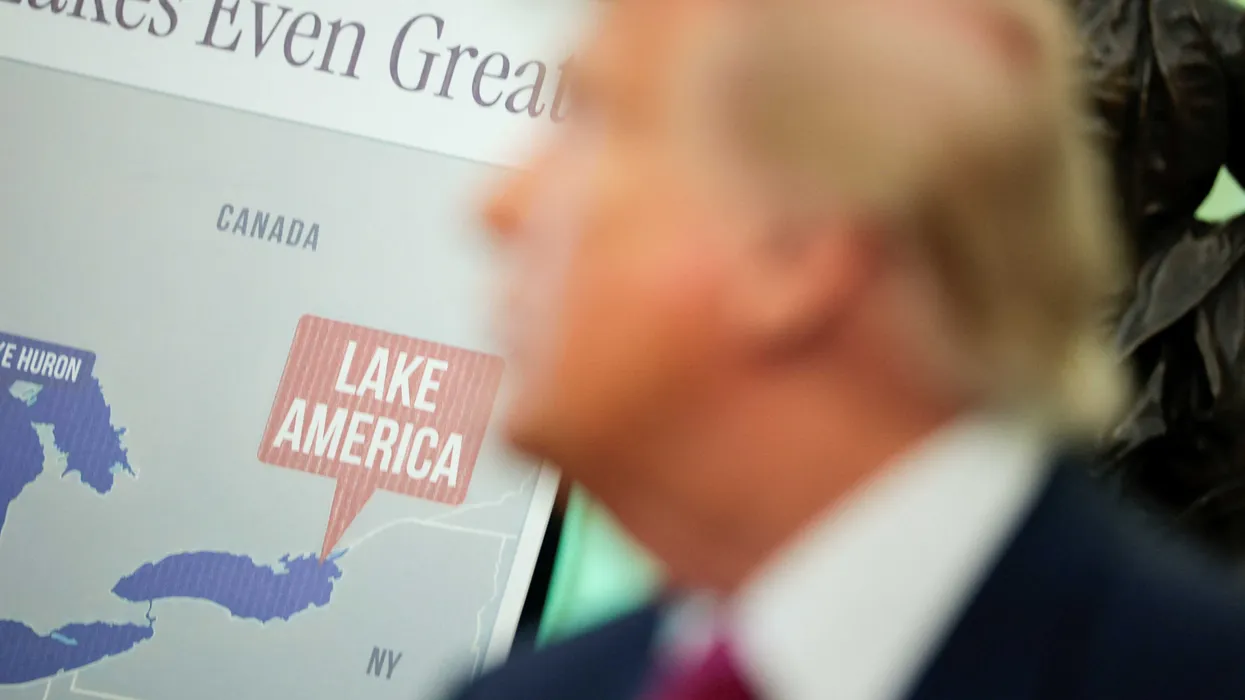
- •Trump said he decided to rename Lake Ontario to Lake America because he was angry with Canada, and has also renamed the Gulf of Mexico to Gulf of America.
- •The Gulf renaming was ordered by executive action at the start of Trump's second term, after an earlier change restoring the name Mount McKinley for the peak known as Denali.
- •Google Maps and Apple Maps show U.S. users the new names while users in other countries still see the original names, whereas MapQuest refused the change.
- •Chief Justice John Roberts quoted Theodore Roosevelt in his dissent from a Supreme Court majority opinion allowing Trump to continue building his ballroom at the White House.
- •Reich argues no single person in a democracy should be able to arbitrarily alter shared place names and physical places that anchor and provide shared meaning.
It is one thing for Trump to usurp powers that belong to Congress — and quite another for him to usurp places that belong to all of us. The concern at hand is his renaming and demolishing of what Americans share in common.
Trump said he "decided" to change the name of Lake Ontario to Lake America because he was angry with Canada. How can a single man decide to rename one of the Great Lakes — a name generations of Americans learned in elementary school? Lake Ontario is also an international body of water, forming part of the U.S.–Canada border and shared with Canada's province of Ontario, whose name it bears. It is not only part of the nation's shared heritage; it is part of the common reality. Well-known place names anchor people. They provide a shared set of markers by which individuals navigate and situate one another. By what right can he arbitrarily take them away?
He has also changed the Gulf of Mexico to the Gulf of America, and is even considering renaming the Atlantic and Pacific Oceans. The Gulf renaming, ordered in an executive action at the start of his second term, followed an earlier change restoring the name Mount McKinley for the peak long officially known as Denali in Alaska — an indication that renaming familiar places has become a recurring feature of this presidency rather than an isolated act. Other countries have not followed suit: Mexico formally objected to the change, and the international name for the gulf remains in use outside the United States.
A U.S. president does have legal authority to instruct the U.S. Board on Geographic Names to update official maps and domestic databases — the Board, created in 1890, standardizes names across federal agencies — but that power exists to maintain uniformity, which is the opposite of what Trump is doing. And why, Reich asks, are Google Maps and Apple Maps following Trump's arbitrary "decision" to change these place names? Both companies have stated policies of reflecting the official names used by each country's government, so U.S. users see the new designation while users elsewhere continue to see the original names — effectively splitting the map itself along national lines. He credits MapQuest for refusing.
The issue extends beyond place names to revered places held in common. The building in Washington, D.C., called the White House is as much a part of the nation's shared reality and common heritage as Lake Ontario or the Gulf of Mexico — a building visited, photographed, and pictured in books and on souvenirs by millions. Built in the late 18th century and rebuilt after British forces burned it in 1814, the White House has been altered by many presidents, but always through public debate over how the nation's most symbolic residence should be treated.
"Its stately simplicity is … in accord with the purposes it was designed to serve," President Theodore Roosevelt once said of the White House, adding that safeguarding it gives the nation continuity with its past. Chief Justice John Roberts used this quote in his dissent from the Supreme Court majority's recent opinion allowing Trump to continue building his ballroom.
Once Trump has erected a giant ballroom in place of the East Wing, the White House will lose its continuity with the past — robbing Americans of the White House they knew, Reich argues.
The same applies to the long pool extending eastward from the Lincoln Memorial to the Washington Monument, known as the Reflecting Pool — a feature of the National Mall, managed by the National Park Service, that has served as the staging ground for historic gatherings from the 1963 March on Washington onward. Trump had its bottom painted dark blue and is now claiming that vandals caused the paint to peel.
To the west of the Lincoln Memorial lie Arlington National Cemetery and the stately Lee-Custis Mansion — also part of the nation's shared reality and common heritage. Trump wants to erect a giant arch that would block this view.
Reich is not arguing that the shared reality must remain exactly the same through time. Place names relied upon for entire lifetimes can be changed, and iconic buildings and monuments can be altered. But one man should not be able to summarily and heedlessly change these places — Lake Ontario, the Gulf of Mexico, the White House, the Reflecting Pool, the view from the Lincoln Memorial. In a democracy, no single person should be able to arbitrarily alter the place names and physical places that anchor and orient people and provide shared meaning.
Trump's "place robbery," Reich writes, is another way of asserting his dominance — a demonstration that he has the power to alter the world at will, forcing people to call places whatever he decides they should be called, to accept whatever physical alterations he makes, and to abide one of the most intimate kinds of subservience: literally losing one's place.
When "sane people" are once again in charge, Reich hopes that among their first acts will be to restore the names, demolish the impositions, and reclaim the common understandings of where and who Americans are.
Robert Reich is an emeritus professor of public policy at Berkeley and former secretary of labor. His writings can be found at . His new memoir, Coming Up Short, can be found wherever books are sold, and can be ordered in support of local bookstores at bookshop.org .
