Trump Baffles Allies by Rolling Out Red Carpet for Xi Jinping's Washington Visit
Key Takeaways
- •Trump intends to greet Xi Jinping with a red carpet and staged flyovers at Andrews Air Force Base, a reception more elaborate than the welcome Xi gave Trump in Beijing in May.
- •Officials cited by Politico say a meaningful U.S.-China AI safety agreement is highly unlikely, with any real dialogue limited to a notification mechanism.
- •The White House plans to present the summit as having produced a deal so Trump can claim a win, with a senior official saying 'We're going to say that regardless.'
- •A former Trump official said the United States has no remaining leverage over China, as U.S. cuts to exchanges from China have left Beijing with little incentive to engage.
- •CNN's David Sanger argued Xi recognizes Trump's moment of weakness, citing upcoming elections, approval ratings and the Iran situation, and believes China has provided Iran with basic technology and intelligence that may have helped target Middle East bases.
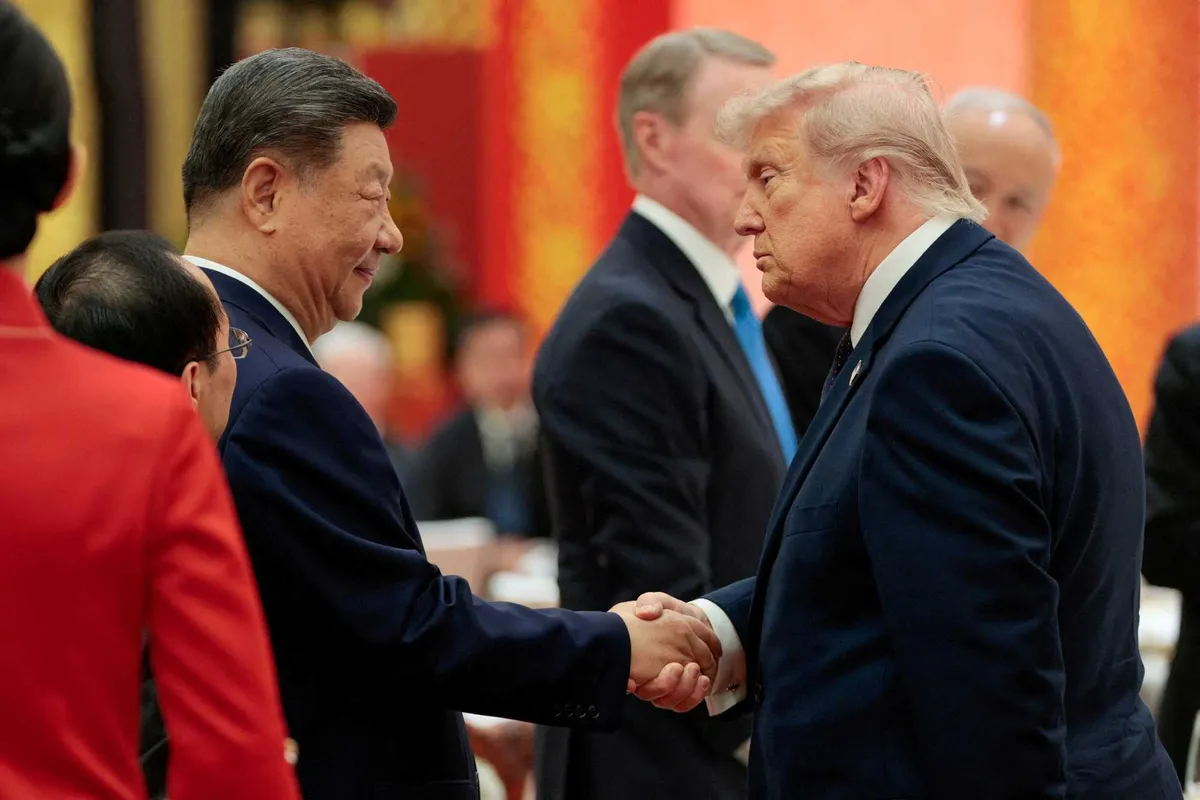
President Donald Trump reportedly intends to literally roll out a red carpet for Chinese President Xi Jinping when the leader arrives in Washington, D.C., on Wednesday — a ceremonial gesture that has left even the president's allies puzzled about its purpose.
Politico's "Playbook" reported Wednesday morning that, despite the ongoing AI arms race, expectations are low that any meaningful agreement between the United States and China will emerge from the summit. The low bar itself helps explain why the visit is being watched so closely: with AI now central to the rivalry, access to advanced chips and computing power has become a strategic question for both governments rather than a routine trade issue.
"The summit is shaping up to be heavy on pomp and light on major breakthroughs," Politico wrote.
"Apart from the notification mechanism, there's almost zero chance that there will be some kind of meaningful U.S.-China AI safety dialogue, where the governments agree to anything real," Liza Tobin, who served as director for China at the National Security Council during Trump's first term, told "Playbook."
Another administration official was equally dire: "There isn't a deal to be had AI. There's not. This is not realistic, and I don't know that there ever will be."
According to the report, the White House intends to present the summit as having produced some kind of deal so Trump can claim a "win."
When asked what would need to happen for the White House to call the meeting a success, a senior White House official told "Playbook": "We're going to say that regardless." Whatever the two sides announce beyond the notification mechanism Tobin referenced will be the clearest measure of whether the meeting produced more than the ceremony on display.
A former Trump official said the United States has no cards left to play, according to the report. "There's 'no pressure point' right now that would force China to the table," the report said, citing the ex-official. Indeed, the U.S. has cut so much of what it receives from China that there is little incentive for Beijing to engage.
Steve Bannon likes it that way. He told "Playbook" that there should be "no chips, no distillation — America must quarantine the CCP from any access to compute power or intellectual property that allows them to compete in AI."
Meanwhile, Republicans are unhappy with Trump's ceremonial flattery. Sen. Roger Wicker (R-Miss.), chairman of the Senate Armed Services Committee, complained from the Senate floor on Tuesday.
"Mr. President, every minute of dialogue, our commander-in-chief should keep in mind that his guest is a brutal, unelected and oppressive dictator who seeks to dominate his neighbors and whose massive military arsenal is aimed directly at the United States," Wicker said.
CNN reporter David Sanger said most people do not recall the last time a U.S. president personally greeted a foreign leader at Andrews Air Force Base, much less staged flyovers and other performances.
"And in fact, that's more of a greeting than he got when [Trump] arrived in Beijing. And the trip in May, I remember, I was on that trip. He got a big welcome," said Sanger. "And, you know, the Chinese military was out in Tienanmen Square ... But we didn't have the kind of flyovers. And what you're going to see."
The second main point, Sanger said, is that Xi fully recognizes that Trump is in a moment of weakness.
Xi "knows about the coming elections," Sanger said. "He's looking at the kind of poll numbers that you were discussing yesterday morning, particularly the approval ratings on foreign affairs. He understands the president is stuck in Iran with no easy way out, and that he has done nothing to make that any easier. In fact, we believe that the Chinese have been providing the Iranians with at least some basic technology and intelligence that probably has helped them target those bases in the Middle East."

