Analysis: Trump's Pursuit of Putin Has Undone Ronald Reagan's Cold War Legacy
Key Takeaways
- •Criticism of Trump's approach to Russia has emerged from inside his own circle, including John Bolton, Steve Bannon, and Senate Republicans John Cornyn and Thom Tillis, not just from political opponents.
- •David Rothkopf argued in The Daily Beast that Trump's pursuit of close ties with Vladimir Putin has effectively undone America's Cold War victory, describing the United States as a satellite of Moscow in crucial economic security matters.
- •Rothkopf criticized Trump's purchase of diesel from Russia and cited an effort to persuade Elon Musk to deny Starlink services to the Ukrainian military, which has relied on the satellite system for battlefield communications since Russia's full-scale invasion began in February 2022.
- •Former U.S. Ambassador to Russia Michael McFaul said in a 2019 interview that Trump's refusal to acknowledge Russia's interference in the 2016 election and his conduct at the July 2018 Helsinki summit served Putin's interests rather than America's national interest.
- •It remains uncertain whether criticism from figures as close to Trump as Bolton, Bannon, Cornyn, and Tillis will lead to any tangible change in U.S. policy toward Moscow.
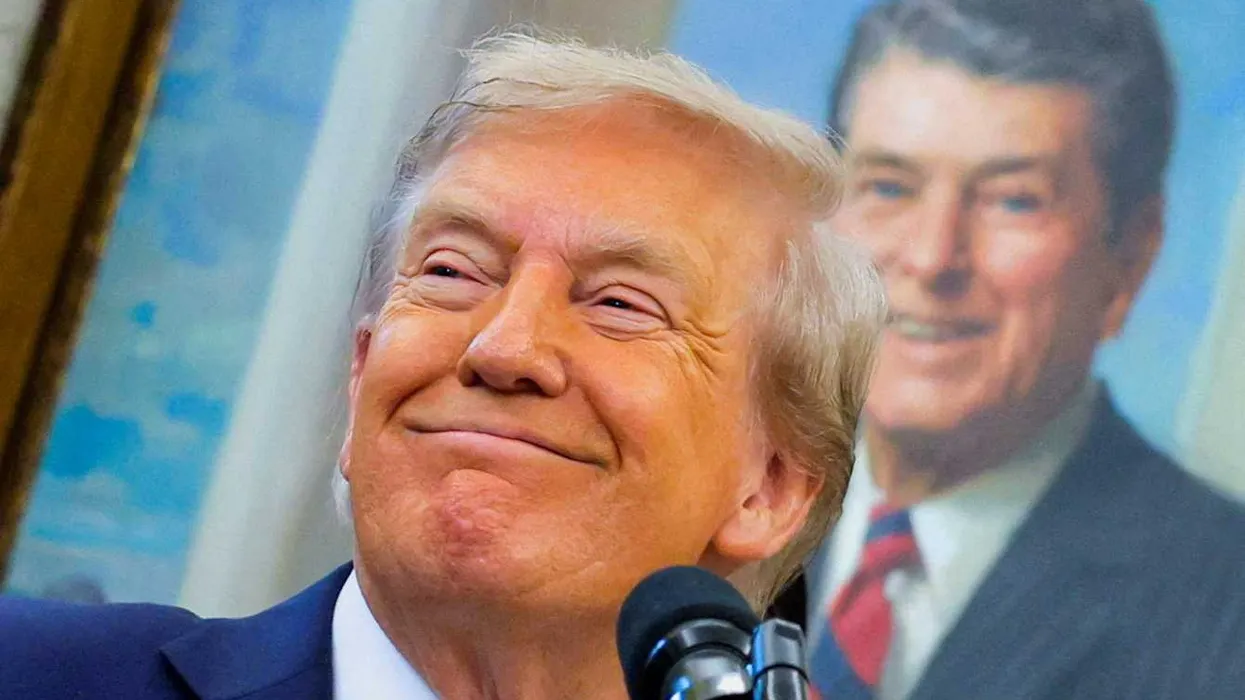
Criticism of President Donald Trump's foreign policy—particularly his approach toward Russia—has come not only from opponents but from figures within his own orbit. The critics include John Bolton, his first-term national security adviser; Steve Bannon, his longtime political adviser; and two Senate Republicans who usually back him, Sens. John Cornyn of Texas and Thom Tillis of North Carolina. That lineup—spanning the national security establishment and the president's inner political circle—shows how sharply policy toward Moscow has become a point of contention inside Trump's own coalition, not merely across party lines.
Now, an expert argues that Trump's pursuit of warm ties with Russian President Vladimir Putin, whom he describes as a dictator, has effectively reversed America's victory in the Cold War (1945–1991). The superpower standoff between Washington and Moscow ended with the Soviet Union's dissolution in December 1991, a victory defined for generations of Republicans by Ronald Reagan (president from 1981 to 1989), who combined pressure on the Kremlin with arms-control diplomacy.
"We were taught we won the Cold War," wrote The Daily Beast's David Rothkopf on Monday. "But today, the president of the United States openly serves the interests of Russia. We have become, in fact in crucial economic and security matters, a satellite of Moscow. The U.S. chief executive has publicly and repeatedly declared his loyalty to Russia's head of state. For more than a decade he has openly and covertly been advancing Russian foreign policy, often at the expense of the national security of the United States, the laws of the United States, and the interests of the United States and our allies."
He continued: "It is such a shocking turn of events, so inconceivable to anyone who lived through the Cold War or its aftermath, that many Americans have been in denial about it for years. But the evidence is not only incontrovertible, but in recent days, the U.S. president has made the situation more explicit."
Rothkopf went on to denounce Trump's purchase of diesel from Russia, arguing that it betrays America's pro-democracy values, which would otherwise place the country alongside Ukraine—a free but small nation invaded by a hostile authoritarian power. He also pointed to Trump's broader hostility toward Ukraine, citing an effort to weaken the country's infrastructure by persuading Starlink CEO and informal adviser Elon Musk to (perhaps temporarily) deny the company's services to the Ukrainian military. Starlink's satellite service has been a key battlefield communications tool for Ukrainian forces since Russia's full-scale invasion began in February 2022.
"This is not the post-Cold War 'end of history' world we were led to believe would be forthcoming back in the 90s or in the years since," Rothkopf wrote. "Russia has the upper hand when it comes to the current U.S. government. America's standing is in rapid decline, and the country is riven with division in many of the ways that might have been dictated by a Russian intelligence operation. Our institutions are under attack from within. Our military readiness is compromised by bad leadership and decisions to fire those who were competent. The values we stood for and by which we distinguished ourselves from the Soviet world—democracy, freedom, the rule of law—are disavowed by Trump and those who work with him and undermined by them in practice."
The "end of history" line invokes Francis Fukuyama's influential 1989 thesis that the Cold War's outcome marked the definitive triumph of liberal democracy.
He concluded: "There is no mistaking who is in the driver's seat in this relationship: Putin. There is no mistaking who is taking orders from the Kremlin. There is no mistaking which country benefits and which pays the price."
Rothkopf's assessment is shared by seasoned foreign policy professionals. Michael McFaul, a foreign policy adviser to President Barack Obama who served as U.S. ambassador to Russia from 2012 to 2014, voiced similar views about Trump's evident affection for Putin in a 2019 interview with Salon during Trump's first term.
"What I do know is that things that the president says serves Russia's national interest, as defined by Putin," McFaul said. "I want to be very clear about that: as defined by Putin. Other Russians have a different definition of the national interest. When the president, for instance, refuses to acknowledge that we were attacked in 2016, as he's done repeatedly for years now, that serves Putin's interest, not America's national interest." His reference was to Russia's interference in the 2016 U.S. presidential election, which the U.S. intelligence community publicly assessed in January 2017.
He continued: "When he does so standing next to President Putin at a press conference in Helsinki, and when tossed up what should have been a softball question to say he supports his intelligence community, and he chooses not to, in my view that serves Putin's interests. That does not serve America's national interest." The press conference took place at the July 2018 Trump-Putin summit in Helsinki, where the president's refusal to endorse U.S. intelligence findings over Kremlin denials drew bipartisan criticism at the time.
He concluded: "That raises the question, 'Why is the president consistently siding with Putin on issues where I think it's not in America's national interest?' And I think that deserves further examination."
Whether criticism from figures as close to Trump as Bolton, Bannon, Cornyn, and Tillis leads to any tangible shift in policy toward Moscow remains an open question.

