Trump’s Asia trip draws criticism over setbacks, cyber outages and China policy divisions
Key Takeaways
- •Trump's Asia trip began with an unconventional welcome in Manila, where he was greeted with the song "YMCA" instead of the customary presidential anthem.
- •A planned signing ceremony for a trade agreement with Thailand was canceled after Thai officials said the deal was not finalized, and the two sides instead signed a joint statement agreement.
- •An internal dispute over AI chip export controls has split the administration, with Commerce Secretary Howard Lutnick reportedly resisting restrictions on Singapore-based Megaspeed's purchases of Nvidia chips, drawing criticism from Treasury Secretary Scott Bessent.
- •While Trump was abroad, multi-day cyber-outages grounded over 20,000 domestic U.S. flights and briefly took the nation's largest bank offline, prompting a dismissive response from the president.
- •Trump is scheduled to hold a trilateral summit with Xi Jinping and Vladimir Putin on Ukraine and the AI arms race, following a previous meeting with Xi two months earlier that was widely viewed as a failure.
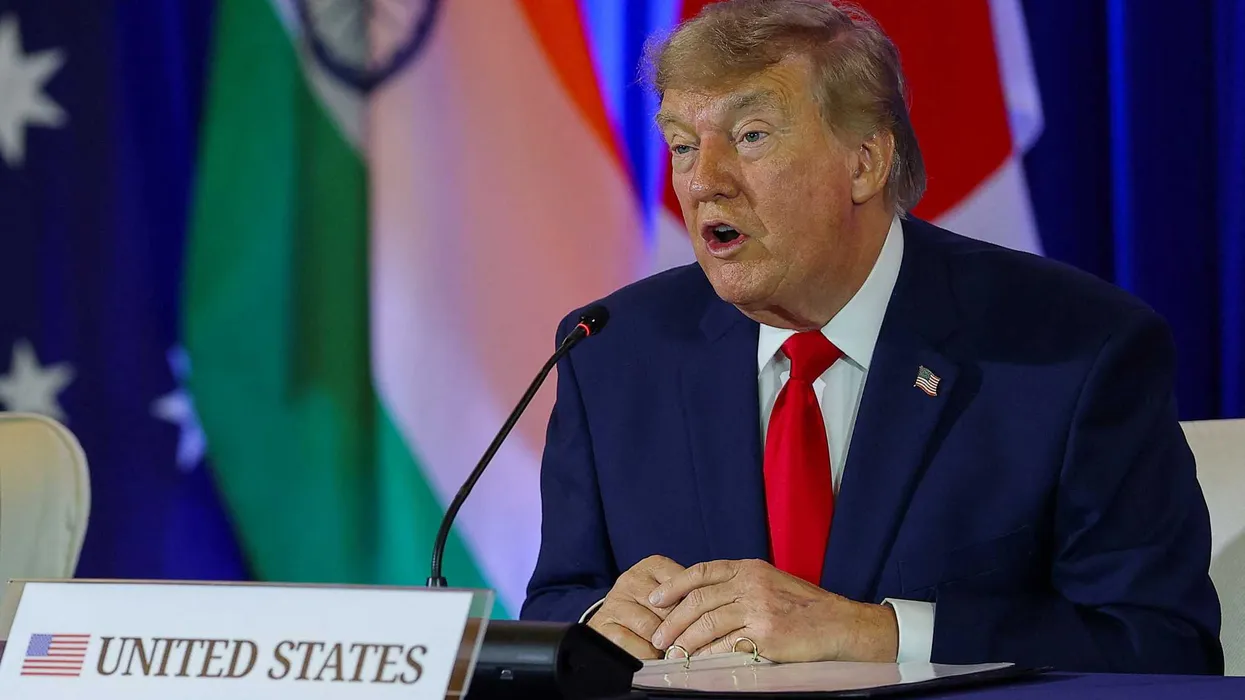
By Wednesday, as President Donald Trump continued his latest tour through Asia, critics described the trip as both “unserious” and marked by “humiliation,” with his losses, blunders and embarrassments visible to world leaders.
Longtime political strategist and Hill contributor Max Burns argued that Trump’s difficulties on the world stage could have significant implications for the future of the United States and its allies. In an article published by Alternet, Burns said the visit began on an inauspicious note when Trump was welcomed in the Philippines not with “Hail to the Chief” or the “Star-Spangled Banner,” but with his favorite song, “YMCA.”
“Trump’s unserious welcome in Manila set the tone for an unserious foreign trip that seems more like an effort to escape the humiliation of a bruising midterm election loss than an attempt at real diplomacy,” Burns wrote. “The visit also puts Trump conveniently abroad as his feckless lackeys at Homeland Security and the Transportation Department continue to botch the administration’s response to a multi-day string of major cyber-outages that grounded more than 20,000 domestic flights and briefly took the nation’s largest bank offline.”
Trump’s “flippant” response to the overlapping crises, Burns wrote, did little to address concerns at home or strengthen the president’s international image. Asked about the continuing cyber-instability, Trump said: “It’s life. When you’re big and powerful, and you have all the money, things like that happen.” He added, “It’s fine.”
Although Trump was away from the digital disruption in the United States, Burns said the president “still managed to rack up his own political embarrassments almost immediately” after arriving in Asia. Officials abruptly canceled a planned meeting to sign a trade agreement with Thailand, which had been Trump’s only major event that day, after Thai officials said the agreement had not been finalized.
Instead, Trump and Thai Prime Minister Anutin Charnvirakul signed a “joint statement agreement.” Burns characterized the document as little more than an announcement of a future announcement.
Trump is next scheduled to hold a trilateral summit with Chinese President Xi Jinping and Russian President Vladimir Putin. The discussions are expected to cover the war in Ukraine, the growing artificial-intelligence arms race between the United States and China, and other consequential issues.
“Yet Trump is entering those discussions with a shockingly weak hand and bitter divisions on China policy splitting his administration,” Burns wrote. He cited reports that Commerce Secretary Howard Lutnick allegedly resisted efforts to restrict the Singapore-based technology company Megaspeed from purchasing Nvidia’s advanced AI chips. That dispute has led to a confrontation with Treasury Secretary Scott Bessent, who blames Lutnick for the chips reaching Chinese hands, according to Burns. Advanced AI chips fall under U.S. export controls designed to limit China’s access to cutting-edge computing hardware, making the internal dispute a direct fixture of the summit’s expected agenda on artificial intelligence.
Burns also wrote that Lutnick’s alleged decision to disregard Trump’s direct orders appeared to leave the president stunned and the administration unable to determine how to proceed. Rather than projecting confidence, Burns said, Trump conveyed uncertainty in remarks to reporters before leaving for the trip.
“If you did do something, you could have a blow-up with China,” Trump said. “We’re having a very good relationship with China right now, and I understand both sides of it.”
According to Burns, Trump entered his previous summit with Xi, held two months earlier, without a clear strategy for what he intended to accomplish. The meeting was widely viewed as a failure for Trump, who achieved nothing while Xi secured several benefits, Burns asserted.
The immediate watch items heading into the leaders’ meeting are whether the administration resolves its internal chip-policy dispute and what the trilateral produces on Ukraine and artificial intelligence. “Trump is now walking into an even more important meeting with Xi and Putin, and he’s doing so from an even weaker and more conflicted position than he did in September,” Burns concluded. “This time, he risks giving two of the world’s most repressive autocrats the upper hand in a conflict that could decide the fate of Ukraine and the future of American global leadership.”

