Report: Trump Ramps Up Pressure on DOJ to Prosecute Political Foes Despite Court Setbacks
Key Takeaways
- •Todd Blanche was confirmed as permanent U.S. attorney general by a 50-49 Senate vote after previously serving in an acting capacity.
- •D.C. U.S. Attorney Jeanine Pirro dropped the vandalism case against former Olympian David Hearn after finding no evidence, drawing a public rebuke from Trump, who has signaled he has not given up on a possible prosecution.
- •Legal analyst Liz Dye said U.S. attorneys are being pressured to bring politically motivated prosecutions based on shoddy or fabricated evidence, with cases repeatedly failing once they reach the courts.
- •Marcotte frames the Hearn episode as part of a broader pattern of prosecutions targeting figures who criticized Trump or sought to hold him accountable, including former FBI Director James Comey and New York Attorney General Letitia James.
- •New York Times columnist Jamelle Bouie argues that revenge is the principal aim of Trump's second term.
President Donald Trump is continuing to press the U.S. Department of Justice (DOJ) to pursue federal prosecutions of his political adversaries, according to Salon's Amanda Marcotte, even as his efforts encounter setbacks in the lower federal courts. The pressure comes as Todd Blanche, confirmed by a 50-49 Senate vote, has moved from acting U.S. attorney general to the permanent role. That dynamic tests long-standing post-Watergate norms that have historically insulated the department's charging decisions from direct White House political direction — guardrails long treated as central to the DOJ's credibility.
"As the courts keeps getting in the way of Trump's desire to persecute people he doesn't like," Marcotte writes at Salon, "the pressure to find a way to cheat the laws guarding human rights is only intensifying."
Legal analyst Liz Dye, who hosts the "Law and Chaos" podcast, told Salon that a shortage of evidence will not deter Trump from pushing for a federal prosecution when he has a target in his sights.
"U.S. attorneys are being pressured to bring politically motivated cases based on shoddy or even fabricated evidence, with the predictable result that the cases implode on impact with the court system, sometimes spectacularly," Dye said. The stakes are institutional as well as personal: once charges are filed, it is federal judges — not the prosecutors who brought them — who decide whether the cases survive, and the episodes catalogued by Salon have repeatedly ended with the department retreating.
The David Hearn case
Marcotte points to the David Hearn case as a glaring example of Trump pushing for a federal prosecution despite a lack of evidence.
"The most recent high-profile example is the attempt by U.S. attorney for the District of Columbia Jeanine Pirro to prosecute David Hearn, a former Olympian who was accused of vandalizing the Reflecting Pool at the Lincoln Memorial," Marcotte observes. "As it turned out, Hearn was being used as a scapegoat to hide Trump's embarrassment over ruining the pool by hiring poorly qualified cronies to renovate it. Pirro eventually had to admit that the case was without merit and dropped it, even though doing so meant a well-publicized dressing-down from Trump at the White House."
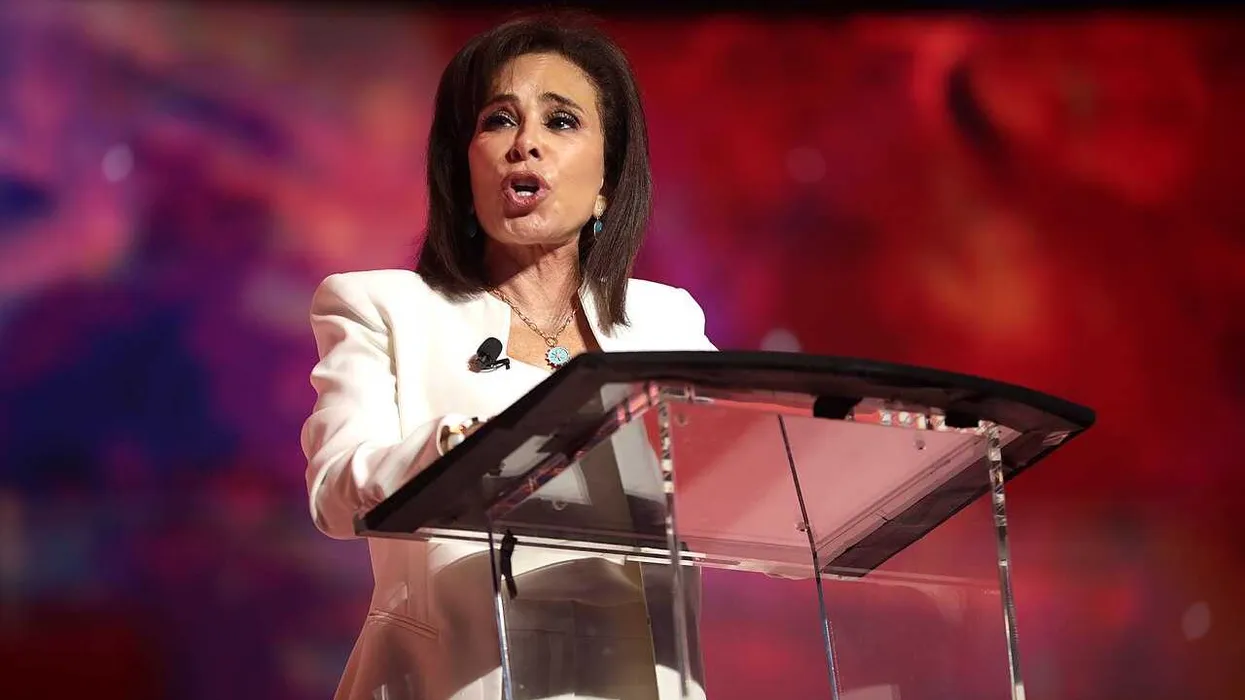
Pirro, a MAGA firebrand and former Fox News host known as a hardcore Trump loyalist, determined that there was no evidence against Hearn and dropped the case. That a prosecutor with Pirro's profile still found no evidentiary basis to proceed underscores the gap between the White House's demands and what career prosecutors can support in court. Trump responded by angrily berating her and making clear that he has not given up on a possible Hearn prosecution.
A broader pattern
Marcotte observes that the failed attempt to prosecute Hearn was just the latest in a series of high-profile prosecutions of people Trump hates for criticizing him or attempting to hold him accountable, including former FBI Director James Comey and New York Attorney General Letitia James.
In a recent New York Times column, Jamelle Bouie observed that "the principal aim of President Trump's second term is revenge." Marcotte adds that most everyone Trump fixates on is innocent of wrongdoing, their only "transgression" having been upholding the law, criticizing the president, or, in many cases, simply being of a race or class of people he doesn't like. Trump, Bouie argued, also wants revenge on the American people "for rejecting him in 2020 and dealing a grievous blow to his ego." With Blanche newly installed in the permanent role and Trump signaling he has not abandoned a possible Hearn prosecution, how the department handles the cases involving figures such as Comey and James — and whether the lower courts continue to stand in the way — is the open question running through the episodes both writers describe.
