New White House Leaks Undermine Trump's Account of Qatari Jet Incident at NATO Summit
Key Takeaways
- •President Trump used a foreign-government-provided Qatari jet for travel to the NATO summit, a departure from the standard practice of presidents flying on U.S. military aircraft.
- •After being informed of an alleged Iranian threat, the administration executed a secret plan to move Trump to a different plane while leaving Secretary of State Marco Rubio, aides, and the traveling press corps on a decoy flight without their knowledge.
- •The CIA and other U.S. intelligence agencies did not endorse the threat assessment, which originated from Israel and was described by one official as low confidence.
- •The White House has launched an investigation into the leaks, led by the chief of staff and the FBI director.
- •Critics, including former Rep. Adam Kinzinger and media commentators, have compared the incident to Trump's 2020 bunker episode and accused the administration of using journalists as unwitting bait.
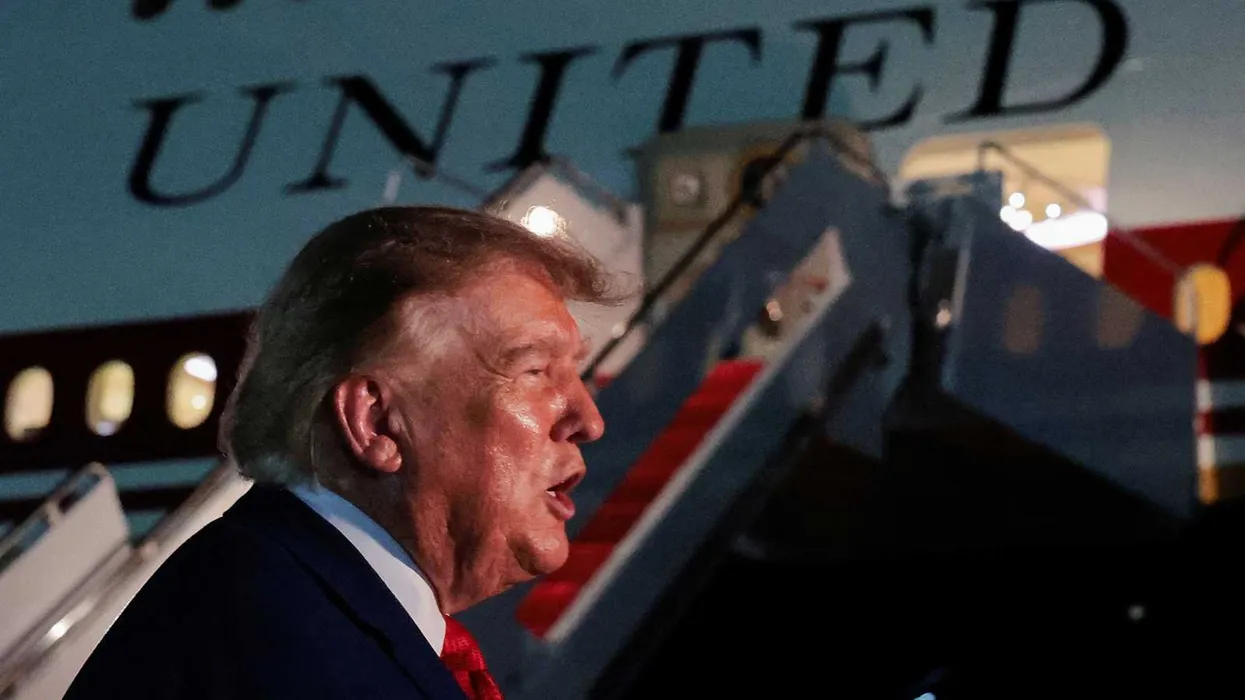
A cascade of leaks from within President Donald Trump's administration is shedding light on the circumstances surrounding his use of a gifted Qatari jet to travel to the NATO summit, and raising questions about the official narrative. The use of a foreign-government-provided aircraft for presidential travel is itself highly unusual, as sitting presidents typically fly on military aircraft maintained and secured by the U.S. Air Force.
Speaking with press critic Margaret Sullivan on Thursday, The New Republic's Greg Sargent noted that reports published Wednesday revealed the president had left key Cabinet members and staff behind as a decoy amid an alleged Iranian threat. Late Wednesday, it was further reported that U.S. intelligence agencies had never fully subscribed to the threat assessment in the first place.
The episode originated when Trump was informed of a credible Iranian threat to his life. Given Turkey's 350-mile border with Iran, the administration devised a plan to conceal the president in a catering truck and transfer him onto a plane belonging to Secretary Pete Hegseth.
"Now new leaks from inside the administration are making this whole affair look considerably darker," Sargent said.
The White House is currently managing the fallout from the leaked information, with an investigation underway led by the chief of staff and the director of the FBI. On Wednesday, details emerged about who was aboard the decoy aircraft: the president had left Secretary of State Marco Rubio behind while members of the press aboard the plane were left unknowingly exposed. Under longstanding White House protocol, a rotating group of journalists known as the traveling press pool accompanies the president at all times to ensure a continuous public record of the commander in chief's activities.
Later Wednesday evening, the Washington Post reported that the CIA had not accepted the intelligence, which originated from Israel. One official described the claims regarding threats to Trump's life as "Israeli-derived, not U.S.-generated, and viewed as low confidence." The revelation that a major presidential security decision was driven by foreign-sourced intelligence that U.S. agencies assessed as unreliable adds to scrutiny of how threat information is evaluated before being acted upon.
"As the President has said, he has faced numerous threats on his life, including ones from Iran, and every measure is taken to ensure his safety," a U.S. official said in a statement to the Post. "The United States Secret Service's core mission is protecting the President, which they achieved."
According to Sargent, several of Trump's most loyal aides were moved to the secret plane with him, including White House Deputy Chief of Staff Dan Scavino, Walt Nauta, another top aide, and Natalie Harp, Trump's executive assistant, whom Sargent described as functioning "like a security blanket to the president." The decoy flight carried Stephen Miller, Secretary of State Marco Rubio, a number of aides, and the traveling press corps.
Reporters were not informed of the plane swap and were left on the decoy aircraft. "All this neatly symbolizes Trump's abusive and authoritarian relationship with the media," Sargent said.
Sullivan echoed the concern, noting that Trump has long had a contentious relationship with the press. "He has treated the press in a very unusual and very bad way for years now, and unfortunately, many members of the mainstream media don't seem to care, or they don't know what to do about it," she said. "But they keep covering him in this very normalizing way. Like, 'Well, he's the president, so therefore we have to believe everything he says,' or, you know, treat it with a great deal of deference."
"And, you know, this, I think, is a very vivid example of what he thinks of them," Sargent added.
Sullivan argued that the White House could have withheld information from the press for legitimate security reasons but instead provided incorrect information. She suggested the White House Correspondents' Association should have intervened.
"But was there a huge outcry? Was there a sense of, 'My God, you can't do this. Is it an absolute outrage?' No," Sullivan said.
During a CNN segment on Thursday morning, former Rep. Adam Kinzinger (R-Ill.) said, "I think that's where the press has a right to be upset. If they were on that plane, they were basically made to be, in essence, bait."
CNN host Audie Cornish raised the possibility that dissatisfaction among staff may have been the source of the leaks. "I wonder if the staff was upset and that's why it got to the press. Do you know what I mean? Like, there were some people who were like, wait, what? Like we were all left behind as well?"
Critics including Jim Acosta, Jon Stewart, and John Oliver have drawn comparisons between the incident and the evening Trump was rushed to a bunker for protection from protesters located several blocks away, a reference to the June 2020 episode when demonstrators gathered near the White House during nationwide protests following the killing of George Floyd.

