'Knives Are Out': White House Allies Turn on Commerce Secretary Lutnick Over Nvidia Scandal
Key Takeaways
- •Commerce Secretary Howard Lutnick blocked investigations into Nvidia despite his former firm, now led by his sons, holding a stake of roughly $1.2 billion in the company.
- •President Trump was briefed twice on Nvidia CEO Jensen Huang's affair with a spy, according to New York Times reporting, despite previously denying any knowledge of the matter.
- •Seven current and former administration officials say the Nvidia scandal has significantly weakened Lutnick's standing, though Trump maintains 'complete confidence' in his commerce secretary.
- •Senate Banking Chairman Tim Scott has called on Lutnick and Huang to testify as soon as next month, with Lutnick's office confirming he will appear.
- •The scandal has sharply boosted legislative momentum for new curbs on semiconductor exports to China, with the National Defense Authorization Act seen as the likely vehicle.
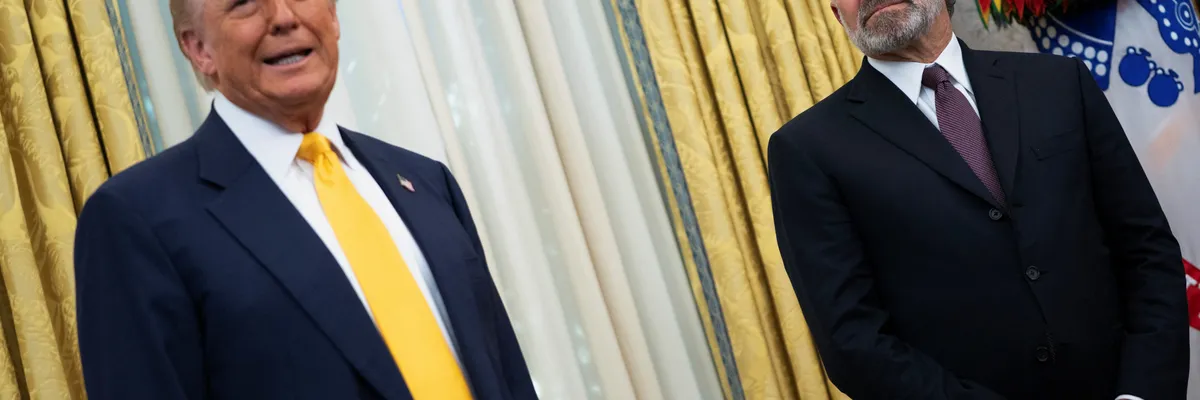
Commerce Secretary Howard Lutnick is facing intensifying scrutiny over his refusal to take action on AI chipmaker Nvidia, and colleagues inside President Donald Trump's administration are now openly calling for him to go.
It was reported this week that members of Trump's Cabinet were briefed on the spy with whom Nvidia CEO Jensen Huang admitted to having an extramarital affair. New York Times journalist Maggie Haberman then reported that the president himself was briefed on the matter twice — despite having previously denied knowing anything about it.
Compounding the pressure, a bombshell report revealed that Lutnick blocked any investigation into Nvidia, a company in which his former firm, now run by his sons, holds a significant stake of roughly $1.2 billion, according to CBS News. The situation deteriorated to the point that other Cabinet officials had to intervene and demand action, Axios reported. That inaction carries unusual weight because the Commerce Department, through its Bureau of Industry and Security, administers US export controls on advanced semiconductors — making the secretary the central gatekeeper over which American AI chips can be shipped to China.
Huang and Trump have cultivated a close relationship, even as Trump continues to draw on the 2022 CHIPS and Science Act, the bipartisan law that channels federal subsidies into domestic semiconductor manufacturing. There is now fear over whether Huang's relationship with Alice Huang, also known as Huang Le, resulted in intelligence being obtained for China — and whether Lutnick, along with Trump, allowed it to happen.
Politico Playbook reported Friday that the "knives are out" following Lutnick's "lax oversight" and ignored warnings, all while he gave Nvidia unusually favorable access. In the end, Lutnick had both the authority and the warning signs needed to tighten enforcement, but instead gave Nvidia a pass and resisted restrictions. Whether that reflects a defensible policy choice, mismanagement, favoritism or misconduct remains to be seen, but it has been enough for top Trump officials to call for his ouster.
Politico reported that seven current and former administration officials said the Nvidia scandal is significant enough to undermine Lutnick's standing in the administration. Trump, for his part, maintains that he has "complete confidence" in his commerce secretary.
Congress, meanwhile, is turning its attention to Lutnick — and Democrats have not even taken over the House and Senate yet. Senate Banking Chair Tim Scott (R-S.C.) has called on Lutnick and Huang to testify as soon as next month, and Lutnick's office said he will. The Banking panel's oversight jurisdiction includes the Commerce Department's export-control regime, positioning the requested testimony at the center of the accountability push.
"Huang's downfall has also significantly ramped up the legislative prospects for curbs on semiconductor exports to China," Playbook reported, citing a piece by Oliver Ward and colleagues. "It's a dramatic reversal from the more lax approach the White House previously took." The National Defense Authorization Act, Congress's annual defense policy bill, has historically served as a vehicle for US export-control legislation, making it a probable landing spot for any new semiconductor restrictions.
The Guardian reported Thursday evening that Trump officials are now discussing whether Lutnick must go.
Sen. John Curtis (R-Utah) said Lutnick's delay in enforcing controls on Huang's mistress's company "raises the question of whether the commerce department is acting in the best interests of the American people." He was one of several Republicans to voice concern. Speaker Mike Johnson (R-La.) similarly said there is a growing agreement among the caucus that it is time for Congress to step in if Lutnick refuses to act. Between the potential testimony next month and the newly energized push for export curbs, the coming weeks offer the clearest tests yet of whether Congress will act on the warnings Lutnick ignored.

