No October Surprise Coming for Trump on Iran, National Review Writer Argues
Key Takeaways
- •Dan McLaughlin argues that a last-minute 'October surprise,' such as a successful end to the Iran war, is unlikely to rescue Trump and Republicans before the November midterms.
- •McLaughlin says wars rarely conclude quickly, and the inflation caused by the conflict Trump began with Iran in February will likely still weigh on voters in November.
- •A second, chronic obstacle McLaughlin identifies is that many Americans do not trust statements from Trump or his administration, a credibility problem he says also damaged Trump during Covid.
- •Trump could only emerge looking like a winner if Iran capitulates, but McLaughlin doubts Iranian leaders would do that.
- •McLaughlin points to early-voting polling shifts, inflation readings, and Iranian signals about ending the conflict as the only realistic markers of a possible Trump rebound.
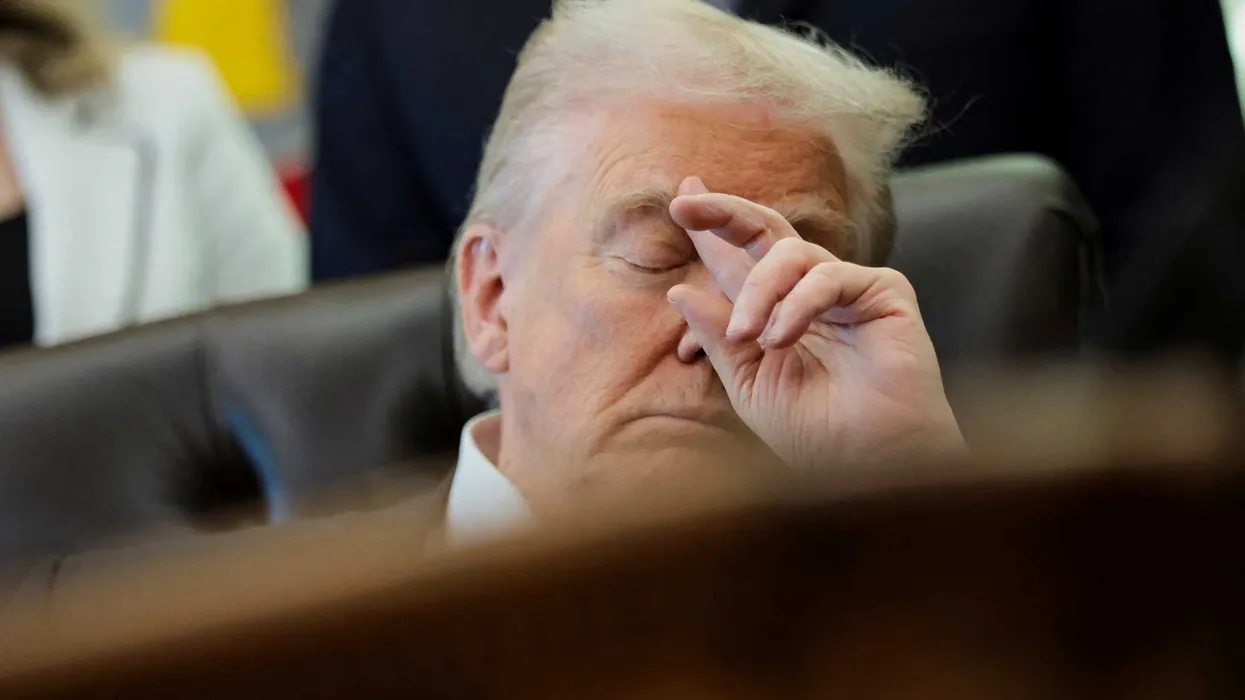
If President Donald Trump is waiting for some form of last-minute salvation to pull himself and Republicans back from the brink of disaster in November, conservative National Review writer Dan McLaughlin says he should stop watching the skies — because it is not coming.
"A perennial phenomenon every election season is the 'October surprise,' or some lesser version of the same: an event after Labor Day that, rather than boost or damage just one statewide or local candidate, changes the trajectory of elections nationwide," McLaughlin wrote. "... Donald Trump has one very large rabbit he could still pull out of his hat: a successful end to the war with Iran. But with early voting beginning as soon as the start of October in some jurisdictions, time is running short."
The term "October surprise" has a long history in American politics, most famously attached to the 1980 election, when Ronald Reagan's campaign feared President Jimmy Carter would engineer a pre-election release of the American hostages held in Iran — a moment that, ironically, also involved Tehran as the potential kingmaker of a U.S. election. Such late-breaking shocks are remembered precisely because they are rare; far more common are campaigns that end much as the fundamentals predicted.
According to McLaughlin, Trump's problem is twofold. First, wars do not end quickly — and Trump fooled himself into believing this one would when he launched his first attack against Iran in February. While it may be possible for Trump to declare defeat and hope Iranian leaders are willing to end the conflict without exacting a price from him, reaching a status quo that could plausibly be called a success is unlikely to happen fast.
Even then, as far as voters can tell, the war is not over, because the inflation Trump caused by starting it will likely not subside by November. Midterm elections are typically referendums on the party holding the White House, and inflation is among the issues voters weigh most directly at the ballot box — a structural headwind that a foreign-policy announcement in the campaign's final weeks would do little to erase.
The second problem, McLaughlin argued, is chronic: "Americans don't trust what Trump tells them, or what an administration that answers to Trump tells them."
Trump won two national elections because people trust him in certain ways, McLaughlin noted. They trust him to be tough on the border and immigration. They trust him to disregard norms and conventional wisdom "when these work to subordinate American interests to wider global interests." And until he squandered that credit with a tariff frenzy, they trusted him to deliver prosperity.
"But even many people who vote for Trump have always understood that he's a blowhard ... who will always put the best spin for himself on anything," McLaughlin wrote. "That bit him badly during Covid, when there was no enemy to fight and people needed a leader they could trust to be straight with them. And it's bad news in wartime, when the same trustworthiness is needed."
All of this means the rabbit is likely "to stay stuck in the hat through Election Day," McLaughlin concluded.
"Trump can probably get out of this looking like a winner only if the Iranians fold — and they are never inclined to do that, even if a purely rational reading of the American electoral situation would teach them that Trump will never be more dangerous or unconstrained than in the two months between getting a midterm electoral pasting and having to deal with a newly elected Democratic Congress," McLaughlin added.
For readers watching the campaign's final stretch, the piece sets out clear markers: whether early-voting window polling shifts after any Iran announcement, whether inflation readings improve before November, and whether Iranian leadership signals any openness to ending the conflict — the combination McLaughlin identifies as the only realistic path to a Trump rebound.

