Trump’s Intervention in Nvidia CEO Reinstatement Raises National Security and Ethics Questions
Key Takeaways
- •Nvidia's board unanimously reinstated Jensen Huang as CEO after Trump joined their meeting and reassured directors that Huang was not a national security threat and would not face criminal investigation.
- •Huang had been removed amid allegations of a relationship with Alice Huang, described as a Chinese Communist Party spy whose presence reportedly enabled Nvidia's advanced AI technology to reach the Chinese military.
- •Nvidia's stock rose 31% following Trump's intervention, recovering more than $1 trillion in market value and reportedly increasing the value of Trump's Nvidia holdings by $15 million.
- •The article alleges financial motivations behind the intervention, including Trump trading $100 million in Nvidia stock, a $25 million donation from Huang to Trump's ballroom, and a secret arrangement allowing Nvidia to sell chips to China for a share of revenue.
- •The Securities and Exchange Commission has opened an inquiry into Nvidia, and incoming House Speaker Hakeem Jeffries has called for a swift congressional investigation into business malfeasance by Nvidia and alleged abuse of power by Commerce Secretary Howard Lutnick.
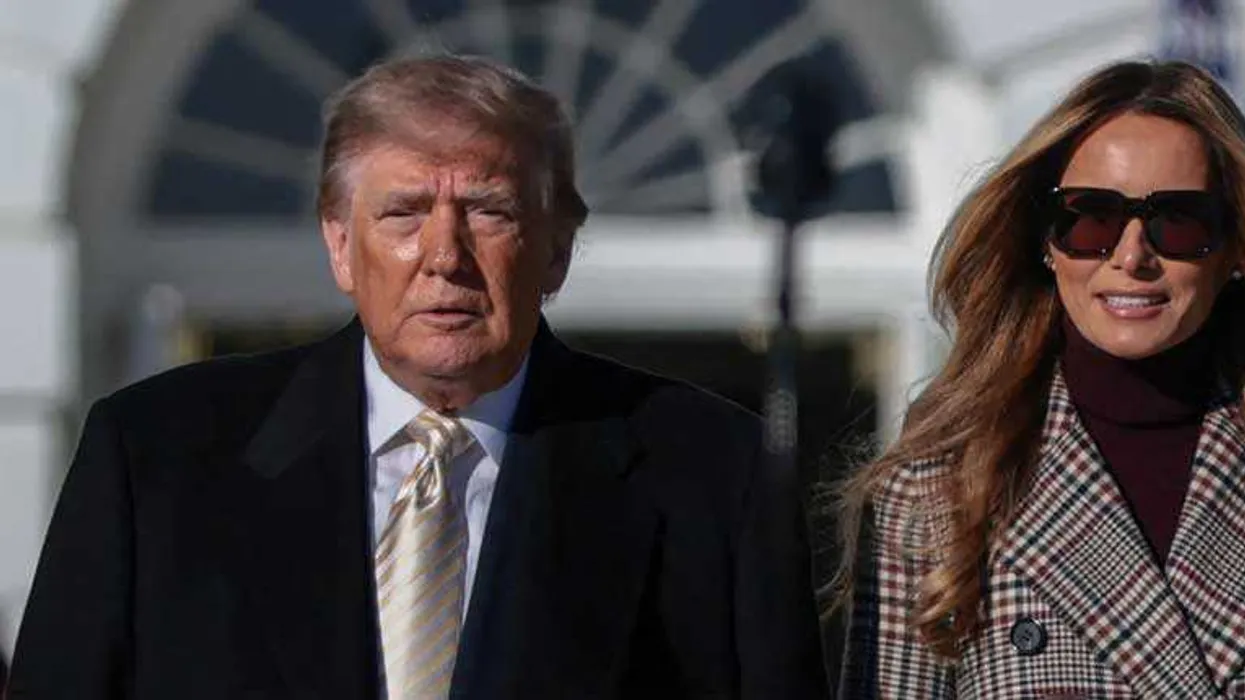
Donald Trump’s reported intervention to pressure Nvidia to reinstate founder Jensen Huang as chief executive has prompted questions about presidential involvement in a publicly traded company, national security and potential conflicts of interest.
Nvidia’s board unanimously agreed to reinstate Huang after Trump joined a meeting of its directors and “reassured” them that Huang was not a national security threat and therefore would not face a criminal investigation, according to The New York Times.
The account described by the source article says Huang had been removed after an alleged relationship with Alice Huang, who is described as a Chinese Communist Party spy. The article claims that her presence enabled Nvidia’s advanced artificial intelligence technology to reach the Chinese military, placing the United States behind its principal rival in the race for AI dominance. The claims sit at the center of one of the most sensitive fronts in US-China technology competition: Washington has for years restricted exports of advanced AI chips to China, and Nvidia’s processors have repeatedly been at the heart of those controls. Nvidia subsequently opened an investigation. Reuters reported that the Securities and Exchange Commission had also opened an inquiry, which the article speculates could later be dropped.
Trump said that if Nvidia did not take Jensen Huang back, Huang might move to China—a statement that, as the article notes, would itself suggest that he posed a national security concern. Trump also said he had discussed Huang with Chinese President Xi Jinping. After that conversation, The New York Times reported, Trump decided he would “do whatever he could to help Mr. Huang get his old job back,” despite intelligence warnings that Huang’s relationship with Alice Huang presented a security risk.
Vice President JD Vance was involved in discussions between Huang and Nvidia, although “only a tiny handful of officials at the highest level of the government were aware of these conversations.” The article further claims that Trump, Secretary of State Marco Rubio and Defense Secretary Pete Hegseth knew that Alice Huang was a spy before news of her relationship with Jensen Huang became public.
Brian Phillips compared the alleged situation to a hypothetical Cold War scandal: “If US military contractors had been caught selling enriched uranium to Soviet-controlled weapons labs at the height of the Cold War with the full knowledge of the president and the secretary of defense, it would have caused a scandal so seismic you’d have studied it in school.”
The article alleges that Trump did not act because he benefited financially. It says Trump traded $100 million in Nvidia stock, while Jensen Huang “donated” $25 million to Trump’s ballroom. It also says Trump approved a secret arrangement allowing Nvidia to sell chips to China for “a cut of the revenue.” According to the article, Commerce Secretary Howard Lutnick arranged the deal and bribed Trump with $25 million to retain his position after reports emerged of Lutnick’s connection to Jeffrey Epstein.
The author rejects the possibility that Jensen Huang was merely the victim of a so-called honey trap, writing that he was probably a willing participant. The article further suggests that Xi Jinping asked Trump to intervene after Huang was allegedly caught in the relationship so that Huang could return to selling technology to China.
Jake Lahut said Trump’s national security officials believe “we are getting played by China is growing a lot stronger than the case that we’re not.” Lahut added that “someone or something” was behind recent technology outages and was “effectively demonstrating a presence of ‘let’s turn some stuff on and off again and see if you notice’ and I think the American people are noticing.” The article argues that Trump may have been willing to intervene because he could conceal his alleged complicity while profiting from the arrangement.
The reasons Nvidia’s directors agreed to reinstate Huang remain unclear. Lindsay Beyerstein wrote on Bluesky that “it was obvious to them that he was a liability for their company. They only took him back because Donald Trump strong-armed them.” She added that the board had accepted a chief executive who was “utterly dependent on the president,” meaning that “all freedom of action or independent judgement is gone.”
Another possibility, the article says, is that Nvidia’s board wanted the president to exercise the kind of direct control associated with authoritarian governments. Jonathan V. Last wrote in The Bulwark that Nvidia capitulated “because the United States is now a country where the maximum leader dictates personnel decisions of private companies.” Last called that system “communism” and said, “Donald Trump is a communist.”
The source article also presents fear of government retaliation as a possible explanation. Trump “assured” Nvidia’s directors that his administration would not investigate Huang if they reinstated him, implying that an investigation could follow if they refused. Ed Elson wrote on X that Nvidia’s stock could suffer over time while a weak and discredited leader remained at the top.
Trump has described Russian President Vladimir Putin as a friend but said he “can’t speak” to whether Putin is a friend of the United States. He has made similar comments about Xi. The article argues that Trump values those relationships more than patriotism. Nvidia’s stock rose 31% after Trump’s intervention, recovering more than $1 trillion in market value lost the previous day—a swing of that magnitude reflecting the company’s role as the dominant supplier of the processors powering the global AI build-out. The rise reportedly increased the value of Trump’s Nvidia holdings by $15 million. Judd Legum reported further details.
The article says the episode reinforces the message that Trump offers “to my friends, anything; to my enemies, the law.” Billionaire hedge fund manager Bill Ackman welcomed Huang’s reinstatement, saying “the wisdom of the crowd prevails.” Daniel Drezner wrote that, after Republicans were defeated in the midterm elections on affordability and accountability, “Trump, Huang, and the rest of Silicon Valley have decided that consequences are for the little people.” The article also invokes the late George Carlin’s line: “It’s a big club and you ain’t in it.”
The political consequences could extend beyond arguments about communism, according to the source. Republicans may withstand criticism that they are adopting communist practices, but the article says lawlessness, corruption, treason and a president appearing to disregard voters could be more damaging. It describes the 2026 midterm elections as a revolt against artificial intelligence and the data centers that support it. One advocacy group called 2026 “the first AI and tech accountability election.”
After the election, David Holt, the Republican mayor of Oklahoma City, said “the American people rejected the Republican Party in its totality because it had become undeniable that this is now, in fact, a fringe party, unworthy of governance.” The article argues that Trump’s actions could weaken the Republican Party’s moral standing while strengthening Democrats’ political position.
Senator Kevin Cramer has raised “the legal and reputational risk of hiring a CEO who may very well be convicted in the United States or other nations of violating espionage and export control laws.” Incoming House Speaker Hakeem Jeffries has called for congressional action. “Congress will not be deterred from conducting a swift, thorough and wide ranging investigation into business malfeasance by Nvidia and corrupt abuse of power by Howard Lutnick,” Jeffries said. “We will not allow America’s national security to be sold out by the Trump administration for personal financial gain.” The formal channels through which the allegations could now be tested—the SEC’s inquiry and the congressional investigation Jeffries has promised—frame the story’s next phase.
The source article concludes that the Nvidia controversy could be only the beginning of a broader scandal during Trump’s remaining two years in office.
Source: Alternet.

