Tillis Sidesteps Questions After Trump Calls North Carolina One of the Most Violent States
Key Takeaways
- •President Trump said at a rally for Michael Whatley that North Carolina is among the most violent states, attributing the alleged decline to former Democratic Governor Roy Cooper.
- •FBI data reviewed by News places North Carolina at No. 21 in violent crime, well outside the top 10 states.
- •Six of the 10 states with the highest violent crime rates are entirely Republican-led, while only three are helmed by Democrats.
- •The FBI recorded its largest national decline in violent crime between 2024 and 2025 in the history of its tracking.
- •Attorney General Todd Blanche described North Carolina's communities as safer at the same event, contradicting Trump's characterization, while Senator Tillis avoided direct questions on both matters.
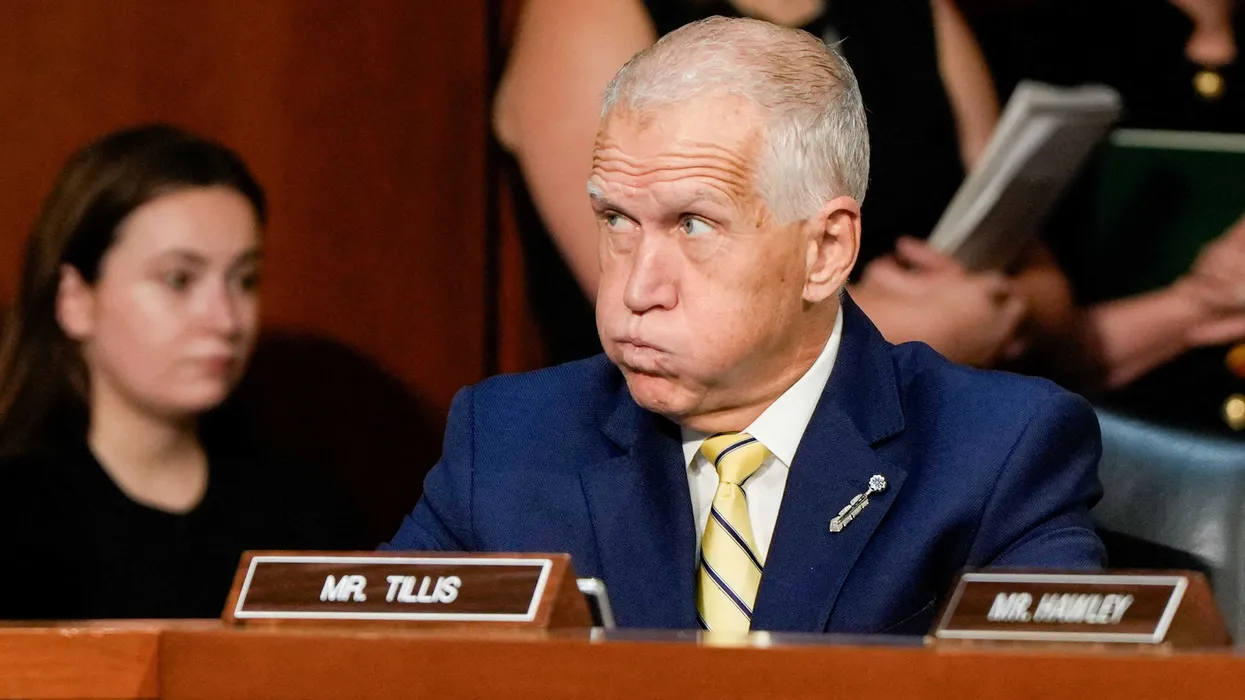
Senator Thom Tillis (R-NC) faced an awkward task on Thursday: responding to an inaccurate claim about the state he represents, made by President Donald Trump the night before. At a campaign rally for MAGA Senate candidate Michael Whatley, Trump declared that North Carolina is "one of the most violent" states in the country.
Trump attributed the state's supposed decline to former Democratic Governor Roy Cooper, Whatley's opponent in the Senate race. "Nobody used to think of North Carolina as a dangerous state, criminally dangerous," Trump said. "It was apple pie. And now it's one of the most violent and one of the worst in the whole nation." With Whatley and Cooper now going head-to-head for the seat, the dispute over how safe North Carolina actually is — and which party's governance gets the credit or the blame — is already part of the campaign's terrain.
When Spectrum News asked Tillis about the president's remarks the following day, the senator declined to criticize the statement. "The president should probably take a look at the top 10 states for danger and look at who's governing it," Tillis said.
Spectrum did precisely that, drawing on the FBI's most recent crime data. North Carolina does not appear anywhere near the top of the list, sitting near the middle at No. 21. The ten states with the highest rates are Alaska, New Mexico, Arkansas, Louisiana, Tennessee, Kansas, California, Colorado, Montana, and Missouri.
Following Tillis's suggestion and examining who governs those states complicates Trump's assertion that Democratic leadership drives crime upward. Alaska, which tops the list, has a Republican governor and two Republican senators. Six of the top ten are entirely Republican-led, while only three are helmed by Democrats. Kansas has a Democratic governor but two Republican senators. For readers tracking the debate, the FBI figures and that partisan breakdown offer a way to test campaign rhetoric against the data, state by state.
Violent crime remains among Trump's most frequent talking points, but Spectrum noted that "the FBI also says violent crime nationally saw its biggest decline from '24-'25 in its history of tracking." That record-setting national drop is the backdrop against which this week's claim about North Carolina — a state ranked No. 21 — is being made.
Tillis was also asked whether it was appropriate for Attorney General Todd Blanche to appear at Trump's campaign events, as he did in North Carolina. Department of Justice officials have long been expected to keep their distance from partisan politics, though Trump's relationship with the DOJ has repeatedly broken down that barrier. On this question, Tillis again dodged. "I'm not going to speak on Blanche," he said.
Notably, while Tillis was unwilling to directly contradict Trump's description of North Carolina's cities as "blood-soaked killing fields," Blanche himself did so just before the president took the stage. "North Carolina is ground zero for exactly what is working," Blanche said. "Communities are safer." The split leaves the safety debate at the heart of the race with an unresolved contradiction: the president and his own attorney general described the same state in opposite terms, while the senator who represents it has so far sidestepped every direct question about it.

