Haberman and Swan Say Trump Came Close to Suspending Habeas Corpus
Key Takeaways
- •Stephen Miller originated and repeatedly pushed the proposal to suspend habeas corpus, directing the Justice Department to study its feasibility after Trump expressed interest in April 2025.
- •Staff Secretary Will Sharf prepared two confidential memos examining the historical basis for suspending habeas corpus and concluded there was little legal justification for such a move.
- •Haberman noted that Trump's second-term administration is staffed with officials willing to execute his directives, unlike his first term which included more internal resistance to radical proposals.
- •Vice President JD Vance proposed invoking the Insurrection Act to suppress protests following the killing of Alex Pretti by ICE agents, though even Miller objected at that point due to unresolved legal questions.
- •Both journalists emphasized that suspending habeas corpus remains an active possibility for Trump, characterizing it as a "loaded weapon" rather than a definitively rejected idea.
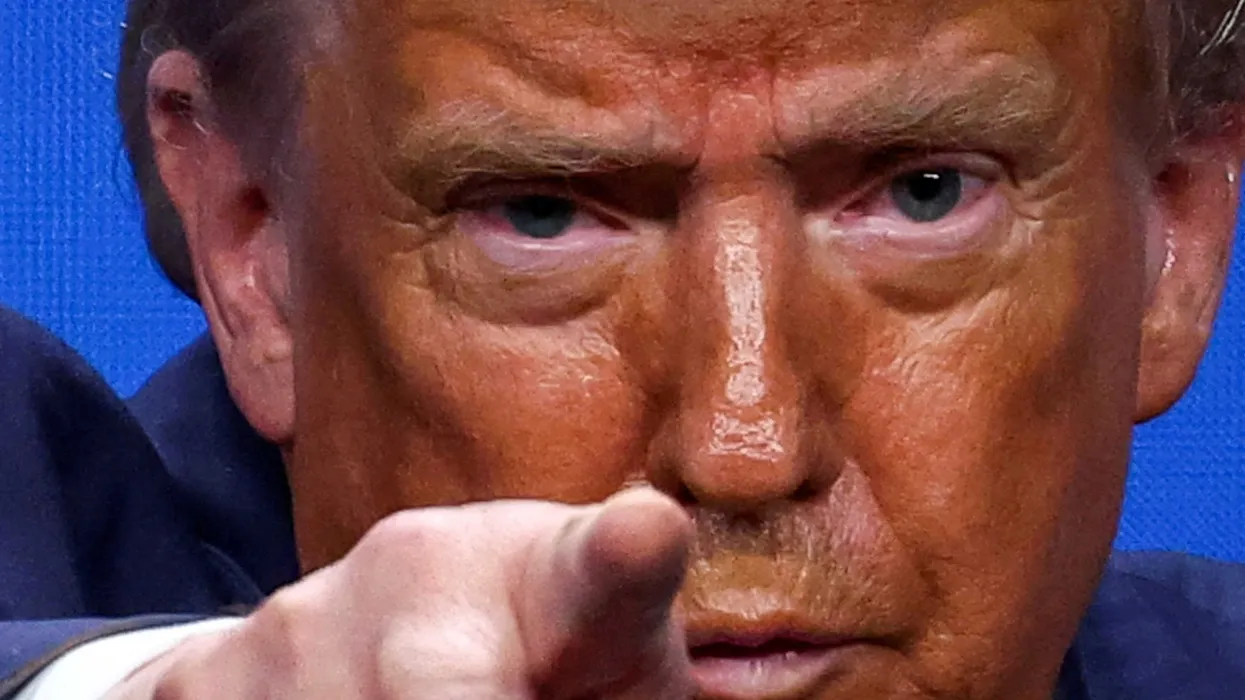
Journalists Maggie Haberman and Jonathan Swan said Friday that President Donald Trump came close to suspending the constitutionally protected right of habeas corpus during his second term, and they warned that the idea remains, in their words, a “loaded weapon” available to him.
Haberman and Swan, the authors of Regime Change, discussed the Trump administration in an interview with Lawfare Senior Editor Roger Parloff. During the conversation, they described internal deliberations over habeas corpus and said the issue was treated far more seriously inside the administration than was publicly understood.
According to Haberman, by April 2025 Trump was publicly considering suspending habeas corpus after the Supreme Court limited his ability to send migrants overseas without trial. She said Trump was frustrated and, during a Cabinet meeting, referred to “one thing three presidents have used very strongly,” a reference to the Insurrection Act. CNN reported several days later that Trump had been discussing the suspension of habeas corpus, though the public episode quickly receded.
Habeas corpus allows a person detained by the government to challenge the legality of that detention before a judge. The Constitution’s Suspension Clause says the privilege may not be suspended “unless when in Cases of Rebellion or Invasion the public Safety may require it,” which is why any internal discussion of suspending it carries unusually high legal and constitutional stakes.
“But we were really obsessed with it,” Haberman said, “because habeas corpus is enshrined in the Constitution. It is older than the Magna Carta. It is one of the most fundamental rights of due process, and the idea that a president would think that this was something he could just end ... Stephen Miller was openly endorsing this, so we went down this rabbit hole to try to understand it. What we learned was the discussions were extremely serious.”
Haberman said the proposal originated with Miller, who repeatedly pushed the idea. “The president was interested,” she said, and Miller directed the Justice Department to study the question, “which was astonishing — that it went that far — and a reflection of how serious it was.”
The discussion led to confidential memoranda prepared by Staff Secretary Will Sharf, whom Haberman described as a “very conservative lawyer” and a strong Trump loyalist. Haberman contrasted Trump’s second term with his first, saying the earlier administration included officials and staff members who were uneasy with, or resistant to, some of Trump’s most radical proposals. In the second term, she said, the administration was staffed with people prepared to follow his direction. Sharf, she said, was among them and “has endorsed almost all of Trump's most radical and extreme agenda items.”
Sharf prepared two memos outlining the historical context for suspending habeas corpus and ultimately concluded there was little legal basis for such a move, according to Haberman. The memos were then sent to Chief of Staff Susie Wiles for presentation to Trump.
“They're very dry these memos,” Haberman said, “but the point is very clear: this is a line the administration should not cross. That kind of a memo is not getting written if this is just some kind of idle talk. It was put back on the shelf, but like all ideas with Trump, you know these are loaded weapons on the shelf.”
Swan said the idea resurfaced in January after ICE agents killed Alex Pretti, when Vice President JD Vance proposed invoking the Insurrection Act to suppress protests. The Insurrection Act is a separate federal law that can allow a president to deploy military forces domestically under specified circumstances, and debates over its use often turn on both statutory limits and constitutional constraints. According to Swan, even Miller objected at that stage, saying officials had not “explored whether the law will stretch to accommodate” it. Swan said, “They end the meeting in this sort of no man's land. They basically decide to put it aside.”
“But it wasn't this definitive decision — We will never do this,” Swan said. “It's something that Trump himself has expressed a desire to do many, many times. Stephen Miller clearly has expressed an eagerness to do it. So it's just waiting there. It's waiting there for the moment. It is not like they flirted with these things and now it's the furthest thing from their mind. That’s not the case.”

