Trump Names Will Scharf as White House Counsel, Citing Loyalist With Limits on Executive Power
Key Takeaways
- •Will Scharf will become White House counsel on September 1 after serving as White House staff secretary.
- •He will replace David Warrington, who is leaving to return to the private sector.
- •White House counsel advises the president on executive orders, presidential authority, and legal exposure.
- •Maggie Haberman said Scharf generally backs Trump but has pushed back on using the Insurrection Act and suspending habeas corpus.
- •Scharf also helped secure approval for Trump’s proposed $400 million White House ballroom and backed the Supreme Court immunity case.
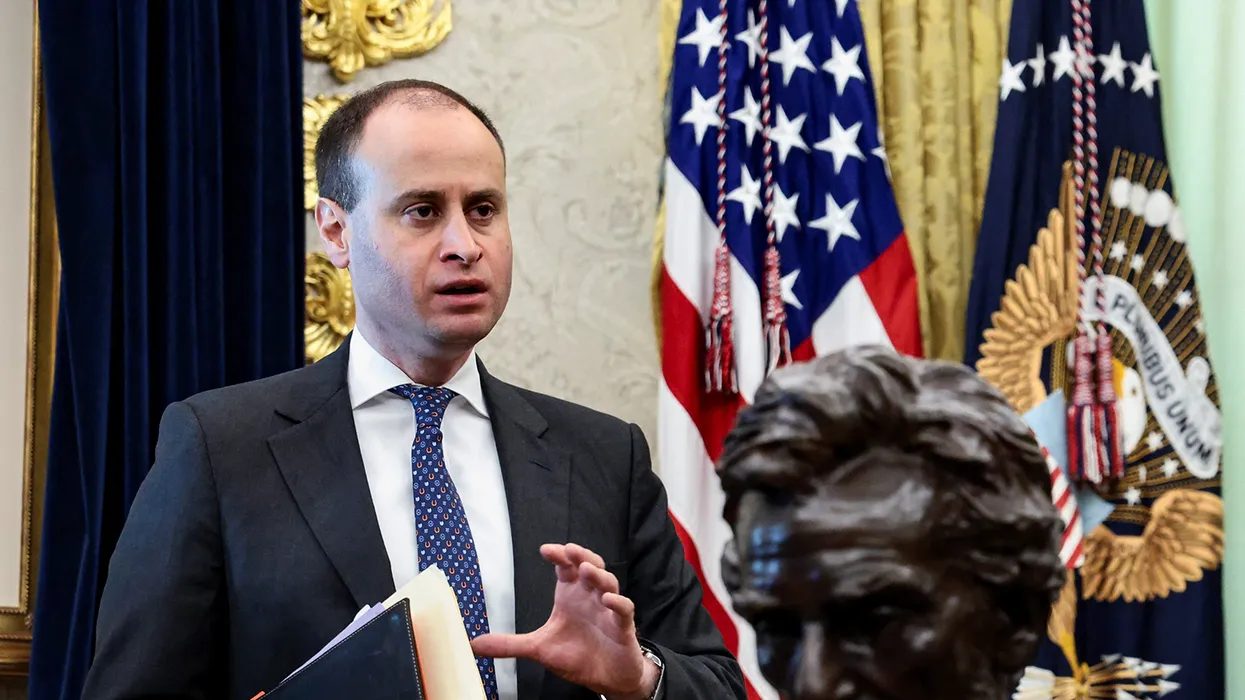
President Donald Trump has selected Will Scharf to serve as White House counsel, tapping a figure who has held the role of White House staff secretary since 2025. The White House counsel serves as the president's chief legal adviser, responsible for vetting executive orders, interpreting the bounds of presidential authority, and managing the administration's legal exposure. According to New York Times reporter Maggie Haberman, Scharf faces a demanding assignment, as Trump has historically been "very hard" on his White House counsels — a pattern visible during his first term with Don McGahn, who served from 2017 to 2018, and Pat Cipollone, who held the role from 2019 to 2021, both of whom at points resisted presidential directives they considered legally untenable.
Haberman made the remarks during a Monday, August 10 appearance on journalist Peter Alexander's new program on MS NOW. She characterized Scharf as a steadfast Trump loyalist but noted that he may encounter friction in the counsel role because he "has limits on what he will do."
Haberman, who co-authored the 2026 book "Regime Change: Inside the Imperial Presidency of Donald Trump" with journalist Jonathan Swan, has used appearances on both MS NOW and CNN to emphasize that Trump is operating with considerably more brazenness during his second presidency than during his first.
During the conversation with Alexander, Haberman underscored that although Scharf aligns with Trump on most matters, his occasional willingness to push back against the president could become a liability.
When Alexander described Scharf as an "ultimate loyalist," Haberman offered a nuanced rebuttal: "He is, but he also has some limits, Peter, on what he will do. One of the things we wrote about in the book, Jonathan and I did, is two issues where Will Scharf drew a line over the course of the last year and a half — where he got concerned about what could entangle this administration in legal fights that they might not be prepared for. One was about when to invoke the Insurrection Act, which is, you know, a loaded weapon on the shelf, as is the idea of suspending habeas corpus rights for undocumented migrants."
The Insurrection Act grants the president authority to deploy military forces domestically to suppress rebellion or enforce federal law, and has been invoked at points throughout American history, including during the Civil War and the civil rights era.
Expanding on the habeas corpus issue, Haberman continued: "You know, the right to due process under habeas corpus is an idea that predates the Magna Carta. It's enshrined in the Constitution. The Supreme Court has repeatedly upheld it very broadly. There was an episode that we wrote about where the president and (Trump White House adviser) Stephen Miller were really aggressively discussing, possibly just broadly, suspending these rights."
The Constitution's Suspension Clause, in Article I, Section 9, permits habeas corpus to be suspended only "when in Cases of Rebellion or Invasion the public Safety may require it," a threshold that has been met only rarely in U.S. history.
Despite those reservations, Haberman acknowledged Scharf's broader philosophical alignment with the president on executive authority: "But in general, Will Scharf is, as you say, he is somebody who generally believes in pretty expansive executive power. He was part of the president's team that fought for the immunity ruling at the Supreme Court, which has allowed President Trump, in President Trump's mind, to plow through all kinds of limits this term."
That ruling, Trump v. United States, issued by the Supreme Court in July 2024, established that former presidents are entitled to presumptive immunity from criminal prosecution for actions taken in their official capacity, significantly reshaping the legal framework surrounding presidential power.
Scharf's appointment as White House counsel takes effect September 1. He succeeds Trump ally David Warrington, who is returning to the private sector. Scharf has also been a prominent backer of Trump's proposed White House ballroom, having helped secure approval for the $400 million project.
Sources: PBS NewsHour, MS NOW via YouTube

