Trump Blames Minnesota for Cyberattacks on Water Systems, Dismissing FBI Assessment of Iranian Involvement
Key Takeaways
- •President Trump attributed cyberattacks on over 30 water facilities to Minnesota's incompetence during a Cabinet meeting at Camp David, rather than acknowledging FBI assessments pointing to Iranian involvement.
- •The FBI had previously determined that Iran-linked actors, including a group identified as CyberAv3ngers, were responsible for targeting water infrastructure systems across multiple states.
- •Governor Tim Walz, whom Trump criticized, is a Democrat who served as the 2024 vice-presidential nominee and leads a state that has not voted for a Republican presidential candidate since 1972.
- •Iran-connected hackers have exploited programmable logic controllers and industrial control systems in water facilities by taking advantage of devices with default or unchanged passwords.
- •Federal agencies warn that many of the nation's approximately 50,000 community water systems lack sufficient cybersecurity defenses against state-sponsored intrusions, prompting bipartisan legislative efforts to address the vulnerability.
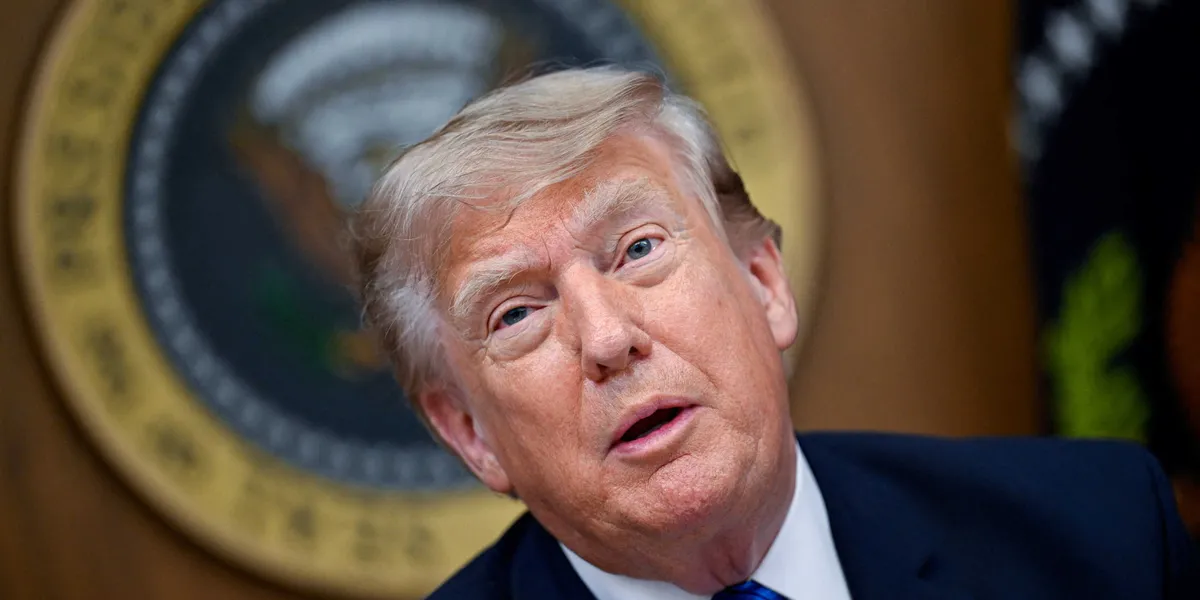
President Donald Trump deflected blame for cyberattacks targeting more than 30 water facilities, directing criticism at Minnesota rather than acknowledging law enforcement assessments pointing to Iranian involvement. The remarks came during a Friday Cabinet meeting held at Camp David, the presidential retreat in Thurmont, Maryland.
"I think I blame it on Minnesota because they're grossly incompetent," Trump said. He added, "I would blame it on Minnesota and the governor, the corrupt governor of Minnesota."
Minnesota's governor is Tim Walz, a Democrat who gained national prominence as the Democratic vice-presidential nominee in the 2024 election cycle. During that campaign, Walz frequently characterized Trump and his running mate as "weird," a label that resonated widely across Democratic messaging. Minnesota has not voted for a Republican presidential candidate since 1972.
Critics interpreted Trump's comments as politically motivated retaliation against a state that has consistently rejected him at the ballot box. The FBI had previously assessed that Iran was behind the cyberattacks on water infrastructure systems, with the campaign targeting facilities across multiple states. Iran-linked actors, including a group publicly identified as "CyberAv3ngers," have previously targeted programmable logic controllers and other industrial control systems used in water and wastewater facilities, often by exploiting devices with default or unchanged passwords.
Journalist Aaron Rupar reacted on Bluesky: "Just incredible to watch the US president take Iran's side when my state's water systems are under cyberattack."
Political strategist Sawyer Hackett noted on X: "His own FBI assessed it was Iran." He added, "They also said they attacked multiple states."
Other observers raised broader concerns that the president appears to be treating Democratic-leaning states as greater threats than foreign adversaries. One commentator warned on Bluesky: "Every state that didn't vote for him is now in danger."
Cybersecurity agencies, including the FBI and the Cybersecurity and Infrastructure Security Agency (CISA), have previously issued advisories about foreign actors targeting critical U.S. infrastructure, particularly water and wastewater systems, which often operate with limited cybersecurity resources. The Environmental Protection Agency has also warned that many of the nation's roughly 50,000 community water systems lack the capacity to defend against state-sponsored intrusions, a vulnerability that bipartisan congressional inquiries have sought to address through pending infrastructure security legislation.

