Fascism Historian: Trump Conceded on Election Night, but the Danger Isn't Over
Key Takeaways
- •President Trump conceded the Democrats' midterm victory despite having previously threatened to use federal force to rig the 2026 elections.
- •Historian Federico Finchelstein says Trump accepted the results because the vote margin was 'too big to rig,' not out of respect for democratic norms.
- •Trump elevated Stephen Miller, whom Finchelstein describes as possibly the most fascist figure in his administration, to chief of staff, signaling no conciliation toward Democrats.
- •Democrats will hold majorities in both the Senate and the House when the new Congress takes office on January 3 under the 20th Amendment, gaining subpoena power and the federal purse.
- •Finchelstein warns that Trump should not be normalized and that attempts at anti-democratic actions, such as the January 6 Capitol attack, cannot be ruled out during his remaining two years.
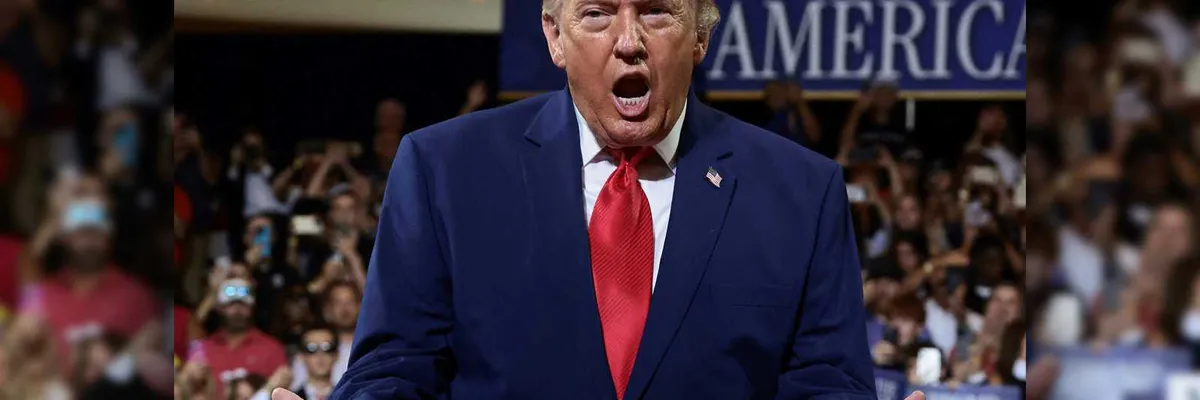
President Donald Trump conceded the Democrats' takeover of Congress on Election Night — even after repeatedly threatening to use federal force to rig the 2026 midterm elections. But for Dr. Federico Finchelstein, a leading historian of fascism at The New School in New York, the concession reflected less a return to democratic norms than a reluctant admission of arithmetic: Trump appears to have concluded that the overwhelming popular vote against him made the elections, in the words of a person close to him, "too big to rig."
Finchelstein — author of histories of fascism including "A Brief History of Fascist Lies" and "The Wannabe Fascists" — warns that the same president who attempted a coup after losing the 2020 presidential election is still trying to impose his will on the United States through authoritarian means. Democrats will soon hold commanding majorities in both the Senate and the House of Representatives. Yet as Finchelstein told AlterNet in an exclusive interview, that will not dampen Trump's desire to realize fascist goals.
The interview, conducted by AlterNet's Matthew Rozsa, has been lightly edited for clarity, context and length.
Why Trump conceded
Rozsa noted that Trump has done surprisingly little to contest the results of the midterm elections. Although the president recently posted that he believes the elections were rigged, that response bore no resemblance to his coup attempt after losing the 2020 presidential election. He asked whether Trump's behavior is best explained through the context of fascist ideology, or by something more personal.
"Well, I think both," Finchelstein replied. "I think his personality is that of a very erratic individual. And in addition to that, he was himself surprised by the reality check. As some person close to him said, it was too big to rig. And that's probably why there was this delay in reacting as one would presume Trump would react, which is by further denial of reality and by rejection of any kind of concession."
In Finchelstein's view, Trump's early response was "more congenial" than many anticipated, but it was quickly followed by "the normal radicalization of Trumpism" — the elevation of Stephen Miller, a senior adviser in Trump's first White House and a principal architect of its hard-line immigration agenda, whom Finchelstein described as "maybe one of the most fascist individuals within the Trump administration," to a powerful post.
"So at the end of the day, even if the strategies are yet to be defined, and they would be erratic as they have been, the ultimate response, and almost immediate response, is that of radicalization," he said.
The lame-duck years
Rozsa then turned to the future. Trump has two years left during which he will be a lame duck — an officeholder in the final stretch of his tenure, and for Trump a final term, since the Constitution's 22nd Amendment bars anyone from being elected president more than twice — and his choice of Stephen Miller as chief of staff makes clear that he does not plan to be conciliatory toward the Democrats even after they take over Congress. What, he asked, can the American people expect, viewed through the dual prisms of Trump's fascist ideology and his deteriorating psychology?
"Regarding Trumpism, as you know, I talk about wannabe fascism as a sort of Trumpist aspiration to fascism, which so far has remained quite incomplete, quite erratic, and maybe can never be accomplished, and yet he's trying, and he has been trying," Finchelstein said.
He pointed to the combination of Trump's "extreme authoritarian personality," his narcissism and "his own belief in his own cult of the leader," set against the reality check — a contradiction that Trump refuses to acknowledge.
"That is to say, between his idea that he's extremely powerful and the reality that he's a lame duck," Finchelstein said. "Then we might expect more conflict and more polarization, insofar as this is a person who doesn't even want to acknowledge what the majority of voters have expressed, which is a rejection of his extremely radical authoritarian policies."
"This logic, or this dynamic, of radicalization will continue," he added. "To put it in a different way, the less power he has, the more potential for violence, erratic behavior and illegality we might have."
The institutional counterweight, meanwhile, is fixed in the constitutional calendar: under the 20th Amendment, the new Congress takes office on January 3, handing Democratic majorities in both chambers the committee chairmanships, the subpoena power and the federal purse.
A mythical past, reinvented
Rozsa next raised Roger Griffin's book "The Nature of Fascism," the 1991 study in which the British scholar describes fascism as palingenetic ultranationalism — palingenesis being the word for rebirth, a definition that places the myth of a nation rising from decline at the ideology's core. Trump, he observed, seems fixated on describing himself as returning America to a previous glory day while simultaneously reinventing it — whether through his architectural renovation projects or his scrubbing of so-called DEI content, shorthand for diversity, equity and inclusion, from public monuments. Asked whether that aspect of Trump's agenda is explicitly fascist, and whether the president will keep pursuing it despite being a lame duck, Finchelstein was unequivocal.
"Well, to me, there is no question that there are fascist tendencies in Trumpism, and that's why I talk about wannabe fascism," he said. "In my own work, I stress these connections between the cult of personality and the mythical ideas that fascism presents of both the past and the present."
"When we talk about the past within Trumpism, which, as I said, has fascist tendencies, it's important to point out that that past never existed in the first place," Finchelstein continued. "This is a fantasy, a myth. So the idea that things were great in America at some point is extremely problematic, insofar as they might have been great for some people and way worse for others. So these fantasies about the past relate to a past that never existed."
The problem, he argued, is that this mythical past is then projected into the present and the future with further fantasies, becoming ever less attached to reality.
"That is not what democratic politicians do, and that's why Trump, who is an authoritarian, is so problematic," Finchelstein said. "His idea of the American nation is extremely chauvinistic, and it implies the exclusion of many others, both in the past and in the present."
Could he still try to become a dictator?
Rozsa asked what Americans should anticipate in terms of Trump attempting to destroy the country's democratic infrastructure — whether the midterm results have permanently stopped him, or whether he could still try to become a dictator, ensure one-party rule indefinitely, declare a national emergency and implement martial law, or in some fashion achieve his fascist ideal.
"Given what we know about Trumpism in the past, and unfortunately about authoritarian movements, including fascism, in the past, we cannot rule out all those conflicts and anti-democratic situations that you are presenting as possibilities," Finchelstein said. "That cannot be ruled out, given the fact that this is a person who attempted it."
The lesson, he argued — including from the naming of Stephen Miller — is that Trump should never be normalized. In the first hours after his defeat, which Finchelstein described as a personal defeat because Trump asked voters to think that he was on the ballot, media outlets and pundits indulged expectations and fantasies about Trump accepting the results and becoming a kind of presidential leader.
"This attempted further normalization of Trump — it seems that we never learned from that," Finchelstein said. "Trump will not be a normal democratic politician. In terms of democracy, he's not. And he should not be normalized like that, because he's a person with whom all these conflicts and anti-democratic situations we are talking about cannot be ruled out. He tried it before. There is no reason to think that he will not try that again."
Advice for resistance
Rozsa's final question was what advice Finchelstein has for ordinary Americans on how they can resist.
"Well, Americans have expressed their rejection of the Trumpist model of government, which is an authoritarian one," Finchelstein said. He described that model as offering "this combination of the lack of justice and the lack of income," pushing income inequality to the extreme while pushing democracy "to the border, or to the frontier, of its destruction."
"The lesson is that voters should make clear that they have expressed their take and that the government should respect their take," he said. "Trump should not be normalized, because we cannot expect that he will do so, and yet there are many avenues of resistance toward those possibilities."
Finchelstein added that he hopes "both representatives in Congress and other members of the state apparatus will recognize that this is the case, and that Trump cannot do what he wanted to do, for example, on January 6th." That was a reference to January 6, 2021, when a pro-Trump mob stormed the U.S. Capitol while Congress met to certify the results of the 2020 election.

