Trump's Midterm Travel Schedule Strays From Pledge to Hit All 35 Competitive Races
Key Takeaways
- •Trump pledged to visit all 35 of the most competitive midterm races, saying he would not have time for less-competitive contests.
- •Instead, his itinerary has featured Alabama, Oklahoma, and a Syracuse event for New York GOP gubernatorial nominee Bruce Blakeman, a gap CNN senior reporter Aaron Blake highlighted on X.
- •A Marist poll shows Governor Kathy Hochul leading Blakeman 53 percent to 42 percent, while Trump's job approval in New York stands at 38 percent.
- •Forty-four percent of New York voters said their congressional vote would primarily be against Trump, compared with 22 percent who said it would favor him.
- •Republicans argue the stops hold strategic value, pointing to Blakeman's upstate polling lead, nearby media markets reaching voters in Texas and the Florida Panhandle, and New York House districts that could help decide congressional control.
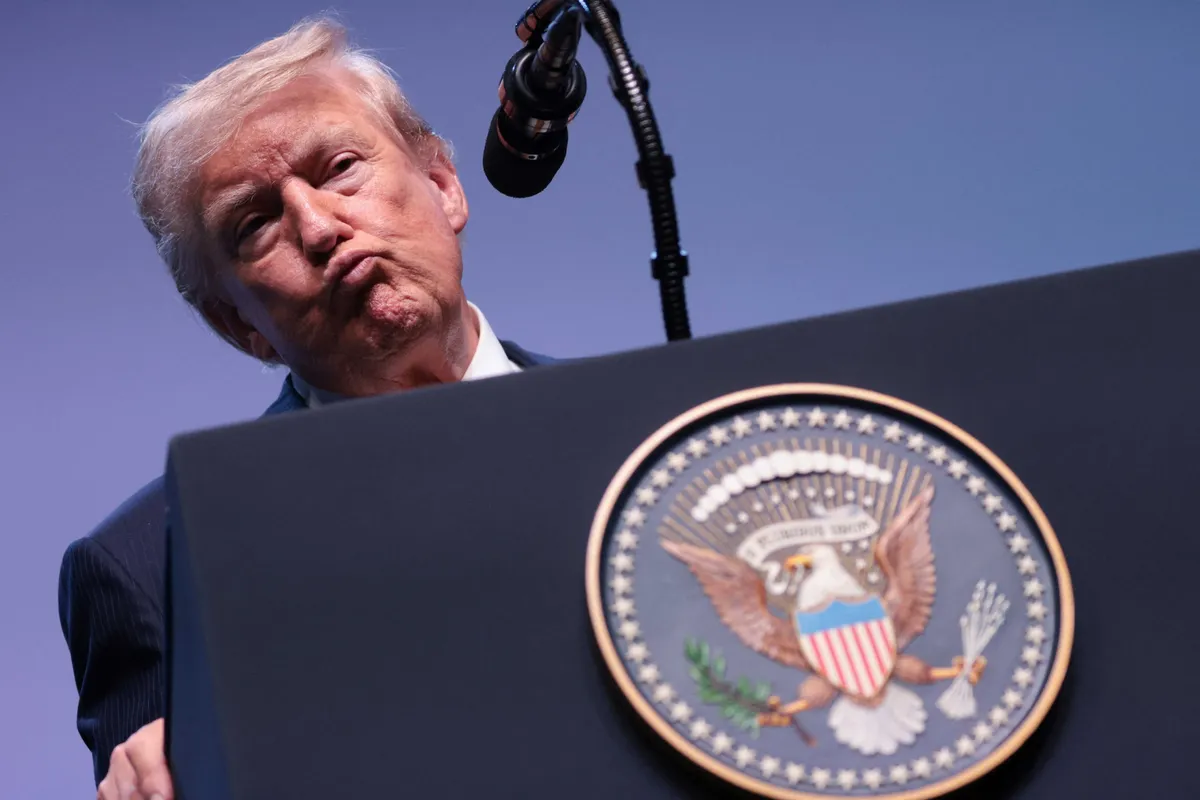
President Donald Trump pledged to spend the final weeks before the midterm elections campaigning in the states with the closest races, but his early travel itinerary is telling a different story.
On Friday, Bruce Blakeman, the Republican nominee for governor of New York, is scheduled to hold a campaign event in Syracuse — adding another stop to a growing list of places that do not align with the president's stated plan to concentrate on the country's most competitive contests.
Aaron Blake, a senior reporter at CNN, flagged the discrepancy in a post on X. As Blake wrote on X, “Trump last month spoke repeatedly about how he was going to all 35 of the most competitive races and how he wouldn't have time for less-competitive races. Since then, he's gone to Alabama and Oklahoma, and is now going to New York for a candidate trailing by double-digits.”
“It's all about 35 races,” Trump said at a recent White House dinner with Republican lawmakers. He later vowed, “I'm going to go to every one of those 35 places.”
New York's governor's race, at least according to the numbers, does not fit within those initial plans. Governor's contests decide control of state executive offices, but the congressional races running alongside them are what shape the balance of power in Washington.
A poll released by the Marist organization on Wednesday showed Democratic Governor Kathy Hochul leading Blakeman, 53 percent to 42 percent, among registered voters. The same survey found Trump very unpopular in the state, with 38 percent of respondents approving of his job performance and 60 percent disapproving.
Republicans further down the ballot do not appear to be faring much better: 44 percent of New York voters told Marist that their congressional vote would mainly be a vote against Trump, compared with 22 percent who said it would mainly be a vote in his favor.
Syracuse, however, carries strategic significance. According to the Marist poll, Blakeman has led Hochul in the upstate region, and New York contains a number of House districts that could help determine control of Congress. Because every one of the chamber's 435 seats is on the ballot in a midterm election, individual districts can carry outsized weight in deciding which party holds the majority. Trump's appearance might serve to energize Republican voters in those areas.
Republicans made a similar argument about their first rallies of October. Party officials said the rally in Oklahoma could reach voters in neighboring Texas through the Dallas-Fort Worth media market, just as Mobile, Alabama, sits within reach of the Florida Panhandle.
Even so, the evolving travel schedule diverges from the one Trump originally promoted. With Election Day approaching and Republicans confronting a difficult electoral map, the president has opted to focus on races where he is most needed. After three visits under that strategy, he is now dividing his time between two solidly Republican states and a New York candidate who trails by 11 points. The remaining itinerary between now and Election Day will show how closely the president's travel ends up tracking the all-35 pledge with which it began.

