Trump's Bizarre Behavior Reaches a Tipping Point as Even Allies Grow Weary, Analysis Finds
Key Takeaways
- •Guardian columnist Margaret Sullivan argues that President Trump's rambling rallies, personal remarks, and focus on his own popularity are now hurting Republicans rather than helping them.
- •Trump, whose name is not on the ballot, has repeatedly told supporters to treat next week's midterms as a vote on him, echoing the historical pattern of midterms serving as referendums on the president's party.
- •Sullivan points to erratic behavior at Trump's appearances, including abrupt topic shifts, insults such as calling Democrats "Dumocrats," remarks about Senator Jon Husted's physique, and his routine of dancing to "YMCA" at rally closings.
- •Conservative Wall Street Journal columnist Jason Riley observes that even some devoted MAGA supporters and congressional Republicans have grown tired of Trump's behavior, making the criticism notable for coming from the right.
- •Beyond rally performances, Sullivan cites Trump's approval struggles, voter frustration over the cost of living, social media outbursts, treatment of allies, and allegations of self-dealing as factors that could deter voters, with next week's results providing the first concrete test.
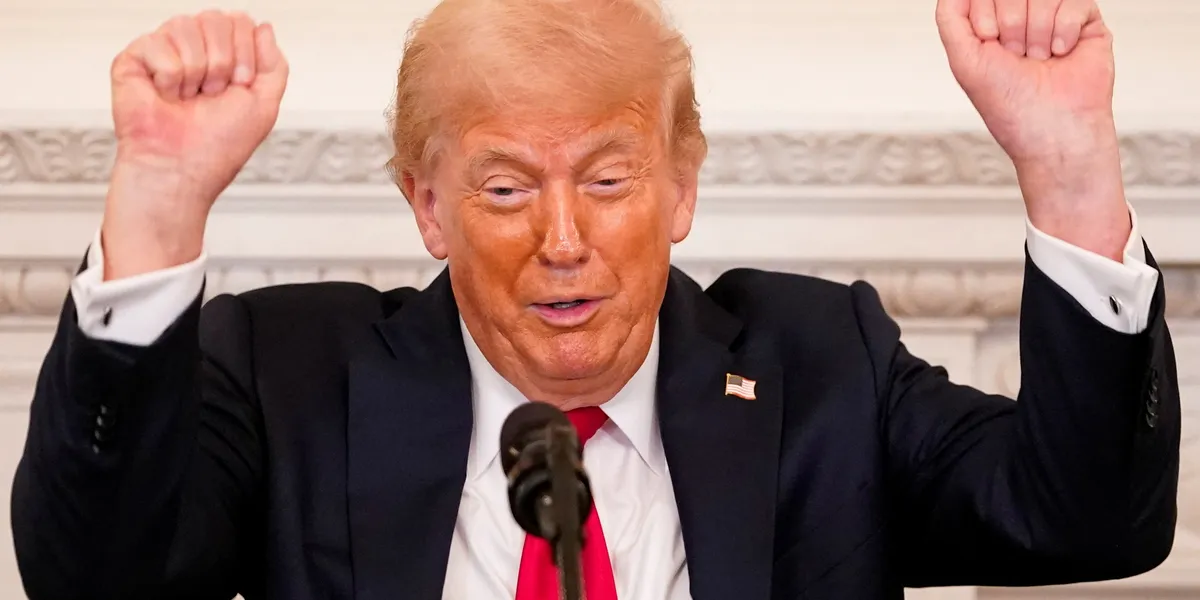
A new analysis suggests that President Donald Trump's increasingly bizarre public appearances may have crossed a political tipping point, as even some of his longtime allies show signs of fatigue with his erratic behavior.
Writing in The Guardian on Thursday, columnist Margaret Sullivan — a veteran journalist who previously served as public editor of The New York Times and as media columnist for The Washington Post — argued that Trump's rambling rallies, personal comments, and obsession with his own popularity are now working against Republicans rather than in their favor.
Although his name will not appear on the ballot, the president has on several occasions encouraged his supporters to treat next week's midterm elections as a vote about him. Midterm elections, in which all 435 House seats and roughly one-third of the Senate are contested, have historically often been read as referendums on the party holding the presidency. Last month, Trump told voters to pretend he was on the ballot — a plea he has continued making while campaigning for Republican candidates.
Sullivan expressed doubt that the strategy would work, noting that Trump was already struggling with his public approval ratings and that voters remained frustrated about the cost of living. She drew attention to a growing pattern of odd behavior at his public appearances, including sudden shifts from one subject to another, insults aimed at his political opponents, and the familiar dance routines that now conclude his rallies.
Sullivan also cited an analysis from The Independent that described Trump's performances as becoming "increasingly detached from reality," observing that he "vacillates between topics to the point where his remarks border on the nonsensical and he ends every appearance by awkwardly dancing to the Village People's well-known gay anthem YMCA."
At a Kansas event, Trump referred to Democrats as "Dumocrats" — the "level of presidential discourse," Sullivan wrote, that Americans have become used to. On other occasions, Trump has made detailed remarks about the physical appearance of male politicians. During an appearance in Kentucky, he described examining Republican Sen. Jon Husted's body, discussing his shoulders and jawline before commenting on his muscular build.
The comments have underscored an increasingly unpredictable campaign style that, Sullivan suggested, may be alienating voters beyond Trump's most committed supporters.
The columnist also cited Jason Riley, a conservative columnist for The Wall Street Journal and a member of the newspaper's editorial board, who observed that even some devoted MAGA supporters and congressional Republicans have grown tired of Trump's behavior. That criticism is significant because it comes not only from Democrats or longtime Trump opponents, but from voices on the right as well.
In her view, the president's problems extend beyond his rally performances. She pointed to his social media outbursts, his treatment of longtime allies, allegations of self-dealing, and misleading economic claims as additional reasons voters might decide not to support him.
At the same time, Trump has continued presenting himself as the central figure in elections across the country, telling supporters to imagine that a vote for a Republican candidate is a vote for him. That message, Sullivan suggested, may inspire his most loyal backers — but it could also remind other voters of the behavior that has caused them to oppose the president. With polls set to open nationwide next week, the results will offer a first concrete indication of how these competing dynamics register with voters.

