Trump Faces 'Extraordinary New Crisis' That Could Hit Harder Than Iran War, Report Warns
Key Takeaways
- •Polls consistently show voter concern over the Iran war and the fuel prices it has driven, making the conflict a political liability for Republicans ahead of the 2026 midterm elections.
- •Brent crude reached $109.80 a barrel on Monday, which Wood characterizes as an oil squeeze rather than a shock on the scale of the 1973 embargo or the 2022 peak of $139.
- •The Houthis, whom Wood describes as armed and funded by Iran, have declared the Bab al-Mandab Strait closed to Saudi shipping but have not announced a wider blockade.
- •A 2023 United Nations report found that nearly 9 percent of global seaborne trade passes through the strait, including a fifth of all containers and new cars and 13 percent of crude oil.
- •Saudi Arabia's main east-west oil pipeline was struck by drones in the past week, and Wood warns that Houthi attacks extending to pipelines and refineries could cripple the Saudi economy.
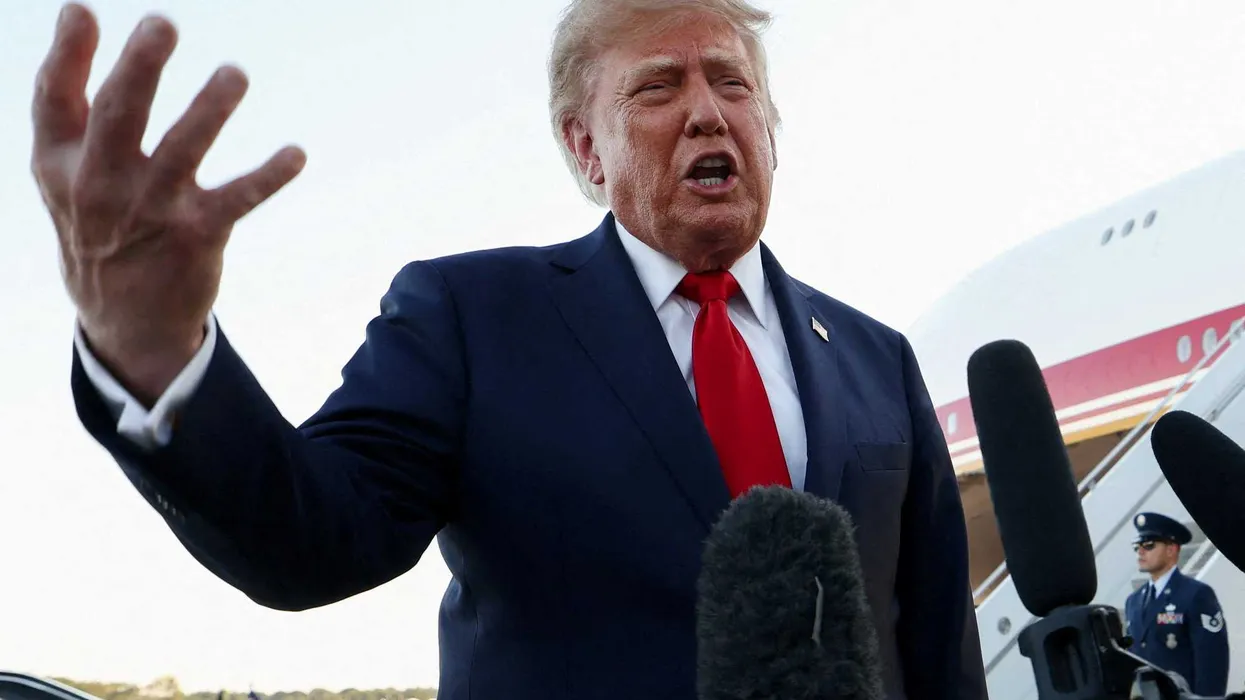
President Donald Trump's war with Iran is shaping up as a major political vulnerability for Republicans ahead of the 2026 midterm elections, with polls consistently showing voter concern over the conflict and the soaring fuel prices it has driven. But according to the UK-based i Paper, Trump now faces an "extraordinary new crisis" in the Middle East — one that could prove even more damaging than the war itself.
Trump has maintained that the war, launched in late February, was necessary prevent Iran's Islamist regime from developing nuclear weapons. Critics counter that the conflict has deepened instability across the region, both militarily and economically. Writing in the i Paper, journalist Paul Wood, a former BBC foreign correspondent, maps out a growing political and energy crisis with major economic implications.
"This is not yet the oil shock of 1973, more of an oil squeeze," Wood writes. "In 1973, the Arab embargo quadrupled the price; in 1979, the Iranian revolution doubled it; with the Russian invasion of Ukraine in 2022, Brent crude reached $139 (£103) a barrel. On Monday, the price of a barrel of Brent crude reached $109.80 (£81)."
Wood notes that while the Houthis have declared the Bab al-Mandab Strait closed to Saudi shipping, they have stopped short of announcing a wider blockade — and he argues the White House is "indulging in some wishful thinking" about avoiding one. The strait, a narrow passage between Yemen and the Horn of Africa, links the Red Sea to the Gulf of Aden and forms the southern gateway to the Suez Canal shipping route. Visiting Dublin at the weekend, Trump said: "The Houthis called us, and they don't want to fight with us … They don't want us to go after them."
According to Wood, "the Houthis are armed and funded by Iran." The group has controlled much of northern Yemen, including the capital Sanaa, since seizing it in 2014, and has fought a Saudi-led coalition there since 2015. Even if the group does not take orders from Tehran, he observes, "they coordinate." Halting oil tanker traffic, he writes, would require little: "a single militiaman firing a rocket-propelled grenade from the shore, perhaps." If shipping abandons the Bab al-Mandab route — because of attacks, or soaring insurance premiums — the economic pain would be considerable. A United Nations report in 2023 found that almost 9 percent of global trade by sea passes through the strait, including a fifth of all containers and new cars and 13 percent of crude oil.
Adding to the pressure, Wood reports that Saudi Arabia's main east-west oil pipeline, which moves crude from Persian Gulf fields to a Red Sea terminal while bypassing the Strait of Hormuz, was hit by drones over the past week.
He warns that escalating tensions between Iran and Saudi Arabia could carry dire economic consequences. If Houthi attacks extend to "Saudi pipelines and refineries," he writes, the "Saudi economy could be crippled."
"If that's what happens," Wood reports, "the question for the U.S. will be how long it can stay out of the war in Yemen … The economic consequences of allowing Iran — through the Houthis — to hold Saudi Arabia to ransom might simply be too great to ignore."
Wood concludes that the latest crisis was always a possibility after Trump's "fateful decision" to join Israel in attacking Iran — a lesson, he suggests, in how "it's easy to start fires in the Middle East, but not to put them out."
The full analysis appears in the i Paper. This article was originally published by Alternet.

