Trump Shares Meme Claiming Jesus Sent Him to Reverse Obama's Policies
Key Takeaways
- •Trump posted a Truth Social meme in which an AI-generated Jesus figure says he sent Trump because Obama reversed his policies.
- •In April, Trump shared an AI image of himself in a white robe healing a sick man, then deleted it amid criticism and explained it depicted him as a doctor making people better.
- •A Pew Research Center poll this month shows Trump's approval among white evangelicals at 58 percent, a 20-point decline from 78 percent.
- •Reuters/Ipsos data puts his white evangelical support at 63 percent this month, down from 77 percent in January 2025, while white evangelicals remain the only major group where he scores above 60 percent.
- •Strong evangelical backing could help Republicans limit losses in 2026 Senate races in states such as Iowa and Kansas, where white evangelicals make up a substantial share of the electorate and the party is defending its majority.
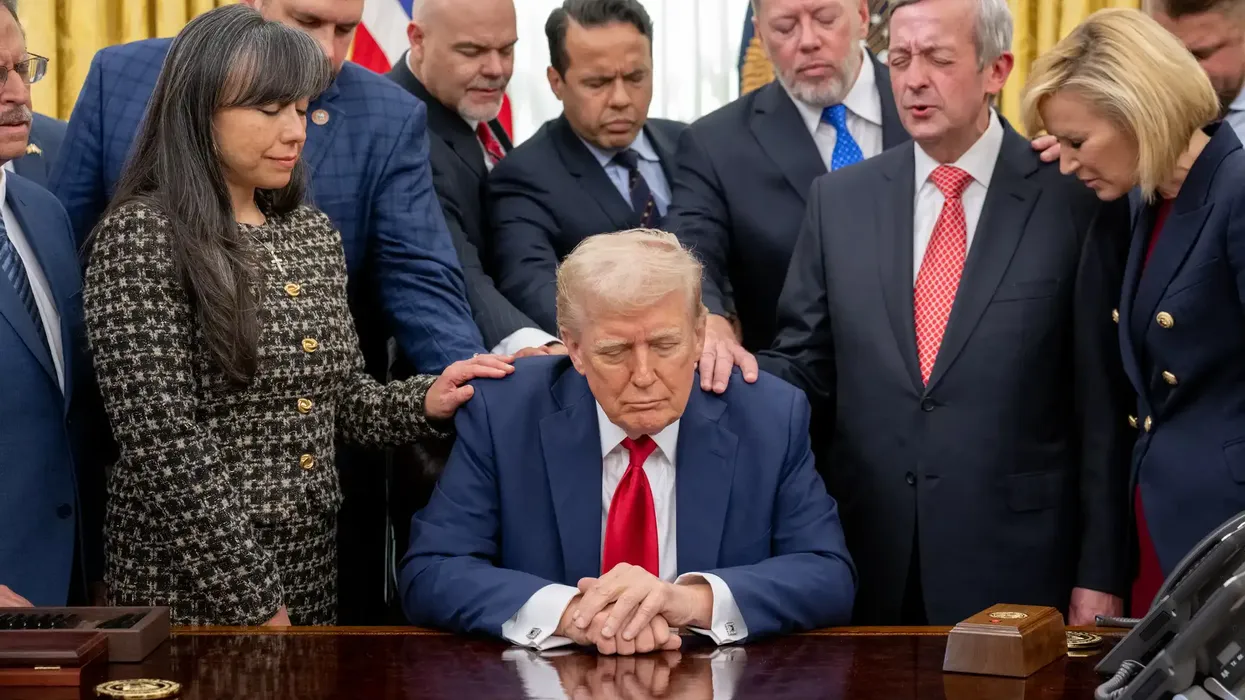
President Donald Trump on Friday shared a meme on Truth Social, the social media platform he founded, suggesting that Jesus had sent him to reverse the policies of former President Barack Obama. The post comes amid a string of earlier social media posts featuring religious imagery — including AI-generated images — that have drawn criticism, including from parts of the president's own base.
The meme depicts Obama in conversation with a Jesus-like figure framed by clouds and columns of gold. In the image, Obama says, "reversing all of my policies!" — to which the AI-generated Jesus replies, "you reversed all of mine, which is why I sent Trump."
It is not the first time Trump has faced pushback over religious imagery online. In April, he posted an AI rendering of himself in a white robe, a hand glowing on the brow of a sick man — an image critics compared to traditional paintings of Jesus tending to the infirm. The backdrop included the Statue of Liberty, a waving American flag, fighter jets, an eagle, a nurse, a praying woman, and what appeared to be a uniformed soldier.
Hours after deleting the image, Trump told reporters he believed it showed him as a doctor standing beside a Red Cross worker. "It's supposed to be as a doctor making people better," he said. "And I do make people better. I make people a lot better." Speaking to CBS News, he explained that he removed the image because "I didn't want to have anybody be confused. People were confused." Criticism followed soon after the image appeared, including from figures close to the administration and the president.
The backlash has coincided with fresh evidence that support among the president's most steadfast constituency — white evangelicals, a group that has anchored Republican electoral coalitions for decades — is softening. A Pew Research Center poll conducted earlier this month puts Trump's approval among the group at 58 percent, a 20-point slide from 78 percent. Reuters/Ipsos data shows his support among white evangelicals at 63 percent this month, down from 77 percent in January 2025.
That decline is smaller than the drop in his standing with the electorate overall, which fell from 47 percent to 31 percent. Trump still holds above 60 percent among white evangelicals — the only major group in the Reuters/Ipsos tracking where he does.
Republicans remain on the defensive amid the president's record-low approval ratings, and strong evangelical backing could help the party limit losses as voters voice frustration over the war in Iran and the cost of living. Trump's ties to white evangelicals have endured a decade of controversy for the three-times-married president, including the hush money case involving an adult film star and dozens of sexual misconduct allegations he denies. That loyalty may prove pivotal in Senate races beyond South Carolina that could decide control of Congress, in states such as Iowa and Kansas where white evangelicals make up a substantial share of the electorate — contests that will be on the ballot in the 2026 midterm elections, when Republicans will be defending their Senate majority.

