Trump's Orbit Reportedly Expects 'Martial Law' Declaration to Seize Control of Midterms
Key Takeaways
- •According to new reporting by The Atlantic, several people in President Trump's circle anticipate he may invoke a 'national security emergency' as justification for taking control of the November midterms.
- •The November 3 elections will decide control of Congress, with all 435 House seats and roughly one-third of the Senate on the ballot under a system administered by state and local officials rather than the president.
- •Attorney Peter Ticktin, a former teenage schoolmate of Trump who has pressed him on election matters, said the remaining scenarios are pre-election action by Trump or a martial law declaration on or around Election Day, and he dismissed concerns about potential riots.
- •Martial law has never been declared nationwide in the United States, and its scope remains legally unsettled, shaped by the 1866 Supreme Court ruling in Ex parte Milligan and the Posse Comitatus Act of 1878.
- •Trump has publicly engaged with the idea, telling Wayne Allyn Root in August that 'stranger things have happened' after Root urged a national-security emergency, even as White House and Cabinet advisers have worked for months to shift his focus away from baseless election-fraud theories.
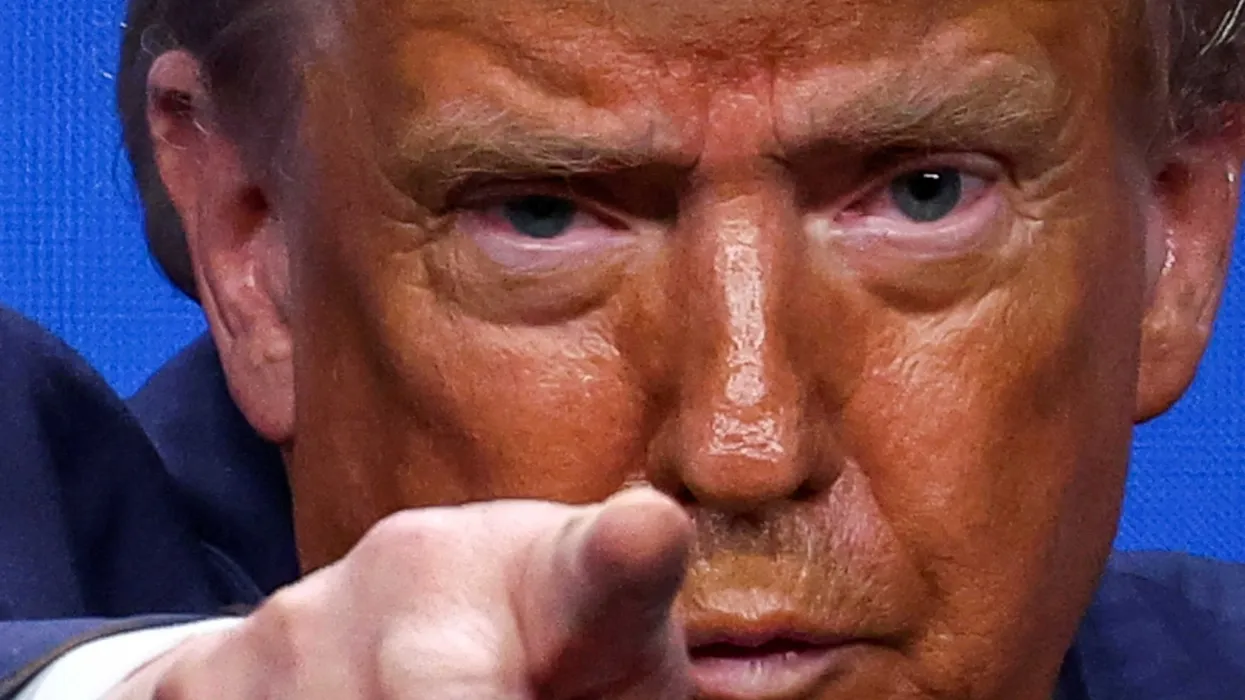
New reporting published Wednesday by The Atlantic indicates that many people in President Donald Trump's orbit expect him to declare "martial law" in an effort to seize control of the November midterm elections. The magazine, which spoke with several people close to Trump, reports that he is likely to claim a "national security emergency" to justify efforts to "seize control of the federal elections." The stakes are structural: the November midterms, fixed by federal law for Tuesday, November 3, will determine control of Congress, with all 435 House seats and roughly one-third of the Senate on the ballot under an election system administered by state and local officials rather than the president.
Attorney Peter Ticktin — a former schoolmate of Trump's from their teenage years who helped Trump sue Hillary Clinton and pressed the president to pardon Tina Peters, a convicted election equipment tamperer — outlined three possible outcomes for November. In his view, the first scenario, a smooth election, will not happen because, he claims without evidence, Democrats already cheated in the primaries. The second is that Trump takes action before the election to prevent cheating. The last option is that Trump tries to declare martial law on or around November 3.
In Ticktin's words: "Either martial law, or step aside." When The Atlantic raised the possibility of riots should Trump overturn the election results, Ticktin said he was not concerned, asserting, "Believe me, our armed forces are a lot bigger than they are."
Martial law has never been declared nationwide in the United States, and its boundaries remain legally unsettled. In Ex parte Milligan (1866), the Supreme Court held that military authority cannot replace civilian courts where those courts are open and functioning, and the Posse Comitatus Act of 1878 restricts the use of the armed forces for domestic law enforcement without express constitutional or congressional authorization. Because the Constitution never explicitly defines martial law, its scope has been defined through court rulings rather than by statute.
Trump has repeatedly signaled a willingness to intervene in the midterm process. As The Atlantic recounts, in August, when television and radio host Wayne Allyn Root urged Trump to declare a "national-security emergency" to require proof of citizenship, voter ID, and other measures, Trump responded coyly: "Let me just say that stranger things have happened, okay? I'll leave it at that." Later that month, the president posted a Root column on the subject, with a headline describing the plan as "foolproof."
Peters, meanwhile, announced after meeting with Trump in June that the president "basically said to his lead counsel to do what I was asking." In a prime-time address at the Republican midterm convention in Dallas, Trump repeated the false claim that he had won the 2020 election and sarcastically encouraged his supporters to "cheat like hell" in the upcoming elections.
Such plans have found an enthusiastic audience among Trump's supporters. Speaking at a recent conference for election deniers, Root described a "nightmare scenario" in which Democrats won, flipped Congress, and then impeached the president. He received a standing ovation after assuring attendees that, according to research conducted by a friend, the election would be upended if Trump declared a national-security emergency.
Trump remains so adamant about these efforts that, according to The Atlantic, "Trump's White House and Cabinet advisers have been working for months to move Trump's focus away from baseless theories of election fraud peddled by people like Ticktin, Root and Peters ... But the prospect of Trump deciding to act on the demands of his most fervent election-denying supporters has remained a constant threat, one that even Trump's inner circle admits remains possible." The calendar itself leaves little slack: with Election Day set for November 3, state and local officials certify results in the weeks that follow under state deadlines, and the next Congress is seated in early January 2027.

