Trump's Oval Office Claim That MAGA Inc. Super PAC Money Is 'My Money' Draws Swift Warnings That It's Illegal
Key Takeaways
- •Trump publicly claimed control over the MAGA Inc. Super PAC's roughly $1 billion, calling it "my money," despite federal law barring candidates from controlling or personally using super PAC funds.
- •Federal campaign finance law requires super PACs to remain independent from candidates, and violations would be enforced by the FEC or the courts.
- •Critics noted the FEC's enforcement capacity is impaired by vacant seats and deadlocked votes, limiting its ability to police violations.
- •Trump said he intends to spend about half a billion dollars on a campaign tour supporting GOP candidates in competitive midterm races.
- •The situation underscores tension for Republican congressional leaders whose members depend on outside spending while the party's major fundraising vehicle remains outside their control.
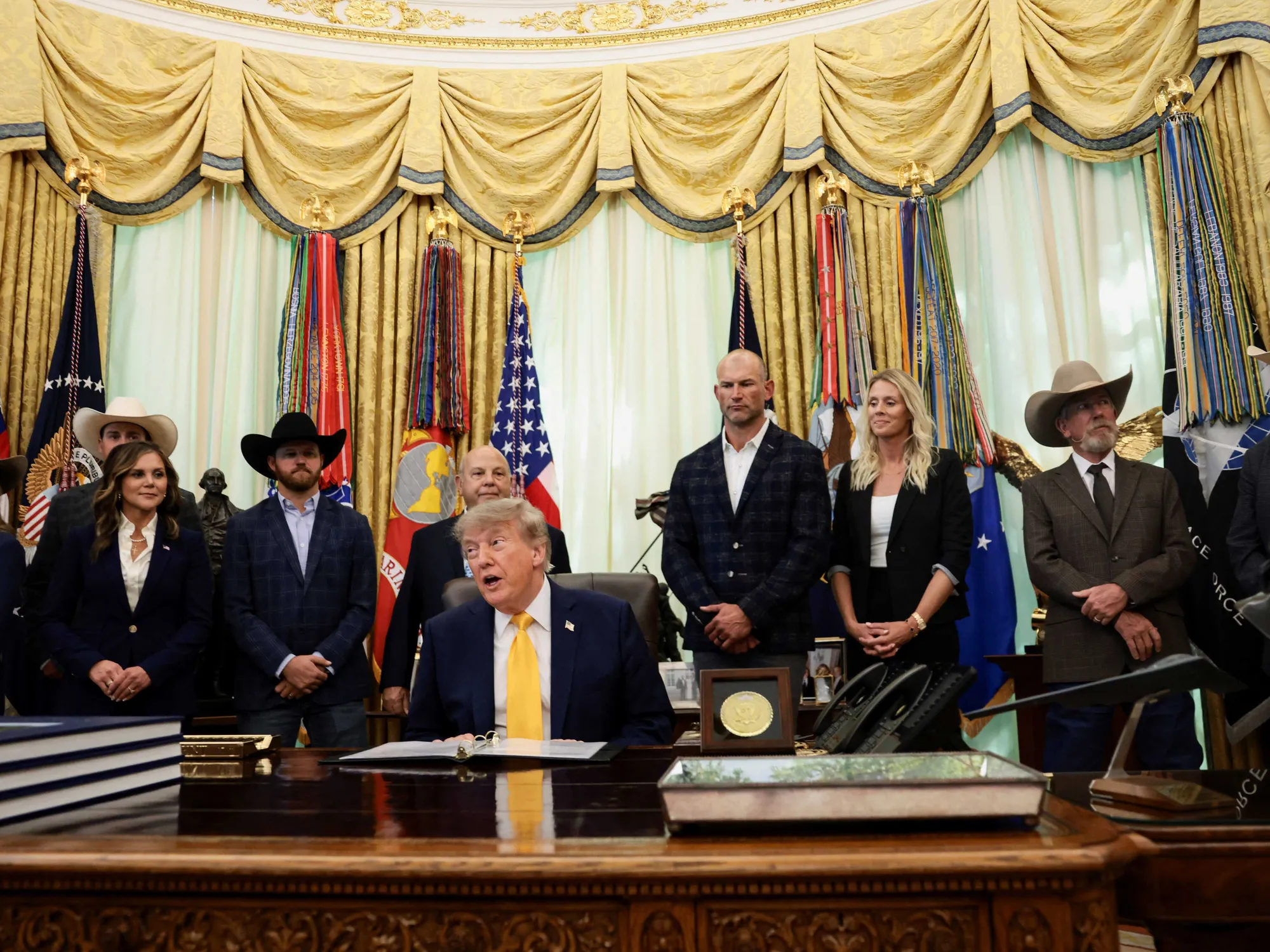
Critics of President Donald Trump moved quickly to point out that his latest Oval Office remark suggested illegal activity.
Speaking to reporters on Friday, Trump was asked about the MAGA Inc. Super PAC, which has not been sharing funds with GOP contenders ahead of the midterms. He responded that the money is "my money," even though it is not legally his money. Under federal campaign finance law, super PACs like MAGA Inc. may raise unlimited contributions but must remain independent from candidates and their campaigns; their funds cannot be converted to personal use, and candidates cannot directly control how the money is spent.
"This money from MAGA Inc. This is my money that I control," Trump said. "We have around $1 billion that I can spend."
The remark drew immediate pushback from commentators who noted the legal constraints involved.
"It's illegal to coordinate with Super PACs," pointed out former Democratic congressional candidate and healthcare advocate Melanie D'Arrigo. "And Trump gutted the agency that polices and investigates that."
"It's illegal for Trump to use his super PAC money and political nonprofit money for unauthorized purposes," explained Axios White House reporter Marc Caputo. "But the president could theoretically do that anyway -- take the money, as much as $800 million (he says about a billion) -- and then self-pardon."
D'Arrigo's reference to a gutted enforcement agency points to the Federal Election Commission, the body responsible for policing campaign finance violations, which has in recent years operated with vacant seats and deadlocked votes that limit its ability to act. Any enforcement of coordination or personal-use rules would ultimately fall to that agency or the courts.
Progressive political analyst Molly Jong-Fast simply reacted with a long "Hahahaha."
"That sound you hear is John Thune crying into a [g]lass of bourbon," joked Eric Michael Garcia, Washington, D.C., bureau chief for The Independent, referring to Senate Majority Leader John Thune (R-SD). Garcia's quip underscores the tension for GOP congressional leaders, whose members depend on outside spending to defend competitive seats in the midterms even as the party's presumptive fundraising arm sits outside their reach.
"Trump could illegally pocket the hundreds of millions in this Super PAC, and Republicans in Congress will pretend like it's not happening while Susan Collins writes a strongly worded letter telling Trump to cut it out," lamented columnist Ben Palmer.
When asked how he intends to use the money in his Super PAC, Trump said, "I'm going to spend whatever amount of money necessary to try and help us," and "I think we have a chance at doing well in the midterms."
He added that he plans to spend roughly half a billion dollars as he goes on a campaign tour to boost GOP candidates in competitive races.
