Analysts Warn of Constitutional Crises and Deepening Political Divisions as Trump Approaches Final Two Years
Key Takeaways
- •Analysts predict Trump's aggressive posture will intensify during his administration's final two years, potentially including deeper immigration restrictions, controversial pardons, and military escalation against Iran and Cuba.
- •Trump has attempted to impose voting restrictions through executive action after his SAVE America Act failed in Congress, though the order faces legal challenges and is unlikely to survive court review.
- •The 22nd Amendment constitutionally bars Trump from a third presidential term, requiring a two-thirds congressional majority and ratification by three-fourths of states to amend.
- •Ongoing GOP primary involvement and redistricting efforts are expected to replace moderate Republicans with Trump loyalists, potentially producing the most ideologically aligned MAGA Congress to date.
- •Former Department of Homeland Security chief of staff Miles Taylor echoed expert concerns, warning that the most disruptive period of Trump's presidency still lies ahead.
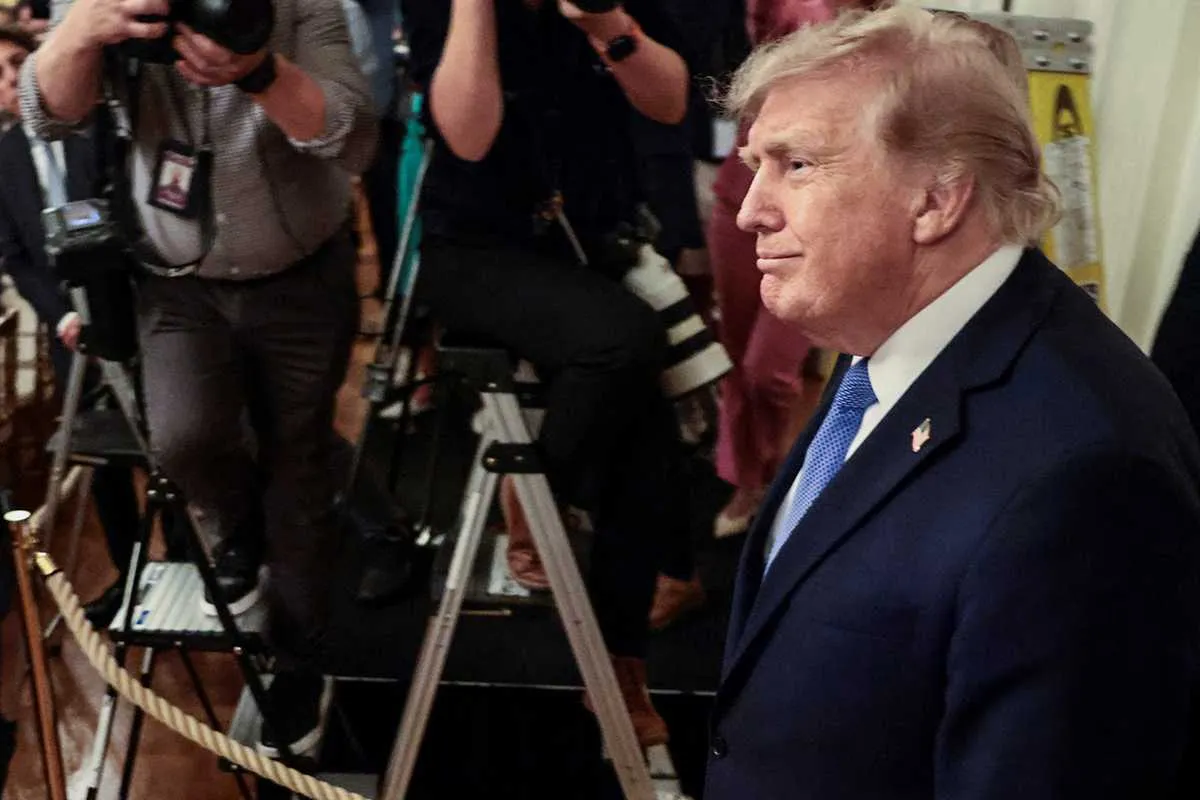
President Donald Trump is entering what analysts describe as a political last stand, with expectations that his behavior will become increasingly volatile regardless of the outcome of the 2026 midterm elections, according to The iPaper's Jessie Williams.
In a Friday column, Williams reported that Trump's aggressive posture is likely to intensify during the final two years of his administration. Analysts anticipate that he could deepen restrictive immigration policies, issue controversial pardons, and escalate military action aimed at toppling regimes in Iran and Cuba — countries that have so far denied him swift foreign policy victories.
Williams also warned that Trump could challenge election rules and leverage discussion of an unconstitutional third term to dominate the 2028 succession conversation. The 22nd Amendment to the U.S. Constitution explicitly prohibits any person from being elected president more than twice, making a third term legally barred absent a constitutional amendment — a process requiring two-thirds approval in both chambers of Congress and ratification by three-fourths of states.
"[Trump] is someone who increasingly is showing signs of completely being unfettered in the way in which he approaches politics, life, business, corruption — a whole variety of different things," Professor David Dunn of the University of Birmingham told Williams.
While Democrats are expected to reclaim the House in November, control of the Senate remains uncertain. Concerns are growing that Trump is already laying the groundwork to interfere in the electoral process, with his Safeguard American Voter Eligibility (SAVE) America Act cited as a key element. After the legislation failed to pass, Trump enacted his own version through an executive order. The order is currently being challenged in court and is not expected to survive.
Nevertheless, Trump is reportedly leveraging his authority over the U.S. Postal Service to restrict mail-in voting and has threatened to withhold federal funding from states that refuse to comply with his directives. The separation of powers under the U.S. Constitution delegates election administration primarily to the states, and federal courts have repeatedly struck down prior attempts to impose uniform voting restrictions by executive fiat.
If Democrats continue to win in 2028, Trump could escalate further during his final months, potentially triggering another event comparable to January 6. The disruption "may even take the form of him instructing people in Congress not even to sit, not to accept the result. You may have a constitutional crisis," Dunn cautioned.
Dunn also assessed that ongoing redistricting battles and Trump's active involvement in GOP primaries will likely see remaining moderate Republicans replaced by Trump loyalists. This trend is evident across multiple states, particularly in Texas races.
"But it means actually both houses of Congress after the midterm elections will be the most pure MAGA Congress in terms of the Republican element of it that we've ever had," said Dunn, noting that this would translate to reduced opposition to Trump's agenda.
"So what we should expect in the post-midterm period is an intensification of the divisions and the strife at the heart of American politics," Dunn added.
Former Trump administration official Miles Taylor — who served as chief of staff at the Department of Homeland Security and later revealed himself as the anonymous author of a 2018 New York Times op-ed detailing internal resistance to Trump — echoed these concerns, writing earlier this week that "the worst is yet to come."
