Trump-Linked TRUMP and WLFI Tokens Lead Crypto Losses After Democrats Sweep US Midterms
Key Takeaways
- •Official Trump (TRUMP) fell 17% over 24 hours to $1.33, while World Liberty Financial (WLFI) dropped more than 7% to $0.047, marking the sharpest losses among the top 100 digital assets.
- •The selloff came after Democrats captured both the House and Senate in Tuesday's midterm elections, which included unexpected victories in Texas.
- •Major cryptocurrencies moved higher in the same period, with Bitcoin climbing more than 4% to roughly $80,500, Ether gaining 6% to $2,433, and the total crypto market rising 3.4% to $2.69 trillion.
- •Other politically linked tokens also declined, including the MELANIA memecoin, which lost nearly 13%, while the political memecoin sector's combined market capitalization dropped more than 16% to $477 million as trading volume surged 123%.
- •The election results add uncertainty for the stalled CLARITY Act, which Democrats had sought to amend with stronger ethics provisions and safeguards against conflicts of interest involving Trump's crypto ventures.
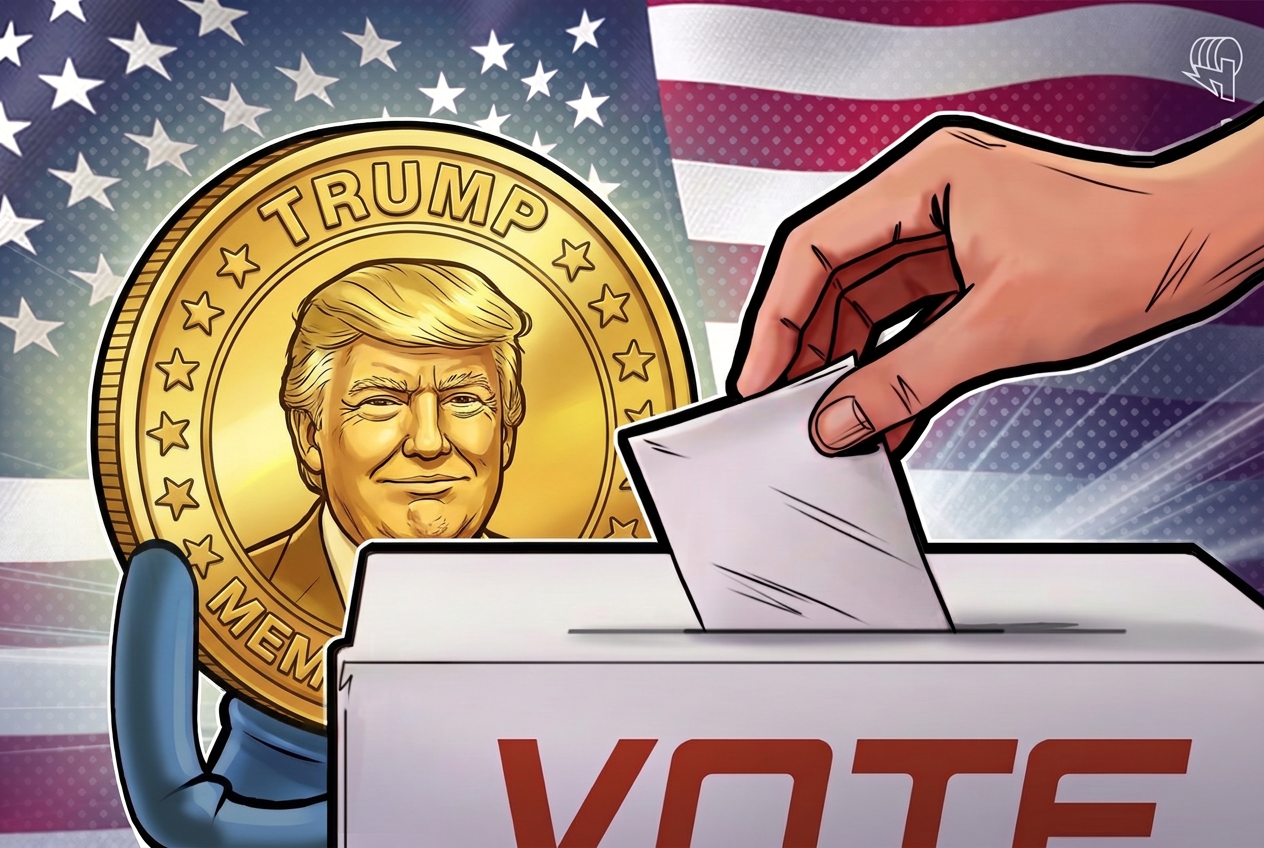
Two cryptocurrency tokens linked to US President Donald Trump recorded the steepest declines among the top 100 digital assets on Wednesday, the day after Democrats swept the US midterm elections, even as the broader crypto market moved higher.
Official Trump (TRUMP) fell 17% over 24 hours to $1.33, while World Liberty Financial (WLFI) dropped more than 7% to $0.047, according to CoinMarketCap data from around 5:32 pm UTC. TRUMP is the president's official memecoin, launched in January 2025, and WLFI is the governance token of World Liberty Financial, a Trump family-backed decentralized finance (DeFi) project that debuted in 2024. Memecoins are a class of tokens whose value rests largely on community sentiment and cultural association rather than underlying utility or cash flows.
The selloff followed a wave of Democratic wins in Tuesday's midterm elections, including unexpected victories in Texas, that gave the party control of both the House and Senate, taking both chambers from Republicans. Midterm elections fall halfway through a president's term, with every House seat and roughly a third of Senate seats contested, putting control of Congress at stake in a single vote.
The outcome could complicate Trump's ability to advance his crypto agenda and could subject his family's digital asset ventures to greater scrutiny. Analysts say the declines also call into question whether political sentiment alone can sustain demand for Trump-linked tokens.
Political tokens slide while Bitcoin, Ether rally
Bitcoin (BTC) climbed more than 4% over 24 hours to roughly $80,500, while Ether (ETH) gained 6% to $2,433, according to CoinMarketCap data. Other major cryptocurrencies advanced as well, with BNB rising 3%, XRP adding 2.6% and Solana (SOL) gaining 2.5%. The total crypto market increased 3.4% to $2.69 trillion.
Losses also spread across other tokens tied to the Trump family, including the MELANIA memecoin associated with First Lady Melania Trump, which fell nearly 13% over 24 hours to around $0.066.
A separate token named after Vice President JD Vance (VANCE) slid nearly 12%, though it has no confirmed official connection to the vice president.
The broader political memecoin sector reflected the same pressure, with its combined market capitalization dropping more than 16% on the day to $477 million, while trading volume surged 123% to $437 million, per CoinMarketCap data.
A growing divergence raises lingering questions
Benjamin Sarquis Peillard, founder and CEO of Cap, a DeFi platform focused on stablecoin yields, told Cointelegraph that investors appear to be treating politically linked tokens differently from other cryptocurrencies.
"Bitcoin and other established assets respond to a combination of liquidity, institutional flows and macroeconomic conditions, while politically linked tokens can be more sensitive to shifts in expectations around Washington," he said. "Even as the broader market recovers, those tokens may face selling pressure if investors begin reassessing their risk exposure."
While the selloff may reflect a short-term reaction to the election results, Peillard said the "longer-term question is what supports demand for these tokens beyond their association with a political figure."
The CLARITY Act and beyond
Beyond the market reaction, the election results also cast uncertainty over the future of US crypto legislation, including the currently stalled Digital Asset Market Clarity Act, commonly referred to as the CLARITY Act.
The bill, which seeks to establish a regulatory framework for digital assets, failed to advance in the Senate earlier this year after falling short of the 60 votes required to overcome a filibuster — the procedural hurdle that in practice lets the minority party block most legislation. Democrats had pushed for stronger ethical provisions and safeguards against conflicts of interest involving Trump's crypto ventures — four Republicans also opposed moving the legislation forward.
"The midterm results introduce a new layer of regulatory uncertainty, particularly around the pace and direction of digital asset legislation," Peillard said. "For politically linked tokens, that uncertainty can have a more immediate impact because investor sentiment is partly tied to expectations around the political environment."
Although the crypto sector continues to have support — and opposition — from lawmakers in both parties, how the election results will ultimately shape crypto legislation remains to be seen. Whether the stalled CLARITY Act can find a path forward in a Congress where Democrats — the party that pressed for stronger safeguards around Trump's crypto ventures — now hold both chambers will be among the questions shaping that outcome.
For the industry at large, Peillard said, the "more important question is whether Congress can establish a durable regulatory framework that provides clarity regardless of which party holds power."

