Trump Administration's Libya Reunification Drive Faces Setbacks Amid Escalating Violence
Key Takeaways
- •Libya approved its first unified national budget since 2013 in April 2026, valued at about 190 billion Libyan dinars, or roughly $30 billion.
- •US-sponsored Flintlock military exercises were held in Libya in April 2026 with personnel from both the east- and west-based factions.
- •Massad Boulos has led the Trump administration’s Libya mediation by pairing power-sharing talks with commercial incentives, especially in energy.
- •Libya has not held national elections since 2014, and the postponed 2021 vote left the current reunification process without a clear electoral path.
- •Russia, Turkey, and the United Arab Emirates have all backed different Libyan factions, increasing the geopolitical stakes of the talks.
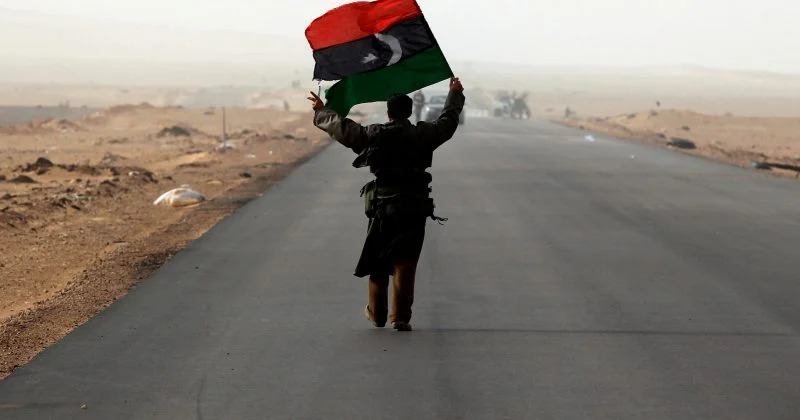
The Trump administration's initiative to reunify Libya is encountering significant headwinds. A wave of violent incidents has disrupted what had appeared to be tangible momentum toward uniting the war-torn OPEC nation's rival governments for the first time in over a decade.
The diplomatic effort, led by senior adviser Massad Boulos, yielded concrete achievements earlier in 2026. The central question now is whether those gains can withstand the deep-seated instability that has characterized Libya since the overthrow and death of Muammar Gaddafi in 2011 — an upheaval that left the country without functioning national institutions and under de facto partition between competing regional authorities.
The Deal and the Dealmaker
Boulos, a Lebanese-American businessman tapped by the Trump administration to oversee Mediterranean and African affairs, has served as the primary point person on Libya mediation since at least 2025. His strategy has been distinctly transactional in nature: negotiate power-sharing arrangements between the country's two principal factions, then offer commercial incentives — particularly in the energy sector — to sustain the peace.
The two main factions are Khalifa Haftar's Libyan Arab Armed Forces (LAAF), which control eastern Libya, and Abdulhamid Dbeibah's Government of National Unity (GNU), based in the west. Their rivalry has produced a prolonged standoff that has, at multiple junctures since 2014, escalated into full-scale civil war. Haftar's forces previously launched an abortive military campaign to seize the capital, Tripoli, in 2019–2020, repelled with Turkish military support for the western government.
Key milestones have punctuated the process. On April 11, 2026, Libya approved its first unified national budget since 2013, valued at approximately 190 billion Libyan dinars, or roughly $30 billion. That same month, the first US-sponsored Flintlock military exercises were conducted on Libyan territory, with personnel from both the GNU and LAAF participating.
In June 2026, Boulos welcomed Saddam Haftar — a leader within the eastern forces and the son of Khalifa Haftar — to Washington in a move aimed at deepening American engagement in the peace process.
Oil: The Glue and the Prize
Libya possesses Africa's largest proven crude oil reserves, but years of armed conflict have consistently kept production well below the country's capacity. Before the 2011 conflict, Libya produced around 1.6 million barrels per day; output in recent years has repeatedly been disrupted by port blockades, field shutdowns, and fighting, swinging from near-zero to roughly 1.2 million barrels per day depending on the security situation. A $20 billion production improvement agreement involving ConocoPhillips and TotalEnergies was reported earlier in 2026, with the goal of increasing Libya's output. Chevron has also participated in discussions concerning expanded US investment in Libya's energy sector.
Why the Cracks Are Showing
Libya has not conducted elections since a ceasefire was established in 2020 through UN-facilitated talks in Geneva, and the political fragmentation underlying the conflict runs considerably deeper than any single budget agreement can resolve. National elections scheduled for December 2021 under UN auspices were postponed indefinitely amid disputes over candidate eligibility and the legal framework for voting.
Analysts have noted that the power-sharing framework effectively entrenches existing power structures, conferring legitimacy on figures who maintain territorial control through force of arms rather than through any democratic mandate. Corruption remains pervasive on both sides of the divide, while Libya's institutional capacity has been steadily eroded by years of war and entrenched patronage networks. Resistance from entrenched elites — including military commanders, militia leaders, and political figures who benefit from the current partition — poses a further barrier to building a unified state.
Commentary from July through early August 2026 has highlighted the stagnation of political momentum and a rising risk of violence, underscoring how precarious the situation remains despite the continuation of diplomatic negotiations.
What to Watch
The question of elections looms over the entire process. Libya's last national vote took place in 2014, and the absence of any established electoral framework means the current arrangement depends entirely on agreements among strongmen. Lacking a credible pathway to elections, the reunification initiative risks becoming what amounts to a permanently temporary settlement.
Multiple external powers — including Russia, Turkey, and the United Arab Emirates — have invested heavily in supporting their preferred Libyan factions, raising the geopolitical stakes of whether the US-led diplomatic effort can hold together. Russia has maintained a presence through private military contractors in support of eastern forces; Turkey has backed the GNU under a 2019 bilateral security agreement; and the UAE has provided material support to Haftar's LAAF. Libya also remains a primary transit corridor for migrants and refugees attempting to cross the Mediterranean to Europe, giving the country's stability direct implications for EU member states along the southern European coast.

