Trump Administration Memo and Rubio Cuba Report Draw Criticism Over Domestic Extremism Focus
Key Takeaways
- •The commentary cites a White House statement saying far-left extremism would be treated with the same seriousness as jihadist terrorism.
- •The article says ICE enforcement expanded from targeting accused criminals to broader arrests, masked operations and alleged force against protesters and immigrants.
- •Salah Sarsour, a legal permanent resident and mosque leader, was released after a judge found he had been detained because of his pro-Palestinian advocacy.
- •NSPM-7 identifies several ideological positions, including anti-capitalism and extremism on migration, race and gender, as potential domestic terrorism indicators.
- •The article says Rubio’s Cuba-related document names U.S. individuals and organizations that it links to left-wing or communist influence.
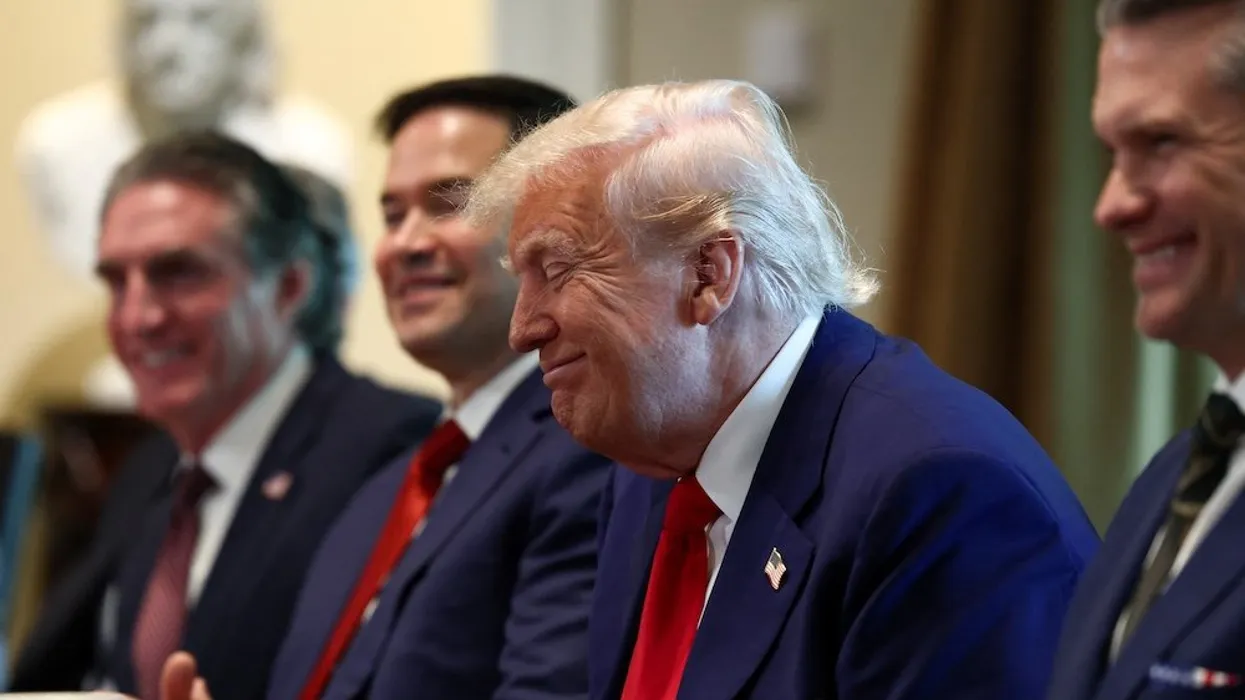
An Alternet commentary argues that recent actions by the Trump administration show a widening effort to treat left-wing political activity and progressive organizations as domestic security threats.
The article opens by citing a White House press release issued last week, which stated: “Under the leadership of President Donald J. Trump, far-left extremism will be treated with the same seriousness and ferocity the world has long reserved for jihadist terrorism.” The statement marks a notable escalation in rhetoric compared to prior administrations, which generally distinguished between foreign-inspired terrorism and domestic political activism in their public framing.
According to the commentary, the administration’s approach began with immigration enforcement infrastructure that was presented to the public as a response to public safety and economic concerns. It notes that people had come to the United States for centuries seeking economic opportunity and a new life, while Trump and the Republican Party emphasized crimes committed by some immigrants as justification for calls to “build the wall,” seal the border and begin aggressive mass deportations.
The article says border security was broadly viewed as important in 2016, citing figures that 81% of Republicans and 49% of Democrats rated it that way. It says Trump then moved to build his wall and expand detention centers that had existed since the Reagan administration opened them in 1981 to detain Black Haitian refugees. It also states that CoreCivic received its first immigration detention contract in 1981 and that GEO Group was founded in 1984. Both companies grew into the largest private prison operators in the United States, and immigration detention became a significant revenue stream for the industry.
The commentary says Trump’s campaign framed expanded arrests and detention as a way to target “the worst of the worst,” and that some Hispanic voters supported him believing he would remove criminals from their neighborhoods. It adds that Trump often referred to immigrants using words such as “rapists” and “murderers,” including in the 2016 campaign launch speech he delivered after descending the escalator at Trump Tower.
The article argues that the first major shift came when enforcement moved beyond immigrants who had committed crimes or were accused of crimes. Instead, it says, authorities targeted ordinary workers, described in the commentary as “Jose the gardener and Maria the maid.” It further claims that, with encouragement from Supreme Court Justice Brett “Beer Bong” Kavanaugh, the system became a mass arrest and deportation program affecting people with brown and black skin rather than only those described as dangerous offenders.
The commentary says this was the point at which Democrats began publicly distancing themselves from the policy, while white supremacist Republicans and racist independents embraced it more strongly.
It then describes what it calls a second policy turn. In March 2025, during Trump’s second term, the article says ICE agents began wearing masks to conceal their identities and using explicit and deadly violence not only against people of color suspected of being undocumented immigrants, but also against people demonstrating against Trump and ICE. ICE, a component of the Department of Homeland Security created in 2003, has historically faced criticism from civil liberties groups over its enforcement practices, but the commentary argues the use of concealed identities and force against protesters represents a departure from prior norms.
The article states that, in the 16 months since, ICE officers have shot at least 30 people, killing at least eight “that we know about,” and that as of last month at least another 50 people had died in ICE custody. It says there have been no meaningful investigations of those incidents and no prosecutions of ICE officers for what it calls “routine” actions.
The commentary then points to what it describes as a third turn: arresting and imprisoning legal immigrants because of their speech rather than their conduct.
It cites a Guardian report from this week about Salah Sarsour, president of Wisconsin’s largest mosque. Sarsour is described as a green-card-holding business owner, a legal permanent resident of the United States for more than 30 years, and the father of six U.S. citizen children and grandfather of nine citizen grandchildren. The article says ICE arrested him and held him for 80 days in what it calls a brutal detention center, where he lost 30 pounds and was denied monitoring for his diabetes.
Quoting The Guardian, the commentary says: “On 30 March, he was on his way to see his elderly mother when he was surrounded, he said, by at least 10 unmarked vehicles and armed agents in civilian clothing and whisked away, first to a detention center near Chicago and later miles away at a facility in Indiana. …
“When Sarsour, who has no criminal record in the US, was first detained, he thought the agents had mistaken him for someone else. When they tried to get him to sign paperwork agreeing to being deported, he refused.
“‘I was very confused,’ he said. Only as his ordeal protracted into days did he realize he had been targeted for his activism. ‘That really shocked me, to be honest,’ he said.”
The commentary says Sarsour was released only after U.S. District Judge James Patrick Hanlon concluded that he had been held because of his outspoken support for Palestinian rights, not because of any crime or immigration-status issue. It says Sarsour had another court proceeding Wednesday in Chicago and was waiting to learn whether he would be fully freed or re-imprisoned. The case aligns with a broader pattern of immigration enforcement actions against pro-Palestinian activists that has drawn scrutiny from federal judges and civil rights organizations.
The article argues that Trump administration detention facilities have now been used to hold people whose views the administration opposes.
It also cites Trump’s September 25 National Security Presidential Memorandum 7, or NSPM-7, titled “Countering Domestic Terrorism and Organized Political Violence.” National Security Presidential Memoranda are formal policy directives that carry the force of executive branch instruction. The memorandum identified as potential “domestic terrorist” threats Americans who espouse: “[A]nti-Americanism, anti-capitalism, anti-Christianity, … extremism on migration, extremism on race, extremism on gender, hostility towards those who hold traditional American views on family, hostility towards those who hold traditional American views on religion, and hostility towards those who hold traditional American views on morality.”
According to the commentary, the memorandum was used last month to indict 15 protesters in Minneapolis. It also says Secretary of State Marco Rubio has effectively signaled that the policy could be directed at anyone opposing Trump or at progressive members of the Democratic Party, with Cuba serving as the justification.
The article says Rubio, whom it describes as wanting to run for president, is using Cuba as both a political issue and a rationale for broader action against American progressives. Cuba has been a recurring theme in U.S. political rhetoric for over six decades, particularly among Republican politicians seeking support from Cuban-American voters in Florida. It says Rubio labeled Cuba “The Capital of 21st Century Communism” and issued a 140-page document claiming that the island nation “has infiltrated the highest reaches of the U.S. government, recruited and cultivated generations of American activists, backed an unprecedented wave of left-wing terrorism on American soil, and carried out one of the most durable and damaging foreign intelligence penetrations in American history.”
The commentary says Rubio made the claim before an audience that included representatives from 66 countries as well as White House deputy chief of staff Stephen Miller, Treasury Secretary Scott Bessent, FBI Director Kash Patel and Education Secretary Linda McMahon.
Rubio was quoted as saying: “The Cubans devoted themselves to recruiting, cultivating and mobilizing a global coalition of activists, intellectuals, and political groups around this cause, building a sprawling revolutionary network that shaped a disproportionate share of America’s most famous and influential extremist movements, from the Black Panthers and the Weather Underground through to Antifa.
“Today, that network continues to maintain ties to powerful leftist nonprofits, anti-ICE collectives, socialist groups, and Marxist militant organizations across the United States.”
The article says the document names American citizens, comparing it to a new White House website that it says names individual American reporters. The commentary says those named are effectively accused of being communist or “leftist” collaborators. It identifies several people named in the document, including David Pakman, Amy Goodman, New York City Mayor Zohran Mamdani, Congresswoman Ilhan Omar and influencer Hasan Piker, along with 19 others, including two other members of Congress.
The commentary also says the 20 organizations named include the Amazon Labor Union, Black Lives Matter, Democratic Socialists of America, the National Lawyer’s Guild and “Antifa.” Several of those organizations have been the subject of previous federal scrutiny during both Democratic and Republican administrations, though the commentary frames their inclusion in Rubio’s document as part of an escalation.
The article concludes by arguing that the institutional structure for a broader crackdown is now in place. It says ICE has billions of dollars to expand detention facilities, that federal enforcement has spread across the country, and that authorities are tied into Flock cameras and Palantir databases containing information on many American citizens. Flock Safety manufactures automated license plate recognition cameras widely used by local police, while Palantir Technologies provides data integration and analytics software under federal contracts. It further claims ICE has shown it is resistant to local law enforcement oversight and can abuse or kill people who resist.
The commentary closes by comparing the Trump administration’s identification of an “enemy within” to actions by Putin, Hitler and other authoritarian leaders, saying the people targeted are being marked for removal from society.

