Trump and World Liberty Financial Hit With Lawsuit Over $2 Billion in UAE-Linked Crypto Transactions
Key Takeaways
- •Circle shareholder J. Benjamin Greenberg filed the lawsuit personally in Washington, D.C. against President Trump, World Liberty Financial, and individuals including Steve Witkoff, without Circle's corporate.
- •The complaint centers on two UAE-linked transactions: a $500 million agreement for a 49% stake in World Liberty Financial and a $2 billion MGX investment in Binance made via the WLFI-issued $USD1 stablecoin.
- •The plaintiff claims the transactions breached the U.S. Constitution's Foreign Emoluments Clause and that $USD1's growth damaged Circle's competing stablecoin, USDC.
- •White House spokeswoman Anna Kelly dismissed the suit as a revival of past allegations and stated there is no conflict of interest for Trump.
- •World Liberty Financial called the allegations unfounded and said it complies with U.S. laws, while Circle stated it did not direct, support, or participate in the case.
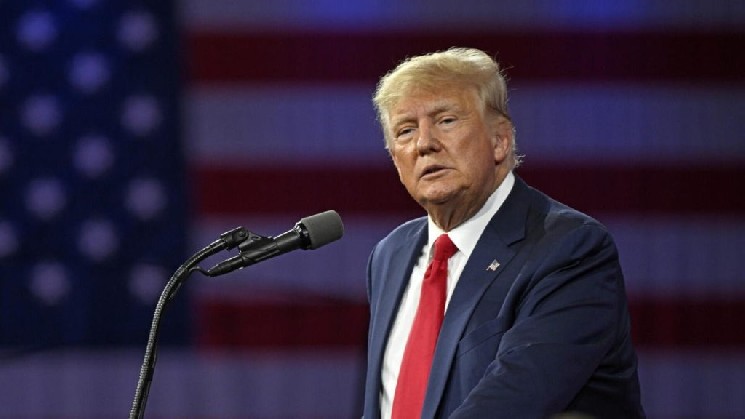
US President Donald Trump, who has repeatedly drawn criticism for his activities in the cryptocurrency sector, is facing a new lawsuit tied to his family's crypto venture, World Liberty Financial. The plaintiff alleges that Trump illegally profited from deals with foreign investors worth billions of dollars, claiming the transactions violated the U.S. Constitution and damaged the competitive position of stablecoin issuer Circle. The case adds a new legal front to the scrutiny surrounding the overlap between the Trump family's crypto business and foreign-linked capital.
The Lawsuit
According to CNBC, J. Benjamin Greenberg, a shareholder in the US-based cryptocurrency company Circle Internet Group, has filed suit against Donald Trump, his family's crypto venture World Liberty Financial ($WLFI), and several individuals, including US Special Envoy for the Middle East Steve Witkoff. The lawsuit, filed in Washington, D.C., alleges that Trump unjustly profited from transactions linked to the United Arab Emirates (UAE). Notably, the case was brought by an individual shareholder rather than by Circle as a company.
Two UAE-Linked Transactions at the Center of the Complaint
The complaint centers on two transactions connected to UAE National Security Advisor Sheikh Tahnoon bin Zayed Al Nahyan. According to the filing, an investment firm linked to Tahnoon agreed to a $500 million deal for a 49% stake in World Liberty Financial just days before Trump took office. The plaintiff claims that this transaction generated more than $75.5 million in revenue during Trump's presidency.
The second transaction involves a $2 billion investment in the Binance exchange by MGX, an Abu Dhabi-based investment fund headed by Tahnoon. The lawsuit alleges that the investment was made through $USD1, a stablecoin issued by $WLFI. Stablecoins are digital tokens designed to hold a fixed value against a fiat currency — in this case, the US dollar — and are widely used to settle large crypto transactions.
Greenberg argues that the transactions violated a provision of the U.S. Constitution — the clause commonly known as the Foreign Emoluments Clause — that restricts the acceptance of unauthorized financial benefits from foreign governments. He also claims that the growth of $USD1 harmed Circle's stablecoin, $USDC, framing the two dollar-pegged tokens as competitors in the stablecoin market.
White House, WLFI and Circle Respond
Speaking to CNBC, White House spokeswoman Anna Kelly claimed the lawsuit was simply a revival of past allegations against Trump and his family. Kelly stated that there was no conflict of interest for Trump.
David Wachsman, speaking on behalf of World Liberty Financial, described the allegations in the lawsuit as unfounded and said the company awaits the conclusion of the legal process in court. Wachsman emphasized that the company conducts its operations in compliance with the laws and regulations in force in the United States.
Circle, the issuer of $USDC, also stated in a press release that it has no corporate connection to the legal action initiated by its shareholder. The company explained that Greenberg filed the lawsuit on his own initiative and that Circle did not direct, support, or participate in the case.
With all sides now on record, the dispute moves to the docket in Washington, D.C., where the court's handling of the constitutional claims will shape how the case unfolds.
*This is not investment advice.

