General Says Trump Is Undermining the Purpose of Military Exercises With South Korea
Key Takeaways
- •Trump said he is reducing annual military exercises because he trusts Kim Jong Un and is unhappy with South Korea.
- •Retired Lt. Gen. Mark Hertling said the drills are essential for training U.S. and South Korean forces to operate together.
- •Hertling said the exercises also help test logistics such as equipment maintenance, fuel, ammunition, medical supplies, and food.
- •Hertling argued that the purpose of the drills is deterrence, not making Kim Jong Un comfortable.
- •He warned that allies and rivals, including Japan, Australia, China, Russia, and North Korea, will watch how the United States treats South Korea.
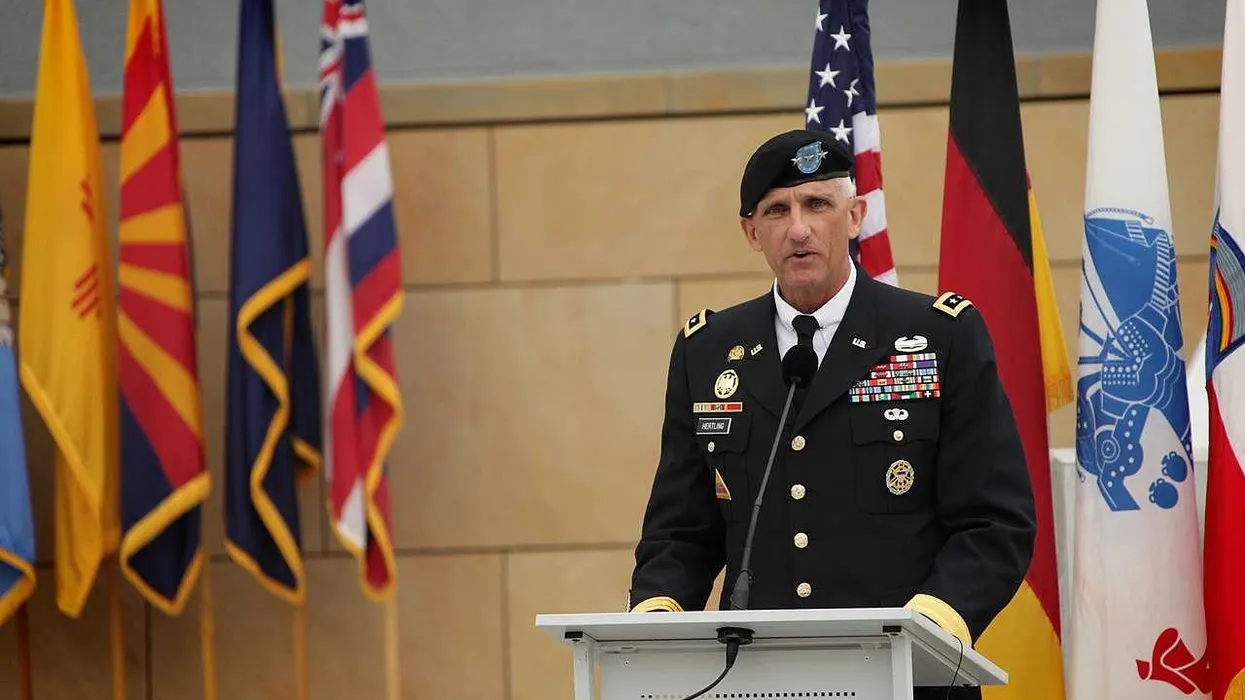
President Donald Trump said on Sunday that he trusts North Korean dictator Kim Jong Un and is therefore scaling back annual military exercises because he was "not happy" with South Korea. One retired general called the move dumb.
Retired Lt. Gen. Mark Hertling wrote a detailed analysis for The Bulwark on the purpose of military exercises and the extent to which they improve readiness.
"Trump often says America has the greatest military in the world, and in many respects, he is right. What he doesn’t seem to understand is how that military became so capable," Hertling wrote on Monday morning.
Hertling said that throughout his decades in the military, these exercises were not only about preparing for war with North Korea.
"Some of the most valuable training involved something harder to measure on a readiness chart: learning how to operate with our Korean allies," Hertling wrote.
According to Hertling, soldiers, pilots and sailors learn "how to fight under extraordinary pressure," while also resolving possible problems in logistics, including moving a large military force to the region, keeping equipment functioning, determining fuel and ammunition needs, and accounting for medical supplies and food.
That practical training matters because the exercises are part of how the U.S. and South Korea demonstrate they can operate as a combined force, not just as separate militaries on paper. In that context, changing the drills carries significance beyond a single training cycle, since allies and adversaries alike use them as a visible test of coordination and resolve.
Former European Union Ambassador Gordon Sondland told CNN on Monday morning that Trump is angry with South Korea for not stepping up to help him in Iran.
"The North Koreans know that he's trying to just insert some friendly rhetoric into the equation, and also to smack the South Koreans a little bit about their lack of willingness to stand next to us during the Iran conflict," Sondland said.
Hertling said that view is shortsighted. He acknowledged that the United States has an extraordinary military, but said the annual exercises are far more than a war game.
"The purpose of Ulchi Freedom Shield isn’t to make Kim Jong Un comfortable; it is to convince him that starting a war would be a catastrophic mistake. If Trump wants to keep boasting that America has the best military in the world, he needs to understand what made it that way," Hertling said.
Former Navy strategist Bryan McGrath wrote on "The Conservative Wahoo" Substack and criticized the administration for broader problems beyond the specific exercise.
He wrote, "This administration is destroying our most important military service through its mismanagement, and Congress does nothing. Where is the legislation directing the Navy to maintain its current aircraft carrier design program in opposition to the President’s incredibly short-sighted tantrum directing the Navy to change how the ship looks because the Toddler-in-Chief doesn’t like it, and also to replace the launching system the Navy FINALLY got right after years of trying, a system crucial to the future of increased unmanned air?"
Hertling ended by saying these issues extend beyond the Korean Peninsula. He described South Korea as an ally, not "an American subcontractor."
"Japan, Australia, and all our allies around the world will watch how the United States treats South Korea," Hertling said. "China and Russia will watch, too. And Kim Jong Un will watch most carefully of all, because deterrence depends not simply on American military capability but on an adversary’s belief that the alliance confronting him is capable, prepared and politically cohesive."
The article includes a Bulwark analysis, a CNN appearance by Gordon Sondland, and a post by Bryan McGrath on "The Conservative Wahoo" Substack.

