Trump's North Korea Policy Draws Warnings Over Nuclear War Risk
Key Takeaways
- •Political analyst Heather Digby Parton argued in a Salon column that President Trump's closeness with Kim Jong Un is increasing the risk of nuclear war.
- •Trump ordered a substantial reduction of this week's annual U.S.-South Korean military field exercises after South Korea declined to join the U.S. effort to denuclearize Iran.
- •Trump's first-term personal diplomacy with Kim produced three leader-level summits, in Singapore in June 2018, Hanoi in February 2019, and the Demilitarized Zone in June 2019, but North Korea surrendered no warheads.
- •North Korea enshrined its status as a nuclear weapons state in its constitution in 2023 and declared South Korea a hostile separate state in 2024, abandoning unification as a national goal.
- •Former national security adviser John Bolton, writing in The Wall Street Journal, criticized the exercise reduction as a unilateral concession that is worse now than the same mistake in Trump's first term.
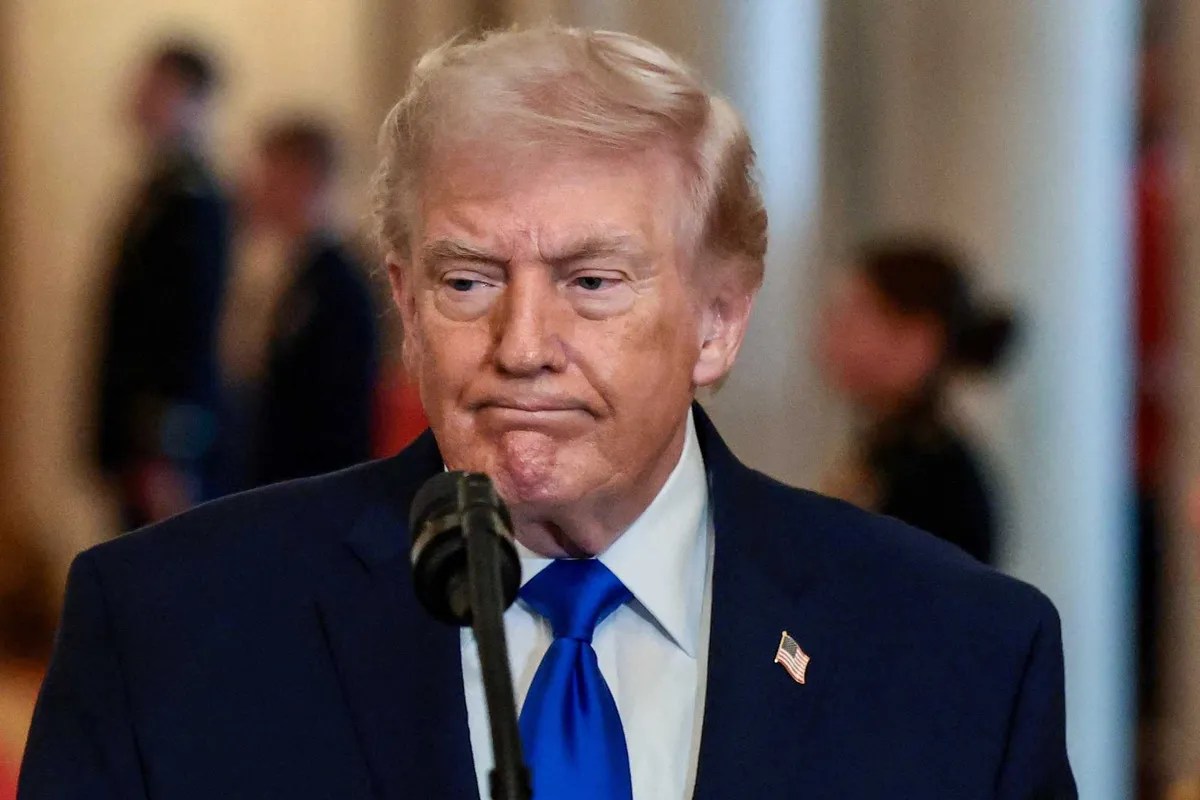
President Donald Trump's closeness with North Korean leader Kim Jong Un is putting the world at risk of nuclear war, according to political analyst Heather Digby Parton, who leveled the charge in a Sunday column for Salon.
"Trump and administration officials have taken to declaring that the economic sacrifices Americans are making for his war are patriotic gestures to ensure that Iran will never have a nuclear weapon — a pledge that had already been successfully obtained through the 2015 Iran nuclear deal negotiated under President Barack Obama, which Trump tore up upon taking office the first time, and then supposedly obtained again through the force of several bunker-buster bombs in 2025," Parton wrote. "According to the polls, most Americans aren't buying that claim."
At the same time, she argued, Trump — "still sulking that U.S. allies didn't rush to jump into his Iran quagmire" — has decided to pick up where he left off in 2020 with Kim, while punishing America's longtime ally South Korea by canceling some military exercises after the country, in his words, "refus[ed] to join us in the Denuclearization of the Islamic Republic of Iran."
The cutback follows a template from Trump's first term, when he suspended or scaled back joint exercises after meeting Kim and called them expensive "war games" — the same framing Pyongyang has long used in branding the drills rehearsals for invasion, while U.S. and South Korean officials describe them as defensive training. About 28,500 American troops are stationed in South Korea under a mutual defense treaty signed in 1953, and Gallup Korea polling has repeatedly found majority public support in the South for the country acquiring nuclear weapons of its own.
"Anyone else would have seen how insensitive such a comment would be to a country that has been forced to stand by as the unhinged, totalitarian dictatorship to its north built up a nuclear arsenal aimed at them and their allies, all while the U.S. brayed about 'denuclearization,'" Parton wrote.
Pointing to the historical record, she noted that between North Korea's first successful underground nuclear test in 2006 and the start of Trump's first term in 2017, "the country had enough fissile material for 60 weapons and they were rapidly developing a ballistic missile program."
"At first Trump did his usual insult-and-threat routine, and he then hit upon the idea that he could personally talk Kim out of the program. The famous bromance began," she wrote.
When Trump held his first summit with the North Korean leader — giving Kim, in Parton's words, "the international prestige he had always wanted while getting nothing in return" — the president was asked how long he thought it would take for North Korea to denuclearize.
"Well, I don't know, when you say a long time," Trump said. "I think we will do it as fast as it can be done scientifically, as fast as it can be done mechanically . . . It's a 15-year process. Assuming you wanted to do it quickly, I don't believe that . . . You're talking about a very complex subject. It's not just like, 'Oh, gee. Let's get rid of the nukes.'"
In all, the personal diplomacy produced three leader-level meetings: Singapore in June 2018, which ended with a vaguely worded denuclearization pledge; Hanoi in February 2019, which collapsed without an agreement; and the Demilitarized Zone in June 2019, where Trump became the first sitting U.S. president to set foot on North Korean soil. No warheads were given up. After the talks stalled, North Korea enshrined its status as a nuclear weapons state in its constitution in 2023 and in 2024 declared South Korea a hostile separate state, dropping unification as a national goal.
Parton concluded: "There's a question historians will one day ask of this era: Who started the global nuclear arms race? The answer to that is complicated, but one name will always rise to the top of any list: Donald Trump."
Parton is not alone in condemning the president's North Korea policy. Writing earlier this month in The Wall Street Journal, Trump's former national security adviser John Bolton said Trump "put North Korea and its rogue nuclear-weapons program back in the spotlight on Sunday. The president ordered the Defense Department 'to substantially reduce' this week's annual U.S.-South Korean military field exercises to defend against a potential attack by the North. He made the same unilateral concession in his first term, a mistake that is even worse now."
As far back as 2019, experts warned that Trump's attitude toward North Korea constituted playing with fire. "When I was in North Korea [President] Kim Jong-il, the father of the current president there, said that he didn't have any problems with us having our troops in South Korea," former Secretary of State Madeleine Albright told Salon in 2019.
She added: "I do think that what is worrisome to me is, in an effort to be flattered by Kim Jong-un, that he gives away something that might have a longer term effect for the next administration."
Source: Alternet; primary analysis by Heather Digby Parton, Salon.
