Trump Says Kim Responded Positively, Hints at Possible New Meeting
Key Takeaways
- •Trump said Kim Jong Un gave a very positive response to renewed dialogue, but North Korea has made no concrete commitments.
- •No date, location or agenda has been announced for a potential fourth meeting between Trump and Kim.
- •Trump ordered a substantial reduction in joint U.S.-South Korea military exercises, citing them as an inappropriate provocation.
- •The exercises have traditionally served as both a deterrence signal to North Korea and a readiness mechanism for about 28,500 U.S. troops in South Korea.
- •Kim would enter any future talks in a stronger position than in 2018 because North Korea’s nuclear capabilities have expanded and ties with Russia have deepened.
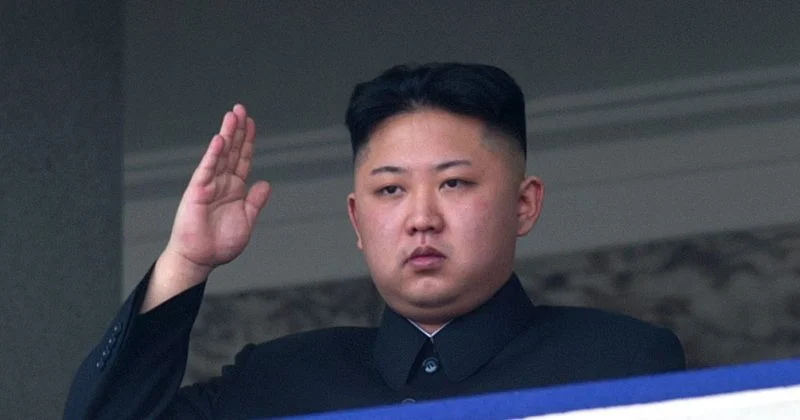
President Donald Trump said on August 18 that North Korean leader Kim Jong Un responded positively to his outreach for renewed dialogue, raising the possibility of a fourth face-to-face meeting between the two leaders. No date, location, or agenda has been disclosed.
Trump described Kim’s response as “very positive,” but said Pyongyang had not made any concrete commitments. He also ordered a “substantial reduction” in joint US-South Korea military exercises, describing the drills as an inappropriate provocation toward North Korea.
The move adds a practical dimension to the diplomatic opening: those exercises have long been one of the clearest signs of US military readiness on the peninsula, so any change in their scale is likely to be watched closely in Seoul, Pyongyang, and Washington as a test of whether talks can advance beyond symbolic contact.
The goodwill gesture and its cost
Trump said South Korea’s lack of support on other military endeavors factored into his decision to scale back the exercises, folding the move into a broader grievance about allied burden-sharing.
Joint exercises between the US and South Korea have traditionally served both as a deterrence signal to Pyongyang and as a readiness mechanism for the roughly 28,500 American troops stationed on the peninsula.
A familiar playbook, different leverage
During his first term, Trump met Kim three times: the historic Singapore summit in 2018, the Hanoi summit in 2019, and a brief encounter at the Demilitarized Zone later that same year. The Singapore summit produced a joint statement with vague commitments toward denuclearization. The Hanoi meeting ended without an agreement after the two sides failed to bridge differences over the scope of sanctions relief. In the years that followed, North Korea accelerated its weapons program rather than scaling it back.
Trump had expressed interest in meeting Kim again as early as 2025, initially hoping to arrange a summit that year. The August 18 announcement is the first public sign that Pyongyang has responded at all.
Kim Jong Un would enter any potential negotiation from a stronger position than he held in 2018. North Korea’s nuclear arsenal has expanded significantly since then, with multiple intercontinental ballistic missile tests and reported advances in warhead miniaturization. Kim has also deepened ties with Russia, a relationship that accelerated during Russia’s war in Ukraine and provided North Korea with economic and military support that reduces the pressure sanctions were intended to create.
