Trump’s Kennedy Center threats reflect misunderstanding of nonprofit, critic says
Key Takeaways
- •Federal Judge Christopher Cooper ruled that the Kennedy Center board could not add President Trump's name anywhere on the center's grounds, stalling his effort to attach his name to the landmark.
- •Trump claimed on social media, without substantiation in the source material, that the Kennedy Center was dire condition and might have to be bulldozed if his name was not added.
- •A photograph of Trump looking at a 'Kennedy Center Demolished' poster through an Air Force One window prompted widespread alarm among observers.
- •Culture critic Rebecca Ritzel argued that Trump is approaching the Kennedy Center like one of his failed hotels rather than as a Congressionally chartered nonprofit with different legal rules.
- •Under nonprofit law, Chapter 7 would require full dissolution of the center's assets while Chapter 11 would not allow debts to be discharged, leaving no route resembling Trump's corporate bankruptcies.
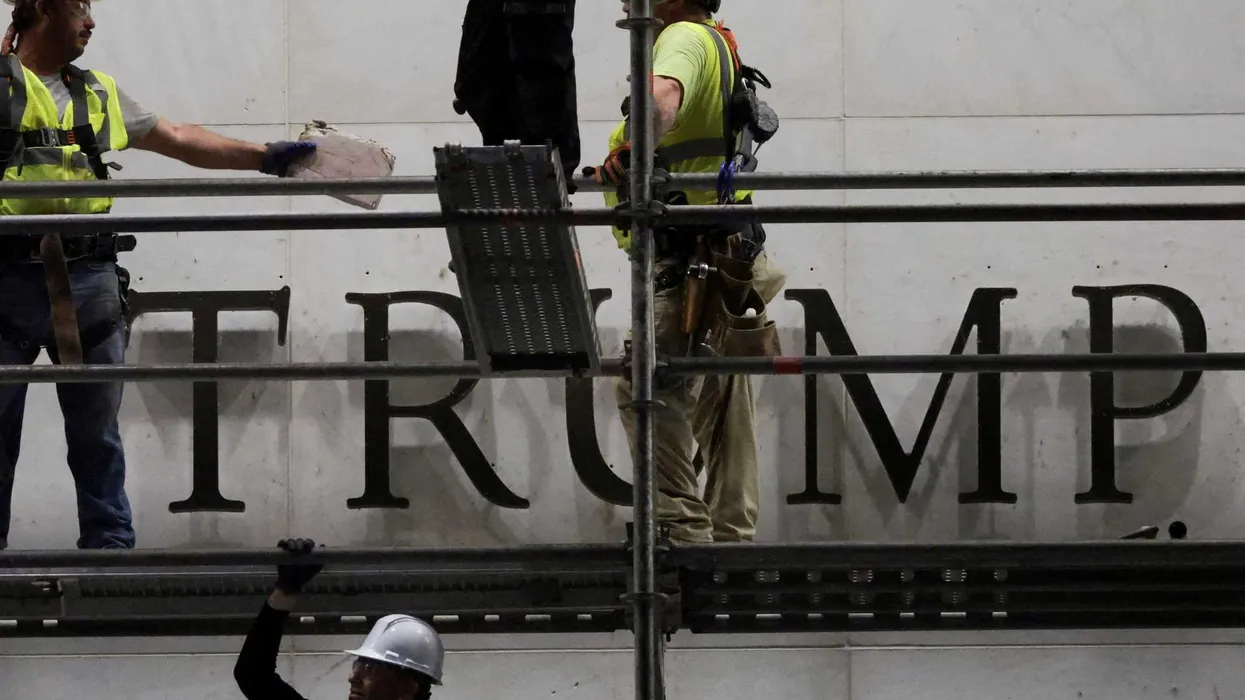
President Donald Trump’s threats against the Kennedy Center reflect what one culture critic described as a fundamental misunderstanding of how the institution operates. In an article for MS NOW, Rebecca Ritzel argued that Trump appears to be treating the arts institution as though it were one of his failed hotels.
Earlier this week, federal judge Christopher Cooper ruled that the Kennedy Center board could not add Trump’s name anywhere on the arts center’s grounds, in any form. The decision firmly stalled the president’s long-running effort to turn the landmark building into a monument to himself. The standoff has thrust a rarely examined distinction — how a Congressionally chartered nonprofit differs from a private company — into the center of a very public fight, with consequences for everything from naming rights to bankruptcy.
Trump responded on social media with a tirade in which he claimed, without substantiation in the source material, that the center was in dire condition and might have to be bulldozed if his name was not added. He also drew widespread alarm after a photographer captured him looking through a window on Air Force One at a poster that read, “Kennedy Center Demolished.” The image suggested to some observers that plans to destroy the landmark were underway.
Ritzel, a Washington, D.C.-based culture critic who writes for various outlets, published her analysis on Sunday amid the intensifying developments surrounding the Kennedy Center. She said Trump appeared to be approaching the venerated arts center with the same mindset he might apply to one of his failing hotels.
“It may feel obvious to say, but the Kennedy Center is not the Trump Plaza Hotel, to name one business formerly owned by the president that did become a pile of rubble,” Ritzel wrote. “Both may be landmark waterfront edifices, one in Atlantic City, one in Washington, D.C. Both have been run by Trump. But one was a business that declared bankruptcy and one is a Congressionally charted nonprofit. If these buildings rack up debt, can’t handle some creaky plumbing and want to stop operating, they do so under an entirely different set of laws.”
She continued: “That’s a distinction the president of the United States, former owner of the Plaza Hotel chain and current chair of the Kennedy Center, does not appear to care to make.”
Ritzel explained that the Kennedy Center is a nonprofit chartered by Congress and therefore operates under fundamentally different rules from Trump’s former private businesses. Any bankruptcy involving the center would also differ from the process with which Trump has extensive experience. The distinction carries practical weight: under the rules she describes, the options narrow to full dissolution or a reorganization that would not discharge the center’s debts — with no route resembling the corporate bankruptcies familiar from Trump’s business career.
“For nonprofits, filing for Chapter 7 requires dissolving all assets in addition to going through bankruptcy proceedings,” Ritzel wrote. “When a nonprofit ‘dissolves,’ laws prohibit the board and employees from making any money. The Kennedy Center couldn’t even keep its curtains. And dissolving a nonprofit that was chartered by Congress is entirely uncharted territory. Chapter 11 is on the table too, but that would not allow a court to discharge debts, and given the president’s claim that the Kennedy Center owes ‘hundreds of millions of dollars,’ it appears reorganizing would not help.”
Ritzel also contrasted nonprofit naming practices with Trump’s corporate branding. “Like several other 1990s businesses, the [Trump Plaza Hotel] retained Trump’s name even after the family reduced its ownership,” she wrote. “Perhaps distant memory is why he thinks carving his name in stone is the only way to save the Kennedy Center. Here again, he does not appear to understand how corporate branding differs from nonprofit norms. When a nonprofit hangs a name on its brick-and-mortar space, it usually does so only after a long history of personal and family investment.”
Where the standoff goes from here remains open. The court has stalled the naming effort, while the president’s warnings about the center’s finances rest on claims the source material does not substantiate. If the dispute escalates, the nonprofit framework Ritzel outlined — not the corporate playbook from Trump’s business career — would govern the options available, in legal territory she described as entirely uncharted.
Source: Alternet

