Trump's Kennedy Center Naming Battle Persists Despite Court Rulings, The Atlantic Reports
Key Takeaways
- •A federal court struck down Trump's attempt to rename the Kennedy Center after himself, forcing his name off the building's facade.
- •The center's board, packed with loyalists after Trump's return to the White House, voted to add the phrase "Restored and Renovated by President Donald J. Trump" to the facade.
- •Courts can restrain the board but cannot remake it, since judges generally will not dictate internal decision-making procedures established by statute.
- •Congress could resolve the dispute only by changing the Kennedy Center's governance structure or clarifying the law on its naming, but such legislation could be vetoed by Trump.
- •Legal experts, including UVA law professor John Harrison, describe the board as a governance problem that courts have little power to fix.
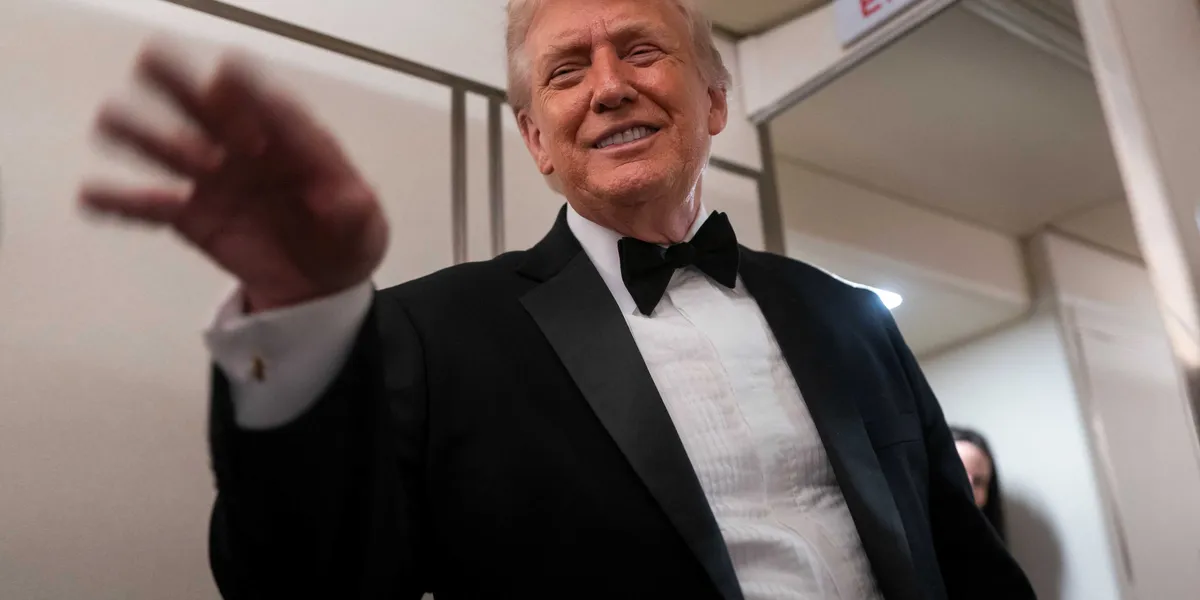
President Donald Trump's drive to attach his name to the Kennedy Center is being sustained by a factor that courts are largely powerless to stop, according to a new piece from The Atlantic.
The dispute stems in part from the Kennedy Center's unusual status: it is a living memorial to John F. Kennedy that operates as a bipartisan public-private institution, with its board of trustees traditionally appointed by the president. Trump's initial push to rename the Washington, D.C., institution to "The Donald J. Trump and the John F. Kennedy Memorial Center for the Performing Arts" was struck down in federal court earlier this year, forcing his name to be removed from the building's facade—though the change remains covered by a tarp. In response, the center's board, which was packed with MAGA loyalists shortly after Trump's return to the White House, tried again, voting in favor of a motion to add the phrase, "Restored and Renovated by President Donald J. Trump," to the facade.
Writing for The Atlantic on Saturday, staff writer Janay Kingsberry argued that this board of loyalists is bound to keep the situation going in perpetuity, as it "keeps making decisions that drag out the ordeal."
"A judge can restrain the board but has no power to remake it," Kingsberry explained. "Congress can remake it, but only through legislative action, which Trump can veto. And meanwhile, his board remains in place—able to make new decisions that invite new challenges that send the parties back to the same judge."
John Harrison, a law professor at the University of Virginia, told Kingsberry that in the Kennedy Center situation, "if the problem is a governance problem, there is not much that a court can do." He also described the board as something of a "black box" as far as a court is concerned.
"A judge may issue orders to the people responsible for the entity and enforce those orders, but he generally will not reach inside that structure to prescribe how its decisions should be made when those procedures are established by statute," Kingsberry added.
That leaves two options for lawmakers, she wrote. First, Congress could change the Kennedy Center's governance structure. Alternatively, it could leave the board intact but alter the law governing what the board is permitted to do—for instance, by making the rules surrounding the Kennedy Center's name more explicit.
Kingsberry continued: "Any provisions affecting the Kennedy Center could conceivably hitch a ride in a larger legislative package rather than come to the floor as a stand-alone measure," Harrison said, but "it would have to be in a bill. It would have to be done by an act of Congress," which, for now, seems unlikely.
