Trump Grows Impatient as RFK Jr.'s Vaccine-Autism Study Passes Deadline Without Findings
Key Takeaways
- •Trump has grown impatient with Robert F. Kennedy Jr.'s stalled autism research effort, which has not produced the findings Kennedy promised.
- •CBS News reported that Kennedy's team missed its deadline and that outside experts view the project as unusually secretive.
- •Several of Kennedy's theories, including links to Tylenol, circumcision and hepatitis B vaccination, have been contradicted or misrepresented by later research.
- •Decades of large-scale studies have found no causal link between childhood vaccines and autism, while the CDC attributes much of the rise in diagnoses to broader screening and awareness.
- •The research effort has largely bypassed major autism scientists and advocacy groups even as the administration has begun changing vaccine policy before any findings are released.
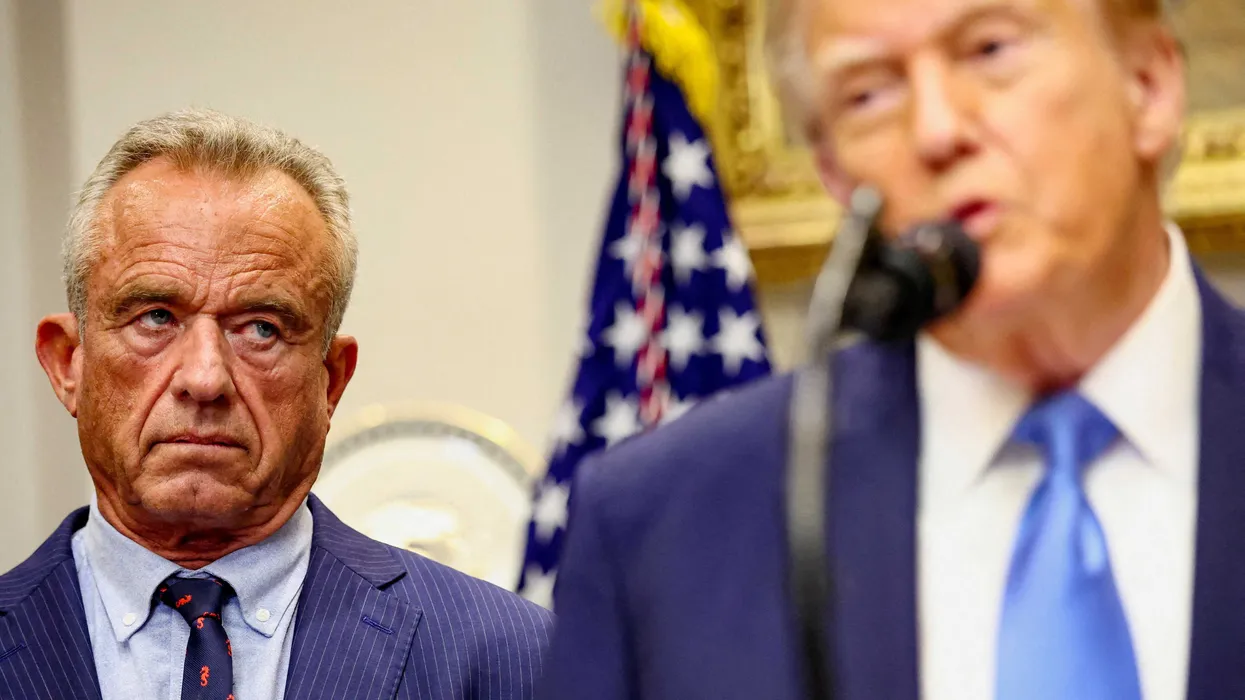
President Donald Trump is pressing for results from a stalled childhood vaccine study led by Robert F. Kennedy Jr., the nation's top health official as secretary of Health and Human Services, who has yet to deliver the sweeping findings he promised when the effort began.
Kennedy told the president he could pinpoint what is driving the rise in autism diagnoses, but more than a year into the job he has not done so — and Trump is growing impatient, CBS News reported.
Last August, Trump predicted it would be "such a big day" after Kennedy assured him he had identified the factors causing autism "clearly, almost certainly." That day has still not arrived.
According to CBS News, Kennedy's team has since blown past its own deadline for definitive answers, leaving little to show for a research effort that outside experts describe as unusually secretive. Helen Tager-Flusberg, who leads the Coalition of Autism Scientists, said she has never encountered a project this closed off.
"They're treating it like the Manhattan Project in the 1940s," she said. "This is as opaque as it could possibly be."
At a recent Cabinet meeting, Trump asked Kennedy directly, "How are you doing on the autism research?" Kennedy replied only, "We will have an answer for you," before Trump cut him off: "That is so important."
Speaking at an Aug. 10 signing ceremony for an executive order scaling back vaccine recommendations, Trump himself claimed that childhood vaccines were tied to rising autism diagnoses. Kennedy, rather than announcing a breakthrough, worked to manage expectations, telling the president, "We have just over two years to finish the work, and I know you're impatient."
Kennedy's specific theories, meanwhile, have not held up. His claim that Tylenol use during pregnancy causes autism was contradicted by a major JAMA study. His suggestion that circumcision could be a factor was undercut by a JAMA Pediatrics study that found no such link. And his citation of a "hidden" CDC study tying the hepatitis B vaccine to a 1,135 percent autism increase misrepresented the actual research, according to the study's own author.
Those setbacks come against a well-established scientific baseline: decades of large-scale epidemiological studies have found no causal link between childhood vaccines and autism, and health agencies including the CDC have attributed much of the rise in measured diagnoses to broader diagnostic criteria, greater awareness and earlier screening. The CDC's latest surveillance estimate puts autism prevalence at roughly 1 in 31 children.
The effort has also largely excluded the scientific and advocacy communities best positioned to help. Leading autism researchers and career federal scientists say they have not been consulted, and Delancy Allred of the Autism Society said requests to meet with Kennedy directly have gone unanswered: "No one has gotten to Kennedy."
Instead, the initiative has leaned on longtime allies such as adviser Stefanie Spear and William "Reyn" Archer III, who has spent months collecting Americans' medical records in search of a vaccine link.
The stakes reach well beyond one study: Kennedy's department houses the CDC, whose advisory committee shapes the vaccine recommendations that doctors, insurers and school systems across the country follow — policy the administration has already begun to change before any findings have been produced.
Even Trump's own NIH director, Jay Bhattacharya, acknowledged on "Face the Nation" that he does not know why autism rates have risen — undercutting the administration's claims a day before Trump signed his vaccine order anyway.

