Ex-Prosecutor: Trump's Trashing of His Own Supreme Court Justices Tops 'Long List' of Misdeeds
Key Takeaways
- •D. Zirin, a former prosecutor for the Southern District of New York, wrote in The Hill that Trump's worst second-term misdeed is his repeated undermining of judicial independence.
- •Zirin focused on Trump's attacks on Brett Kavanaugh, Neil Gorsuch, and Amy Coney Barrett, the justices Trump appointed during his first term, completing the court's current 6–3 conservative split.
- •After losing the Supreme Court tariff case, Trump called Gorsuch and Barrett's votes an "embarrassment to their families," labeled conservatives who joined the majority "disloyal" and "fools and lapdogs," and alleged without proof that the court was swayed by foreign interests.
- •Zirin compared Trump's behavior to Roy Cohn's "favor bank" playbook, under which a judge is expected to owe allegiance to the politician who appointed them rather than to the law.
- •Zirin cited Alexander Hamilton's Federalist No. 78, the 1788 essay describing the judiciary as the weakest branch of government and presenting life tenure as its principal safeguard against the elected branches.
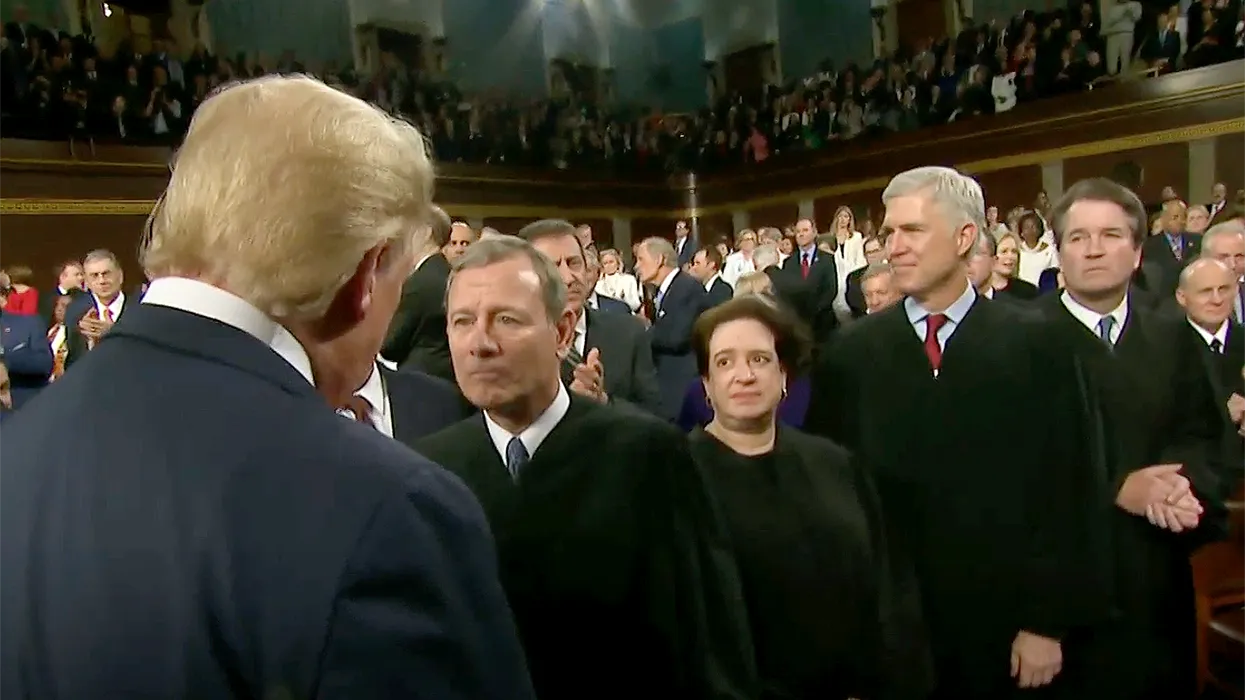
President Donald Trump's misdeeds since returning to the White House have accumulated into a "long list," but one former federal prosecutor argues that the worst of them is clear: the president's sustained assault on judicial independence — including against the three Supreme Court justices he appointed himself.
Writing in The Hill on Tuesday, James D. Zirin — who previously served as a prosecutor for the Southern District of New York and now regularly publishes legal analysis and op-eds for the outlet — recounted being asked by a "right-leaning" colleague, "what is the worst thing Trump has done since he took office?"
According to Zirin, the "competition" for that ignoble honor was fierce. "Is it the rampant corruption in Washington, using the criminal justice system for revenge on personal and political enemies?" he wrote. "Is it pressuring law firms, universities and media companies to achieve political ends? Barring press from the White House because he doesn't like what they report? Weakening our alliances? Warring with science and the arts? The fiasco in Iran and the global exposure of our military's weaknesses? Then there's the self-valorizing East Wing ballroom or the Arc de Trump. Is it a pass to the dangers of AI, the outrageous lies or his repeated savaging of the three Supreme Court justices he appointed because he doesn't like their decisions? Take your pick; it's a long list."
Amid those choices, Zirin identified "the coup de grâce" among Trump's worst second-term misdeeds as his "repeated undermining of judicial independence, trashing the three justices he himself appointed, Brett Kavanaugh, Neil Gorsuch and Amy Coney Barrett." All three were confirmed during Trump's first term — Gorsuch in 2017, Kavanaugh in 2018 and Barrett in 2020 — completing the court's current 6–3 conservative split. He conceded that his view was informed by his own background as an attorney and reverence for the legal system.
To back up the argument, Zirin catalogued Trump's reactions to adverse rulings. "When Trump lost the tariff case in the Supreme Court, he called Justices Gorsuch and Barrett's votes an 'embarrassment to their families,' labeled majority conservatives voting with the liberal minority 'disloyal, unpatriotic' and 'fools and lapdogs,' alleged without proof that the court was 'swayed by foreign interests,' and said he was 'ashamed' of the justices he appointed lacking the courage to do right," Zirin detailed.
That pressure reaches into the structural design of the federal courts: Article III justices hold lifetime appointments, a feature intended to insulate the judiciary from the political branches. "His assault smacked of his mentor Roy Cohn's playbook," he added. "In Cohn's Bronx back room 'favor bank' ethos, if a politician was responsible for appointing a judge, that judge owed allegiance not to the law, but to the corrupt political system that gave him the gavel."
Zirin noted that Trump returned to the theme after losing a separate case on mail ballots. "These are not the people I interviewed to serve on the United States Supreme Court, they are merely a shell of their original selves," the president wrote in a social media post, according to Zirin.
In Zirin's assessment, "Trump's actions are those of a sore loser and a bully, and many Americans are prepared to live with that. Bullies thrive on weakness, and Alexander Hamilton thought the judiciary to be the weakest branch of government, having no sword and no purse." Hamilton made that argument in Federalist No. 78, the 1788 essay that presented life tenure as the judiciary's principal safeguard against the elected branches — the same independence Zirin argues is now under strain.
Source: Alternet

