Trump's Boardroom Intervention at Nvidia Exposes GOP's 'Big Con,' Historian Argues
Key Takeaways
- •Jensen Huang was removed as Nvidia CEO over accusations of an extramarital affair with a woman thought to have ties to Chinese intelligence, and President Trump said the Justice Department had exonerated him.
- •Trump's account shifted, backing away by Tuesday evening from his claim that the intelligence on Huang was shaky and saying his advisers were reviewing the matter, while Attorney General Todd Blanche avoided questions about which investigations are underway.
- •The Atlantic reported that Commerce Secretary Howard Lutnick reassigned agents preventing AI chip smuggling to his personal security detail, and Nvidia chips banned from sale to China under export controls have appeared there.
- •The Wall Street Journal's editorial board reported that Trump told Nvidia's board the government would not punish the company if it reinstated Huang, which Richardson interprets as evidence the board feared retribution.
- •Nvidia's stock dropped 6% on Tuesday after surging 31% the previous day on news of Huang's return, the Nasdaq fell 1.5%, and Trump is thought to have made as much as $15 million on his Nvidia shares during the rally.
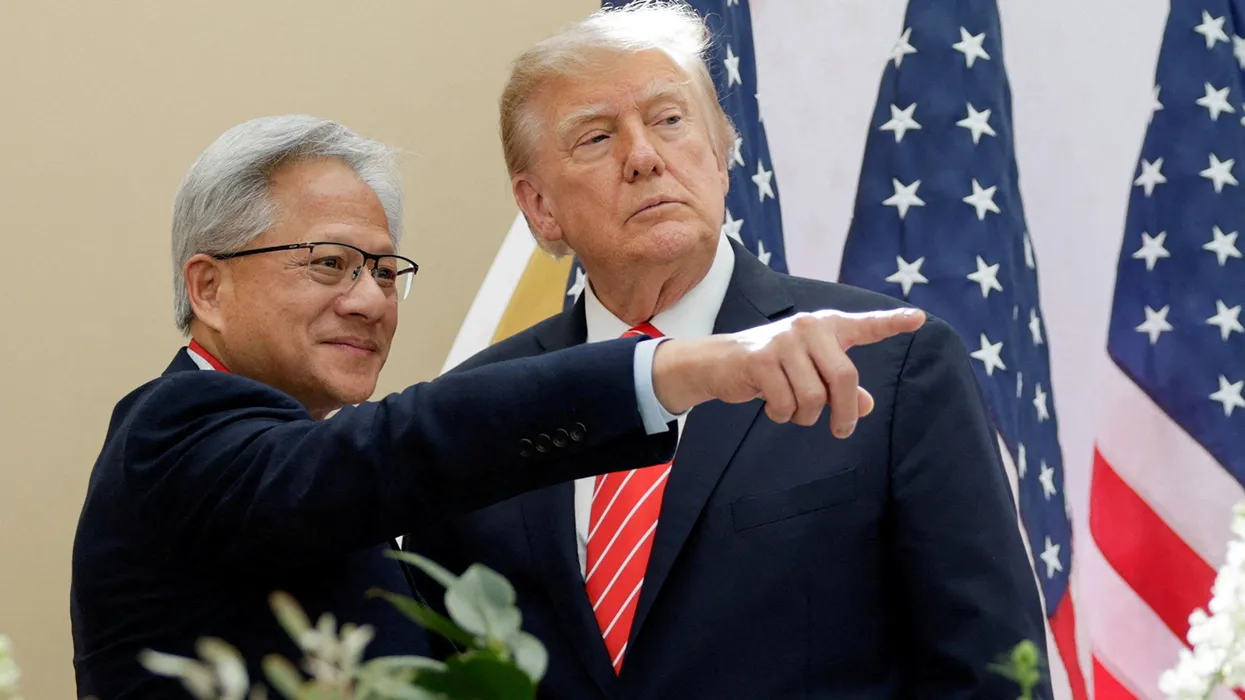
Historian Heather Cox Richardson argues that President Donald Trump's involvement in returning Jensen Huang to the helm of Nvidia has laid bare a long-running falsehood at the heart of Republican economic policy.
Writing in her Substack newsletter, Letters from an American, Richardson says the GOP's promotion of free markets since the era of Ronald Reagan "was always simply a smoke screen to enable them to concentrate wealth."
Huang was removed from his position after being accused of having an extramarital affair with a woman thought to have ties to Chinese intelligence. Trump has maintained that Huang's reinstatement poses no national security risk, telling CNBC's Eamon Javers that the Justice Department had "exonerated" Huang. The episode carries industry-wide weight: Nvidia designs the advanced chips that underpin the global AI boom, which places its leadership at the intersection of commercial and national security interests.
The administration's account, however, has shifted. The New York Times' Maggie Haberman reported that by Tuesday evening, Trump had backed away from his earlier claim that the intelligence about Huang was shaky, saying instead that his advisers were looking into the matter. Meanwhile, CNN's Aaron Blake reported that Attorney General Todd Blanche has been dodging questions about which investigations are actually underway. Those threads — the outcome of the advisers' review, whatever investigations may exist, and the posture of Republican lawmakers — are the ones to watch as the episode continues.
The Atlantic reported separately that Commerce Secretary Howard Lutnick reassigned agents who had been working to prevent the smuggling of AI chips to his personal security detail — a move officials said stripped the department of its key expertise. Nvidia chips the company is banned from selling to China under U.S. export controls have already shown up there.
Richardson also highlighted the claim from The Wall Street Journal's editorial board that Trump reportedly told Nvidia's board of directors that the government "wouldn't punish the company" if it chose to reinstate Huang. In her view, the episode suggests Nvidia's board feared retribution at the hands of the government.
She says this is what a "personalized economy" looks like — a system in which a strongman has a say in who runs a private company — and she compares it to the oligarch system in Russia. Richardson believes the administration has been demanding its cut from private companies and is moving toward the state-directed style of the Chinese model.
She cites The Atlantic's Adam Serwer, who has pointed out that Republicans only appear to be upset about government involvement in private business when it benefits people who are not wealthy. While some GOP lawmakers have been shying away from the Huang controversy, Richardson writes, the party so far appears willing to abide by the new rules.
The only true protection for wealth in the face of an autocrat, she argues, is the rule of law — a lesson Russian oligarchs who have stashed their money in the U.S. and U.K. know well.
The market reaction was swift. Nvidia's stock dropped 6% on Tuesday after skyrocketing 31% the day before on the news of Huang's return, and the Nasdaq fell 1.5% alongside it. Trump is thought to have made as much as $15 million on his Nvidia stock during Monday's rally.
Source: Alternet

