MAGA figures split as Trump’s Iran strategy draws criticism
Key Takeaways
- •Trump met with Israeli Prime Minister Benjamin Netanyahu, prompting fears among some MAGA figures that the meeting could encourage further escalation in the Iran war.
- •Steve Bannon and Curt Mills both described the conflict in stark terms, saying it is damaging the America First agenda and could intensify pressure for escalation.
- •Greg Sargent said new polling shows a sizable share of MAGA voters are turning against the war, widening divisions inside the Republican Party.
- •Emily Horne said the United States no longer has leverage in the conflict and argued that Trump lacks a clear endgame or strategy.
- •Horne said Iran still has bargaining power, including its nuclear program and control over the Strait of Hormuz, while Trump’s withdrawal from the JCPOA helped preserve that leverage.
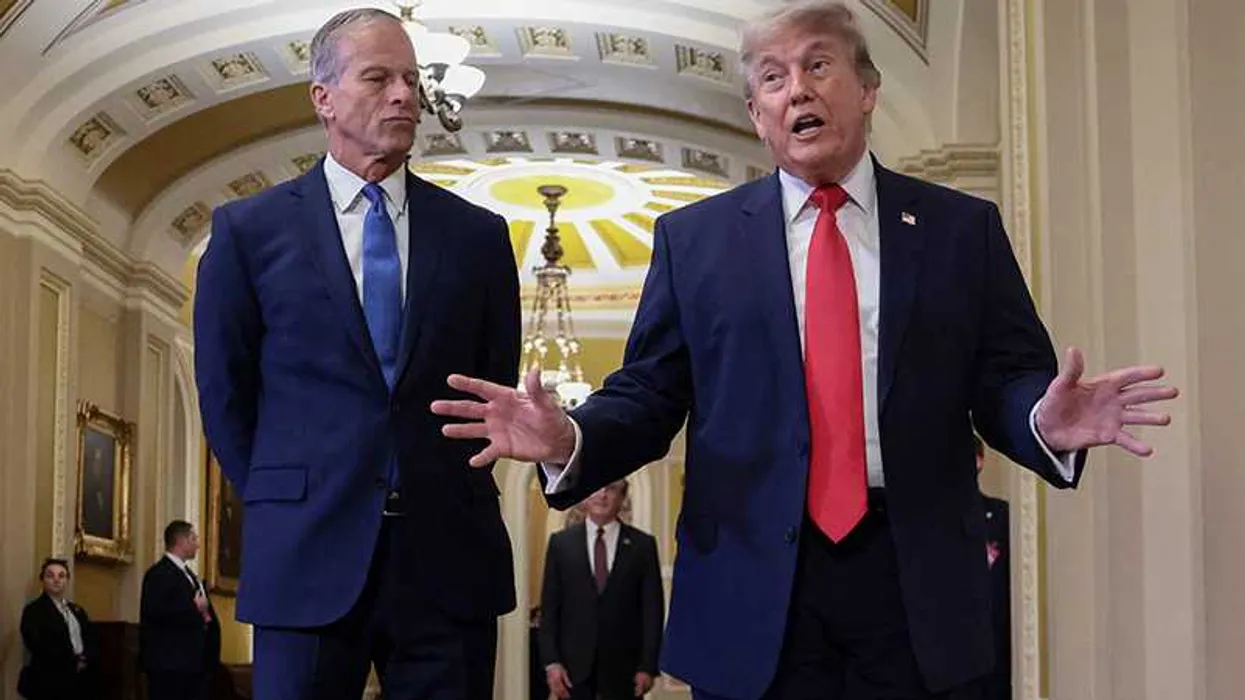
President Donald Trump has put forward a new approach to the Iran war, but it appears strikingly similar to the old one. The move has left some of the most prominent voices in the MAGA movement “rattled.”
Former State Department official Emily Horne discussed Trump’s Iran strategy with The New Republic’s Greg Sargent on the Morning Podcast, where they examined what they described as a clumsy and escalating approach.
Trump met with Israeli Prime Minister Benjamin Netanyahu on Tuesday as he arrived for the funeral of Sen. Lindsey Graham (R-S.C.). According to Sargent, “Many MAGA figures are upset about this, fearing that a meeting will push Trump into escalating, and they don’t want Trump to do Israel’s bidding.”
He cited far-right former Trump campaign leader Steve Bannon, who told Politico, “All of Trump’s most ardent non-Israel First supporters are furious.” Bannon said the war has been a “disaster” for the America First agenda.
Sargent also pointed to Curt Mills of The American Conservative, who said the situation was at “DEFCON 1” because Netanyahu would likely “argue for the essential logic of escalation.”
At the same time, Trump appears to be losing support. Sargent said that while criticism initially came mainly from independents, “new polling shows a large chunk of MAGA turning on the war.” That split highlights a broader tension inside the GOP: whether to follow Trump’s more hawkish posture or the party’s more isolationist wing, which has been pressing harder against another prolonged Middle East conflict.
Horne said it is important to distinguish between legitimate criticism of the Israeli government and attacks coming from a “strain of MAGA” that is “really virulent and ugly antisemitic.”
“But that aside, I think it’s really telling that there is not agreement within MAGA, within the Republican Party, on the best way out of this own goal that is Trump’s Iran war, his forever war, really,” Horne said. She noted that Trump also acknowledged on Fox News on Tuesday morning that there are elements of the Republican Party that want the conflict to end, especially with midterm elections approaching and the war becoming increasingly unpopular.
“As members of Congress are going back to their districts for August recess, they’re going to be getting an earful about gas prices and forever wars and politicians who are focused on the wrong thing,” Horne said.
She contrasted that with the hawkish wing of the GOP that supports continuing the war.
“Nobody knows what Trump’s endgame is or what the strategy is,” Horne said. “They’re clearly just making it up as they go along. And the only answer that they have for ‘the bombs haven’t worked so far’ is more bombs.”
Trump has continued to claim that the Iranians want a deal and are eager to end the war, raising questions about why he is not pursuing an agreement. Sargent said that is not the reality.
“In reality, the Iranians are not in any rush to talk to Trump at all,” he said.
Horne said that, in “bureaucratic terms,” the “TLDR” is that the United States no longer has leverage. She contrasted Trump’s posture in the Iran conflict with the line he used during a contentious Oval Office meeting with Ukrainian President Volodymyr Zelenskyy, when he said, “you don’t have the cards.” In the Iran war, Horne said, Trump is the one who has no cards.
Iran is able to pass the costs of the war onto its own people, but the conflict is also imposing political costs on Trump and his party, including at the ballot box. Horne said control of the Strait of Hormuz is giving Iran greater power and more leverage in negotiations with Trump’s son-in-law, Jared Kushner, and Steve Witkoff, Trump’s “special envoy for peace missions” and “Special Envoy for the Middle East,” respectively.
Iran also continues to maintain a nuclear program despite the bombing campaign. Horne said that is in large part because Trump withdrew from the JCPOA during his first term. The JCPOA, or Joint Comprehensive Plan of Action, was President Barack Obama’s agreement with Iran and allied countries including the United Kingdom, France, Russia, China and Germany. The International Atomic Energy Agency (IAEA) found that Iran was complying with the deal until Trump ended it in May 2018.
“So, no matter what Trump has said at various points in Trump II about obliterating Iran’s nuclear program, again, that is something that Iran has as a bargaining chip, and they have been very clear that they’re going to control the direction of the conversation moving forward,” Horne said.

