Trump's Latest Nuclear Rhetoric on Iran Draws 'Incoherent' Criticism from i Paper Columnist
Key Takeaways
- •The U.S.-Iran war has lasted more than six months despite Trump's promise it would conclude within weeks, and remains in stalemate.
- •Trump told GB News the war was launched to prevent Iran from using nuclear weapons, potentially against Europe or the UK.
- •James Ball of the i Paper argued Trump's logic contradicts earlier U.S. claims that 2025 joint strikes with Israel had completely destroyed Iran's nuclear capabilities.
- •Trump's Iran policy is deeply unpopular in Europe, and European governments are uneasy about the conflict's open-ended trajectory.
- •During the interview Trump also repeated claims about 'no-go' areas in London, which Ball cited as further evidence of confused and contradictory reasoning.
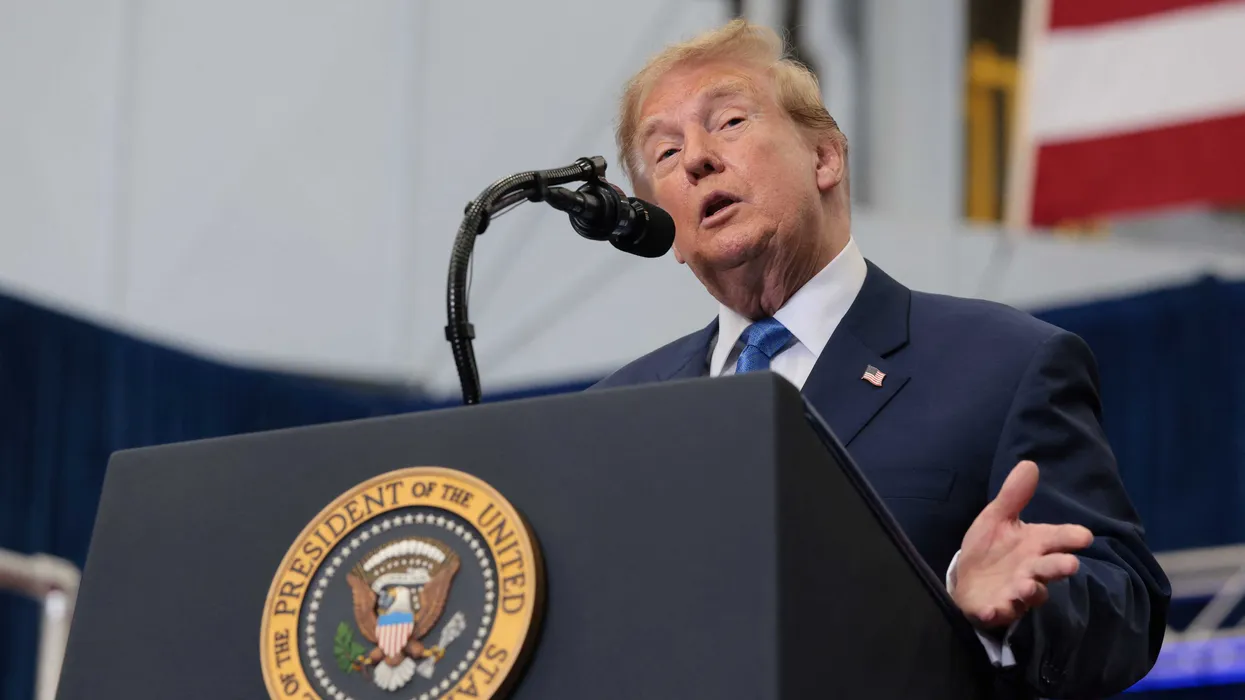
More than six months after it began, the war with Iran — a conflict that U.S. President Donald Trump promised would be brief — continues to drag on. Although Trump's Iran policy is deeply unpopular in Europe, the president is still working to persuade the United States' European allies that the war serves their interests. According to James Ball of the i Paper, Trump's remarks on Europe, Iran and nuclear weapons in a recent GB News interview defy all logic and reason.
Ball, writing in the UK-based i Paper, characterized Trump's comments in the interview as "a display of an increasingly elderly and incoherent man, ranting only semi-coherently about world affairs."
"Trump used to be a man who wanted to look in control at all times," Ball argues. "Now, though, he just looks like he's lost it."
During the interview, Trump insisted that the war with Iran is intended to protect Europe. But according to Ball, the president's arguments were riddled with glaring contradictions. The column lands at a moment when European governments have been visibly uneasy about the conflict's open-ended trajectory, making Trump's bid for allied gratitude an awkward sell among leaders whose publics largely opposed the war from the outset.
"In the interview," Ball explains, "Trump said that his reason for launching a war against Iran earlier this year had been to avert the possibility of Iran using nuclear weapons against its enemies — and suggested that this could have included the UK. 'I'm saving your country from the threat too,' he explained. This is a strange chain of logic, not least because Trump and his officials claimed repeatedly — dozens of times, over a period of months — that joint strikes by the U.S. and Israel in 2025 had 'totally obliterated' Iran's nuclear capabilities, and promised it would take 'many years' for Iran to recover."
Ball continues: "Now, Trump says, his 2026 conflict — which he promised would last for just weeks, and which is still stuck in stalemate after six months — was essential to stopping a nuclear-armed Iran, and that it was essential for the UK and Europe's safety."
Ball also observes that Trump "seems fixated on securing the gratitude of British and European politicians for a war they didn't want him to start."
"Trump's logic as to why his war was good for Europe is confused, to say the least: Iran's missiles, he claims, can reach Europe but not America," Ball argues. "'Because if Iran had a nuclear weapon, they're more likely to use it in Europe, where they do have missile capability, than they are in America, where they don't,' he said. 'I'm saving your country from a problem because they would use it.'"
The i Paper reporter adds: "This is an odd way to understand a nuclear capability. Countries don't immediately launch nuclear missiles as soon as they obtain them — instead, they generally use them to try to deter invasion by their adversaries. Why Iran would immediately launch its theoretical nukes against European nations who hadn't involved themselves in the war against it is never spelt out by Trump. That confusion is compounded by Trump's insistence on repeating U.S. right-wing clichés about Britain. Trump said that London was full of 'no-go' areas that police dare not visit, and that this lawlessness was caused by immigration … If Britain is apparently changing so fast under immigration, and becoming an Islamic country, why would it still be so high on Iran's target list?"

