Trump Vows US Retaliation Against Iran Following Jordan Base Attack, Warns China on Arms Supplies
Key Takeaways
- •President Trump announced that the United States plans to carry out military strikes against Iran in response to an attack on a US-linked base in Jordan.
- •Trump issued a direct public warning to China to stop supplying weapons to Iran, transforming a long-standing diplomatic grievance into a higher-stakes standoff.
- •The United States maintains approximately 3,000 troops in Jordan dedicated to counterterrorism and regional stability missions.
- •Military confrontation with Iran risks disrupting the Strait of Hormuz, a critical chokepoint through which roughly one-fifth of the world's daily oil supply passes.
- •Escalating US-China tensions over Iran could affect cryptocurrency markets by impacting stablecoin settlement flows, mining operations, and cross-border capital movement.
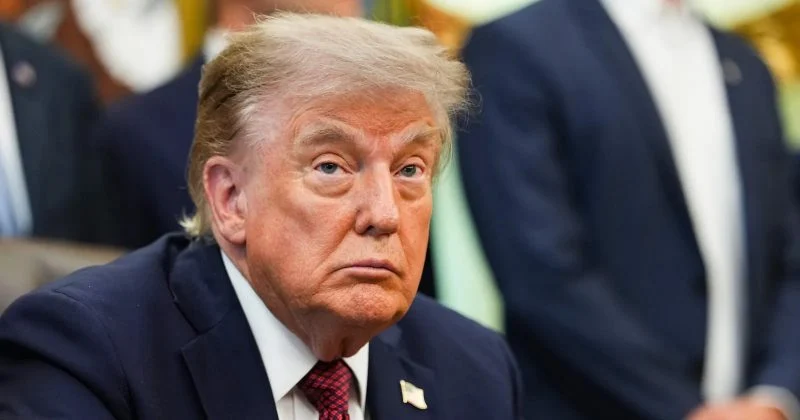
President Trump announced that the United States would carry out strikes against Iran in retaliation for a recent attack on a US-linked military base in Jordan, signaling a sharp escalation in an already volatile Middle Eastern landscape. In the same statement, Trump issued a direct warning to China against continuing to supply weapons to Iran, widening the confrontation into a multi-front geopolitical crisis.
What Happened and Why It Matters
Trump's declaration places US military action against Iran squarely on the table. The announcement follows an attack on a US-associated base in Jordan, though the specifics of that incident — including its timing and any casualties — have not been publicly detailed.
Jordan has long hosted US military personnel as part of a broader American security presence in the region. The kingdom borders Iraq, Saudi Arabia, Israel, and the West Bank, making it a strategically significant partner for Washington. Attacks on US installations in the region have periodically drawn warnings of retaliation from successive administrations. The US has maintained a military presence of roughly 3,000 troops in Jordan, focused on counterterrorism and regional stability missions.
Iran maintains a network of allied armed groups across the Middle East, including in Iraq, Syria, Lebanon, and Yemen, through the Islamic Revolutionary Guard Corps' Quds Force. US forces in Iraq and Syria have faced dozens of attacks from Iran-aligned militias in recent years, and any attack on a facility linked to US forces in Jordan would mark a widening of that pattern to a country that has seen fewer such incidents than its neighbors.
The warning to China introduces a second layer of complexity. Beijing's arms relationship with Tehran has been a persistent source of friction in US-China relations. China and Iran signed a 25-year strategic partnership agreement in 2021 covering economic and security cooperation, and China has been a top buyer of Iranian oil despite US sanctions. Trump's public ultimatum elevates what was previously a diplomatic grievance into a more consequential standoff with potential economic and security ramifications.
The Oil-Crypto Transmission Mechanism
Military confrontation with Iran would almost certainly disrupt global energy markets. Iran borders the Strait of Hormuz, a narrow shipping channel between Oman and Iran through which roughly one-fifth of the world's daily oil supply passes. The strait has long been recognized as one of the world's most critical energy chokepoints, and any disruption to shipping through it has historically triggered sharp movements in oil prices. Iran has repeatedly threatened to close the strait during periods of heightened tension with the US and its allies, most notably during the 1980s Tanker War and in subsequent standoffs over sanctions.
The last major direct US-Iran military escalation — the January 2020 US strike that killed IRGC Quds Force commander Qasem Soleimani, followed by Iran's ballistic missile attack on US forces at Al Asad Air Base in Iraq — produced an immediate but short-lived surge in oil prices before markets stabilized.
Safe Havens and the Flight to Quality
The China dimension adds a wrinkle uniquely relevant to cryptocurrency markets. If US-China tensions escalate further over the Iran arms issue, there could be downstream effects on stablecoin flows, mining operations, and cross-border capital movement. China remains a significant, if unofficial, participant in crypto markets despite its domestic bans on cryptocurrency trading and mining. Any broadening of sanctions or financial restrictions tied to the confrontation could affect how digital assets move across borders, particularly in regions where stablecoins serve as key settlement instruments. Geopolitical crises have historically driven increased interest in decentralized and non-sovereign assets as potential hedges, though individual outcomes vary and past patterns do not guarantee future results.

