Trump Administration Crowdsources Iran Strategy as Loyalist-Driven Approach Draws Criticism
Key Takeaways
- •A senior CENTCOM intelligence officer emailed external military analysts seeking creative and unconventional strategies to pressure Iran, a notable departure from established Pentagon planning procedures.
- •The Trump administration's Iran policy has cycled through aggressive threats followed by climbdowns and promised negotiations for over five months without producing a coherent strategy.
- •Trump has significantly reduced foreign affairs experts at the State Department and removed senior military and intelligence officials under Defense Secretary Pete Hegseth.
- •Experts cited in the analysis argue that replacing career professionals with political loyalists has cultivated an organizational culture reluctant to challenge presidential decisions.
- •Marc DeVore of Chatham House cautioned that bypassing established strategy institutions has created a strategic deadlock that crowdsourced tactical ideas alone cannot resolve.
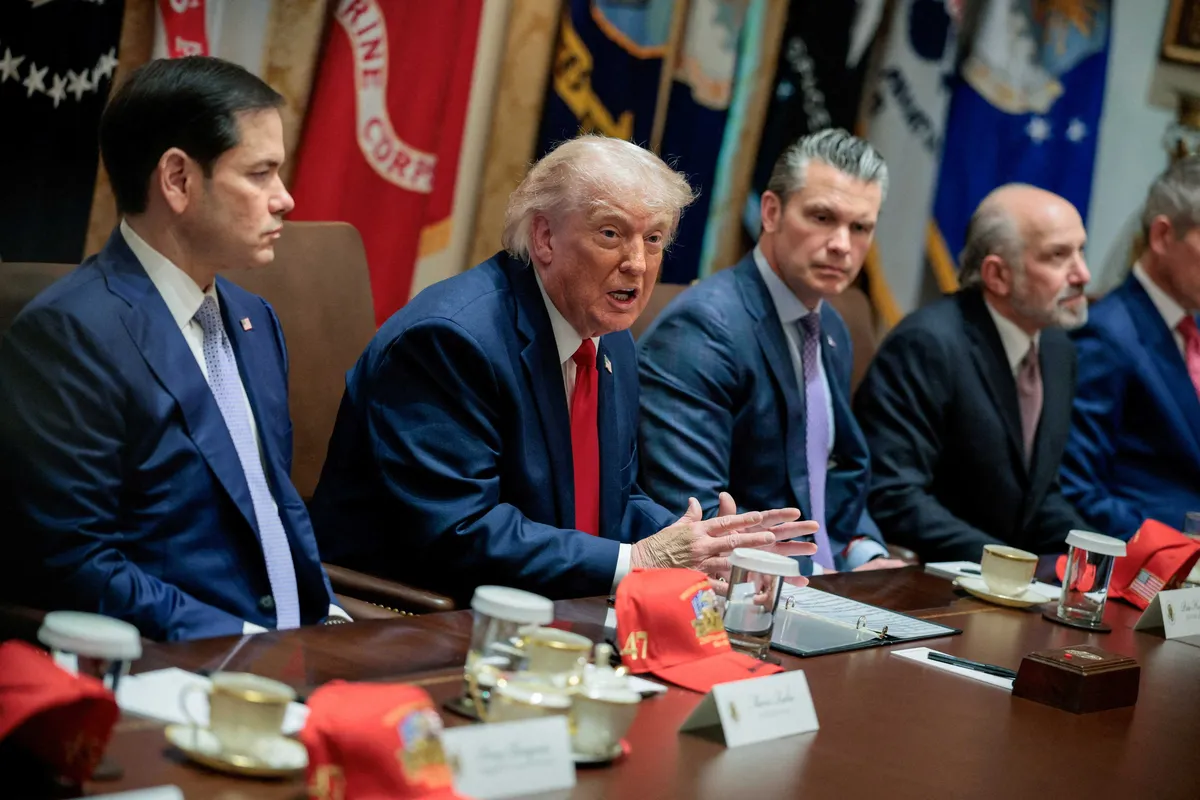
President Donald Trump has resorted to "begging" for help, according to an analysis published by The i Paper, which argues that his reliance on loyalists over seasoned experts has led his administration to sleepwalk the United States into what the outlet describes as a deadly failure.
Jonathan Singh, a journalist and former Royal Air Force pilot with a background in aid work, published the piece on Tuesday. He contends that the Trump administration's approach to Iran has resulted in repeated setbacks, with prior initiatives ending in "failure every time," and that the president is now compelled to seek outside assistance "to save the situation – and his authority." The U.S.-Iran adversarial relationship, rooted in decades of hostility over Iran's nuclear program, its support for regional proxy groups, and American military presence in the Persian Gulf, has historically required layered diplomatic, intelligence, and military coordination.
"In an extraordinary move, a senior intelligence officer from U.S. Central Command emailed military analysts last week to try and crowdsource ideas for 'new creative and unconventional ways to pressure and punish Iran,' American media reported," Singh detailed. CENTCOM, which oversees U.S. military operations across the Middle East and Central Asia, maintains its own planning and intelligence apparatus, making the appeal to outside analysts a striking departure from standard Pentagon procedure.
He continued: "Since he launched his war alongside Israel more than five months ago, the U.S. President has pursued a cycle of aggressive threats, followed each time by a climbdown and promise of talks."
Singh described the military's effort to solicit outside ideas nearly 160 days into the conflict as "highly unusual," saying it underscores the administration's lack of a coherent strategy. A source familiar with the crowdsourcing email told CNN that U.S. Central Command (CENTCOM) was "looking at every option," acknowledging the need to re-evaluate its approach.
According to Singh, this desperation reflects a broader structural problem: the hollowing out of the U.S. foreign policy establishment and its replacement with political loyalists rather than subject-matter experts. The United States has historically maintained career diplomatic and intelligence cadres specifically to preserve institutional memory and provide continuity across administrations, regardless of party.
"Since his return to the White House, Trump has made drastic cuts to foreign affairs experts at the US Department of State, while an executive order last year directed the Secretary of State, Marco Rubio, to ensure 'faithful and effective implementation' of Trump's foreign policy," Singh wrote.
The departure of experienced diplomats who might have engaged both Iranian counterparts and regional allies has been compounded by the removal of senior military and intelligence officers under Trump and Defense Secretary Pete Hegseth, Singh noted. Experts cited in the piece argue this has fostered an organizational culture that "can't – or won't – call out bad decisions from the President."
Marc DeVore, a senior lecturer in international relations at the University of St. Andrews and an associate fellow at the think-tank Chatham House — the London-based Royal Institute of International Affairs and one of the world's most influential foreign-policy research organizations — addressed the broader institutional dimension.
"The U.S., as with other major countries, has developed institutions to produce strategy," DeVore said. "They're not always perfect, but when you entirely disregard them, you end up in a strategic cul-de-sac that cool tactical ideas from crowdsourcing are not going to provide the answer to. The problem is if you have everybody in the administration completely loyal to Trump and Hegseth, it becomes groupthink where everybody is afraid to challenge the leadership."

